
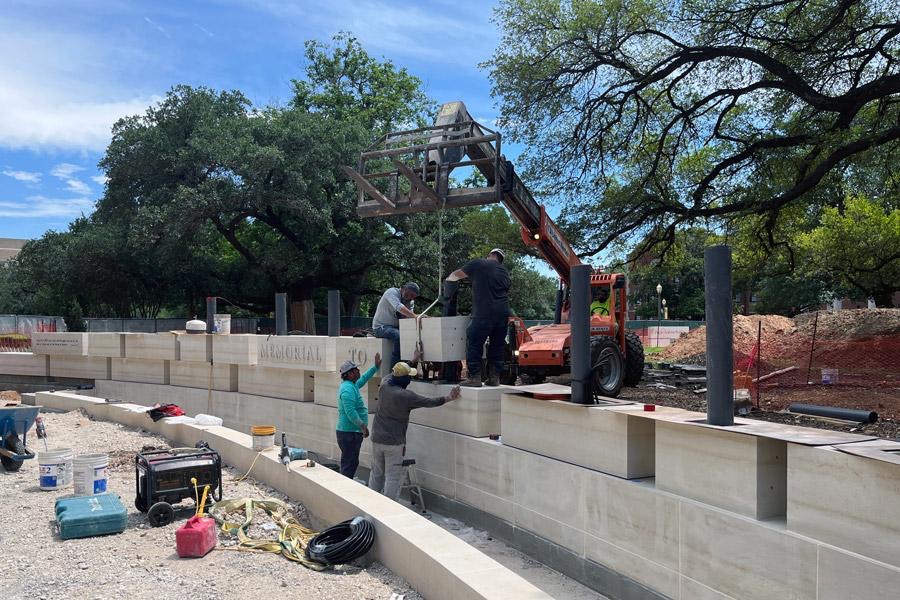
Baylor University’s campus looks a little different at the moment. There are fenced-off portions of campus undergoing obvious reconstruction, accompanied by the sights of orange cones and the shouts of crew workers. A major project at the heart of campus that is causing much of this congestion is a huge step towards Baylor’s future.
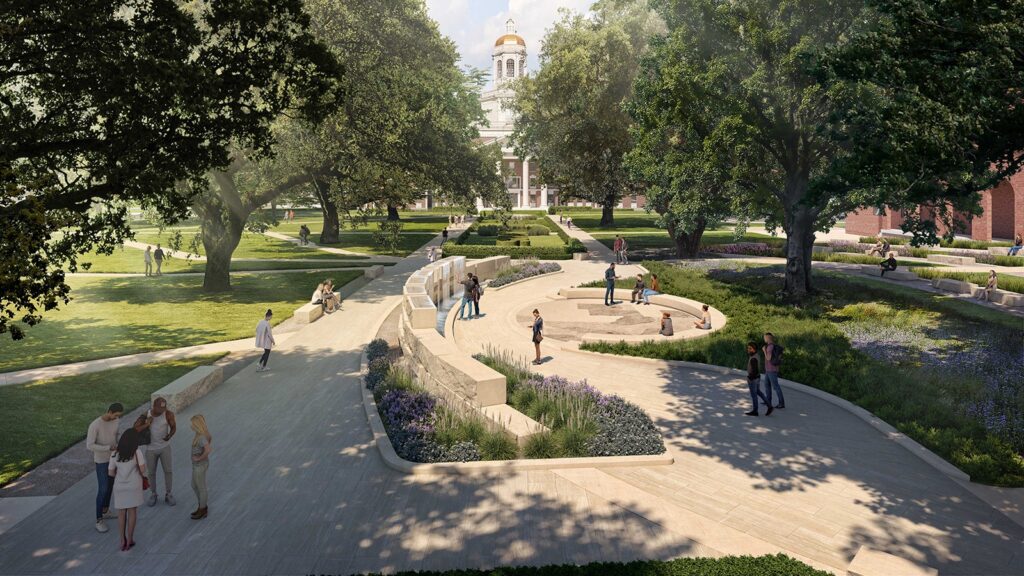
The Memorial to Enslaved Persons is restructuring Founders Mall to acknowledge the immoral use of chattel enslavement during the building of Baylor’s original campus in Independence and the activities of daily life for nearly two decades. On Baylor’s ‘Background & History for a Memorial to Enslaved Persons’ webpage, it states, “It is an acknowledgment of a challenging part of our history while helping us see the need for Christian repentance while we press toward renewal, reconciliation and restoration.” Unfortunately, this isn’t the only accountability Baylor needs to take.
Previously, Baylor University and the City of Waco attempted to reconcile with Indigenous populations that originally inhabited the area. In October of 2020, Baylor authorized research on the history of Baylor’s land and its connections to Indigenous People, and in November of 2022, the University presented a Land Acknowledgement during Native American Heritage Month. In May of 2022, the Baylor Board approved a four-phase plan to address priorities identified by the Commission on Historic Campus Representations:
Phase One is complete, with the new Campus Experience Project.
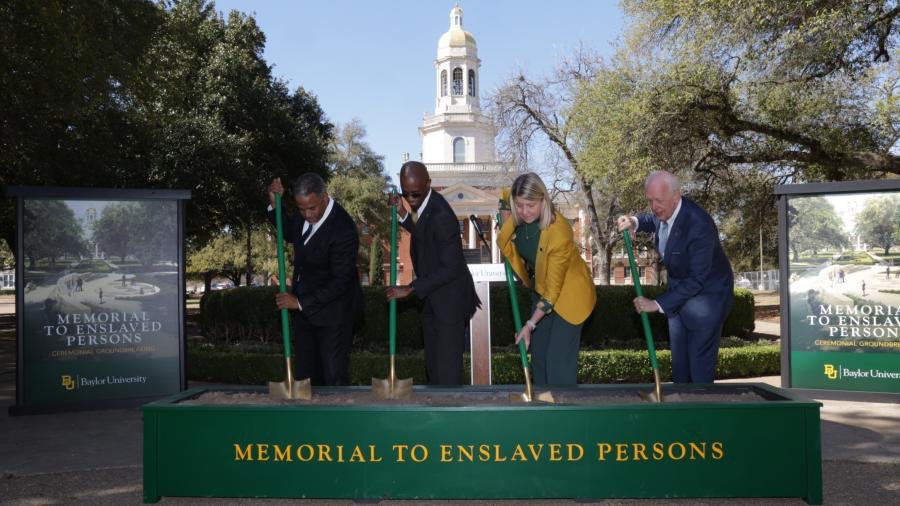
Phase Two formally began February 20, 2024, with the ceremonial groundbreaking for the Memorial to Enslaved Persons. This phase also includes additional historical context being placed around the existing Judge Baylor statue, connecting his history of enslavement with those individuals recognized by the Memorial.
Phase Three will include enhancements to Speight Avenue that explain how the land upon which Baylor sits evolved and was developed, often at the expense of communities and individuals already occupying the property.
Phase Four will feature improvements along the Quadrangle.
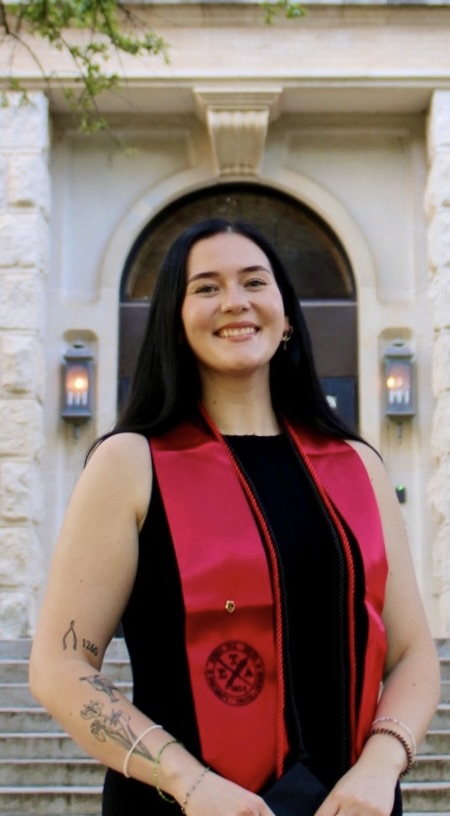
Elizabeth Riley hails from Tennessee and is a graduate of English Literature and Professional Writing & Rhetoric from Baylor University. With passions in archival preservation, communal connection, and women in sports, she writes because it matters, with hopes of bridging villages and fostering revelry amongst them.
If you or someone you know is struggling or in crisis, help is available. Call or text 988 or chat 988lifeline.org to reach the 988 Suicide & Crisis Lifeline.

September is upon us, and our duty this Suicide Awareness Month is to start conversations regarding mental health, spread hope to those in need, and spark meaningful action around one of the most urgent crises of our time. World Suicide Prevention Day is Wednesday, September 10th, but all month long, mental health advocates, prevention organizations, survivors, and allied community members are uniting to promote suicide prevention.
Suicide affects millions of people every year, yet too many struggle in silence. It starts with one conversation: ask someone how they’re doing and be ready to truly listen. No one has to face their battles alone. Whether you’re facing challenges, hoping to support a friend or loved one, or looking to help, your voice matters.

Here in Texas, there are three branches of the American Foundation for Suicide Prevention. AFSP of Central Texas is hosting an Out of the Darkness fundraiser walk in Waco on September 27, 2025. With over 350 participants already joined, this walk at Brazos Park East is the perfect way to participate in the community in a way that matters.
Help exists, and healing is possible. Inform yourself of warning signs for suicide, encourage open conversations about mental health, and connect people to proven treatments and resources.

Elizabeth Riley hails from Tennessee and is a graduate of English Literature and Professional Writing & Rhetoric from Baylor University. With passions in archival preservation, communal connection, and women in sports, she writes because it matters, with hopes of bridging villages and fostering revelry amongst them.
The Advocacy Center for Crime Victims and Children in Waco is a vital non-profit organization that serves potentially anyone and everyone in our area. Their mission is to promote healing of children and crime victims through advocacy, collaboration, prevention, and treatment across six Central Texas Counties, serving over 7,000 victims.
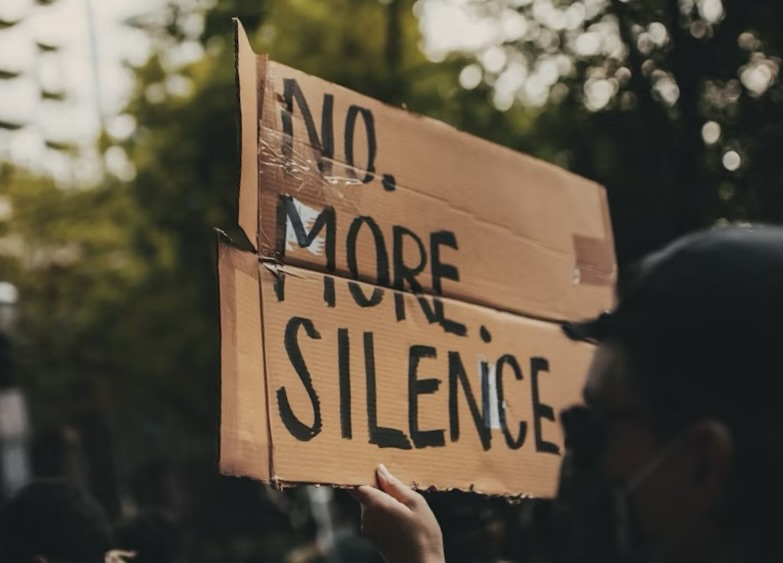
Victims can suffer both vocally and in silence because of acts of violence committed against them. Anyone–men, women, and children–may be affected by violence, which is why the Advocacy Center for Crime Victims and Children does not discriminate based on race, creed, color, religion, disability, nationality, sex, gender identity, sexual orientation, English proficiency, or age.
Unfortunately, children are one of the most vulnerable populations that are susceptible to neglect, which can appear as abuse in physical, emotional, or sexual forms. The Advocacy Center not only provides an immediate response to victims of violence with their Victims Center, but they also take care of our youth through work with the Children’s Advocacy Center.

The Children’s Advocacy Center (CAC) provides a helping hand to hurting children by minimizing their amount of time involved in the investigative and judicial processes. The CAC takes a holistic, coordinated approach to suspected abuse, which includes steps like videotaped forensic interviews. This way, the child has the opportunity to share their story in a safe, confidential manner. They also offer forensic medical examinations that ensure the physical health of the child and weekly case reviews, in which partner agencies oversee each case.
The Advocacy Center greatly relies on the community, and a few of their partner agencies include law enforcement, child protective services, the district attorney, the medical community, social workers, and case managers. However, they utilize volunteers and donations in order to aid the Advocacy Center’s staff, allowing the day-to-day operations of the Center to run smoothly and efficiently. Without these volunteers and monetary donations, they would not be able to continue to serve and impact our community so effectively.
The Advocacy Center has two community events coming up, including the 2025 Waco Designer Purse Bingo Day and the 2026 Mardi Gras Ball. Visit their website or Instagram to find more information on these special occasions!
Elizabeth Riley hails from Tennessee and is a graduate of English Literature and Professional Writing & Rhetoric from Baylor University. With passions in archival preservation, communal connection, and women in sports, she writes because it matters, with hopes of bridging villages and fostering revelry amongst them.
From the Texas Secretary of State’s Office
Deputy Secretary of State Joe Esparza drew the ballot order for eight proposed amendments to the Texas Constitution that will appear on the Nov. 2 ballot. The proposed amendments were approved by at least two-thirds of the members of both the Texas Senate and House of Representatives.
Texans will have the opportunity to approve or reject the following amendments with a majority vote:
Proposition 1 (HJR 143)
“The constitutional amendment authorizing the professional sports team charitable foundations of organizations sanctioned by the Professional Rodeo Cowboys Association or the Women’s Professional Rodeo Association to conduct charitable raffles at rodeo venues.”
Proposition 2 (HJR 99)
“The constitutional amendment authorizing a county to finance the development or redevelopment of transportation or infrastructure in unproductive, underdeveloped, or blighted areas in the county.”
Proposition 3 (SJR 27)
“The constitutional amendment to prohibit this state or a political subdivision of this state from prohibiting or limiting religious services of religious organizations.”
Proposition 4 (SJR 47)
“The constitutional amendment changing the eligibility requirements for a justice of the supreme court, a judge of the court of criminal appeals, a justice of a court of appeals, and a district judge.”
Proposition 5 (HJR 165)
“The constitutional amendment providing additional powers to the State Commission on Judicial Conduct with respect to candidates for judicial office.”
Proposition 6 (SJR 19)
“The constitutional amendment establishing a right for residents of certain facilities to designate an essential caregiver for in-person visitation.”
Proposition 7 (HJR 125)
“The constitutional amendment to allow the surviving spouse of a person who is disabled to receive a limitation on the school district ad valorem taxes on the spouse’s residence homestead if the spouse is 55 years of age or older at the time of the person’s death.”
Proposition 8 (SJR 35)
“The constitutional amendment authorizing the legislature to provide for an exemption from ad valorem taxation of all or part of the market value of the residence homestead of the surviving spouse of a member of the armed services of the United States who is killed or fatally injured in the line of duty.”
For more information and resources for voting in Texas, visit VoteTexas.gov.