
By Jeffrey Vitarius
(Civic meetings happen in Waco every week – city council, school board, planning commission, and countless others. Decisions from these meetings affect our lives every day. Many of us are curious about these meetings, but to be honest, it’s just too hard to decipher the jargon and figure out what’s going on and why it’s important. Act Locally Waco is trying something new in August! Jeffrey Vitarius follows civic meetings for his work and out of personal interest. Each week in August he will pick a meeting in our community and highlight one or two items from the agenda to translate from “government-ese” into language we can all understand. We’re calling the series “Meeting Insights.” Let us know what you think! If you enjoy it, we will try to keep it going! — ALW )
The Board of Directors for Reinvestment Zone Number One For Tax Increment Financing (TIF Board) meets every other month on the second Thursday of the month. These are the folks that make recommendations to City Council about how TIF dollars should be spent. Before COVID-19 they would go on a tour of potential projects some time in the morning and then conduct their regular meeting at noon. The public is invited to the regular meetings, although, for the time being due to COVID-19, that attendance is virtual through the Waco City Cable Channel’s YouTube channel (WCCC.TV – YouTube) with public comments sent in ahead of time. There are a few interesting projects on the agenda this week, but we are going to dive into some background and look at how the TIF encourages development in a way you may not expect…silencing train horns in Downtown Waco.
Meeting Basics
- Regular Meeting – 12:00pm
- To watch the live stream click here (City of Waco Cable Channel YouTube channel)
- For the full agenda click here
- For the meeting packet with the documents pertinent to the meeting click here. I will refer to page numbers from this packet in the notes below.
- Details on how to provide public comment are listed in the agenda
A Study in TIF – the Downtown Waco Quiet Zone
Mention of the TIF invites questions. What is the “TIF”? How is it funded? Who allocates the funding and to what? Luckily, Waco 101 has already tackled a number of those topics here. Today we are going to zoom in on one example of a TIF funded project, and follow how that example has had an impact on the direction of downtown development, and potentially even the skyline of Waco.
It all starts with trains and their horns. The locomotives that make their way through Downtown Waco along Jackson Avenue are required to sound their horns as they approach any train track crossing. This is to alert folks that they are coming so they can make sure they are well out of the way. As any Wacoan who lives or works near the tracks can tell you, they certainly accomplish this goal. Everyone knows when the train is coming!
However, all this alerting makes it somewhat difficult to invite investment in the properties next to the tracks. An early morning horn makes these properties a hard sell to anyone looking to place hotel rooms or residences in Downtown Waco, and midday horns interrupt workflow in office spaces.
Enter “the quiet zone.”
The quiet zone amounts to improvements the City and railroad can make to the track crossings that provide sufficient safety so that the horns are no longer required (outside of certain specific circumstances, like construction). Unfortunately, the process of figuring out what improvements are needed and then constructing them can be costly. This is where the TIF makes the difference.
In the summer of 2017, city staff presented first to the TIF board and then to the City Council on the potential benefits of a quiet zone in Downtown Waco. Then City Manager Dale Fisseler noted that increased density of development in the area was an important potential benefit of the quiet zone. He pointed out that the quiet zone could “open up other sites along the railroad track for redevelopment.” That summer the TIF board recommended and City Council approved $450,000 in TIF funding towards the study of a quiet zone. The project essential broke down into three phases:
- Phase 1 – Feasibility – this is checking to make sure that creating a quiet zone is reasonable to do or “feasible”
- Phase 2 – Design – putting together the specific improvement designs
- Phase 3 – Construction
The $450,000 in TIF funding was intended to cover phases 1 and 2 of the potential project. Phase 1 was completed in December 2017 (per later presentations by city staff).
In the summer of 2018, staff produced a summary of the improvements that would be necessary for a quiet zone. Most of these improvements involve installing new crossing gates, efforts to make sure folks don’t drive around those gates (something called “channelization”), changes to Jackson Avenue (that runs parallel with the tracks), and pedestrian safety improvements.
In the fall of 2019, the project was ready to seek funding for phase 3. The TIF Board recommended and the City Council approved $1,528,807 in TIF funding for the construction of the improvements noted above. At the time, the project was estimated to be completed sometime in the fall of 2020 (it is possible COVID-19 has had an impact on this process).
The project has some benefits that do not involve any other development: improved safety at crossing, improved pedestrian connections, and decreased downtown disturbance from the horns.
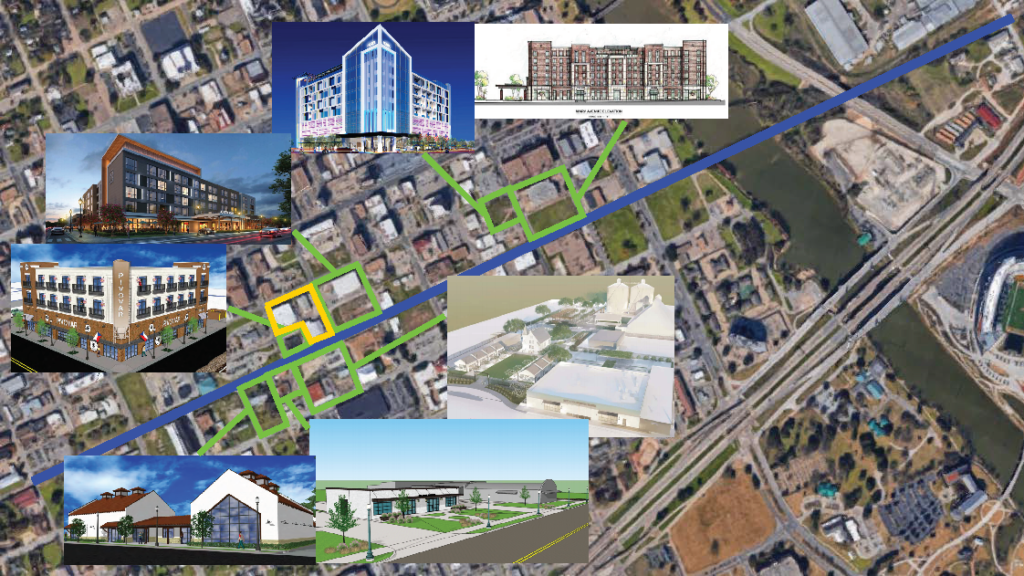
But perhaps, the biggest impact of the quite zone has been in making sites near the railroad track more appealing for development, just like City Manager Fisseler noted back in 2017. Since staff presented the improvements in the summer of 2018, seven projects have sought TIF funding (two this month) for developments right next to the tracks (see map below, the quiet zone in blue and the projects in green).
Before we move on, here are some critical caveats to keep in mind with TIF projects:
- A project being funded may not ultimately be completed. Lots of changes can happen between funding and completion (like a pandemic, for example)
- Sometimes completed projects can look different from their initial renderings.
- The information I have gathered here is from what I could find in the meeting packets from past meetings of the TIF board and City Council. It is possible that some details of these projects have changed since those packets were put together.
That being said, these seven projects represent a combined total private investment (not counting any TIF funding) of $93.9 million. They include 22,000 square feet of retail space, at least 709 new parking spaces (not all public), space for six new restaurants, and nearly 500 new hotel rooms. On top of all of this, a developer announced in June of this year intentions to build a set of office towers next to the tracks that might grow higher than the ALICO Building (site in yellow above). We can’t say for certain that these projects have come about because of the quiet zone, but the logic of less noise, more development and the timing of these projects is convincing for me.
Be on the lookout for more TIF-funded public projects like this that encourage economic development in particular parts of downtown.
Other Interesting (to me) Items From the Agenda
- This month’s agenda includes the annual board report for the TIF board. Each city board or commission produces one of these reports each year, and they can be a pretty good starting place for getting to know what that group has been doing and will do in the future.
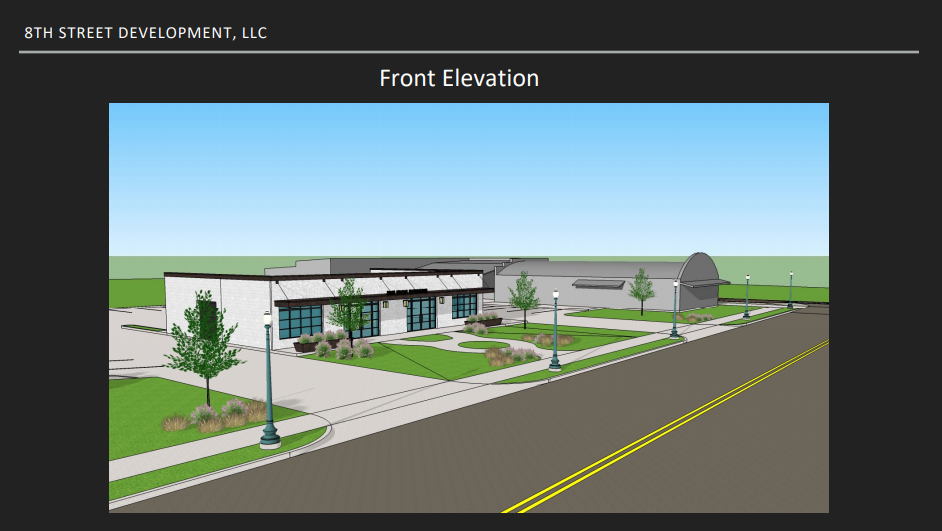
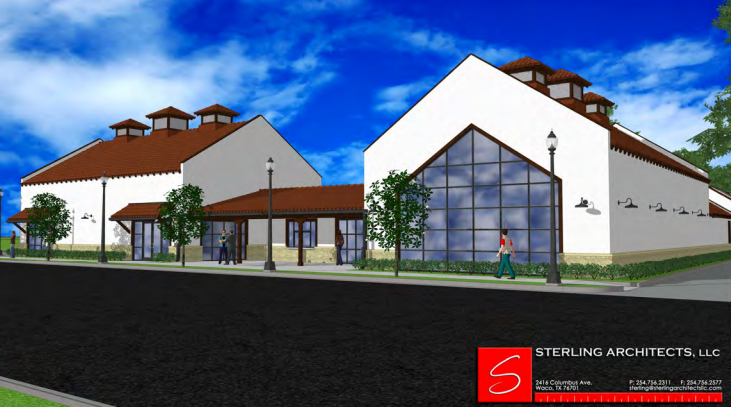
- One of the best parts of any TIF board packet are the renderings. Below are those for the projects consider this month.

Jeffrey Vitarius has been actively local since early 2017. He lives in Sanger Heights with partner (JD) and his son (Callahan). He helped found Waco Pride Network and now serves as that organization’s treasurer and Pride Planning Chair. Jeffrey works at City Center Waco where he helps keep Downtown Waco clean, safe, and vibrant. He is a member of St. Alban’s Episcopal Church and graduated from Baylor in 2011.
The Act Locally Waco blog publishes posts with a connection to these aspirations for Waco. If you are interested in writing for the Act Locally Waco Blog, please email [email protected]for more information.
By Jeffrey Vitarius
(Civic meetings happen in Waco every week – city council, school board, planning commission, and countless others. Decisions from these meetings affect our lives every day. Many of us are curious about these meetings, but to be honest, it’s just too hard to decipher the jargon and figure out what’s going on and why it’s important. Act Locally Waco is trying something new in August! Jeffrey Vitarius follows civic meetings for his work and out of personal interest. Each week in August he will pick a meeting in our community and highlight one or two items from the agenda to translate from “government-ese” into language we can all understand. We’re calling the series “Meeting Insights.” Let us know what you think! If you enjoy it, we will try to keep it going! — ALW )
The Waco City Council meets every other Tuesday. The work session starts at 3:00, that is where most of the explanation and discussion happens. The business session is at 6:00, that is when the council takes action (votes). The public is invited to attend either or both of these sessions, although, for the time being due to COVID-19, that attendance is virtual through the Waco City Cable Channel (WCCC.TV/live) with public comments sent in ahead of time. Today we will highlight Work Session Agenda item 3…taxes.
Meeting Basics
- Work Session – 3:00 pm / Business Session – 6:00pm
- To watch the live stream click here (City of Waco Cable Channel, wccc.tv)
- For the full agenda click here
- For the meeting packet with the documents pertinent to the meeting click here. I will refer to page numbers from this packet in the notes below.
- Details on how to provide public comment are listed in the agenda
Work Session Agenda item 3 – WS-2020-508 – Discussion of the Property Tax Certified Appraisal Roll and Certified Estimate of taxable value, as well as information on the No-new-revenue Tax Rate, the Voter-approval Tax Rate, and the Tax Collection Rate.
Agenda item 3 is just one part of an ongoing budget process. So, let’s start with a bit of a timeline. Two weeks ago, city staff talked through preliminary budget projections with City Council (minutes and video). Since then city staff has received a certified estimate of tax value (more on that below) and developed a proposed budget and tax rate. This week the council will discuss these proposed items and set a public hearing on the budget (tentatively – 9/1) and the tax rate (tentatively 9/1 with vote on 9/8). In today’s “Meeting Insights” we’ll zero in on the tax rates.
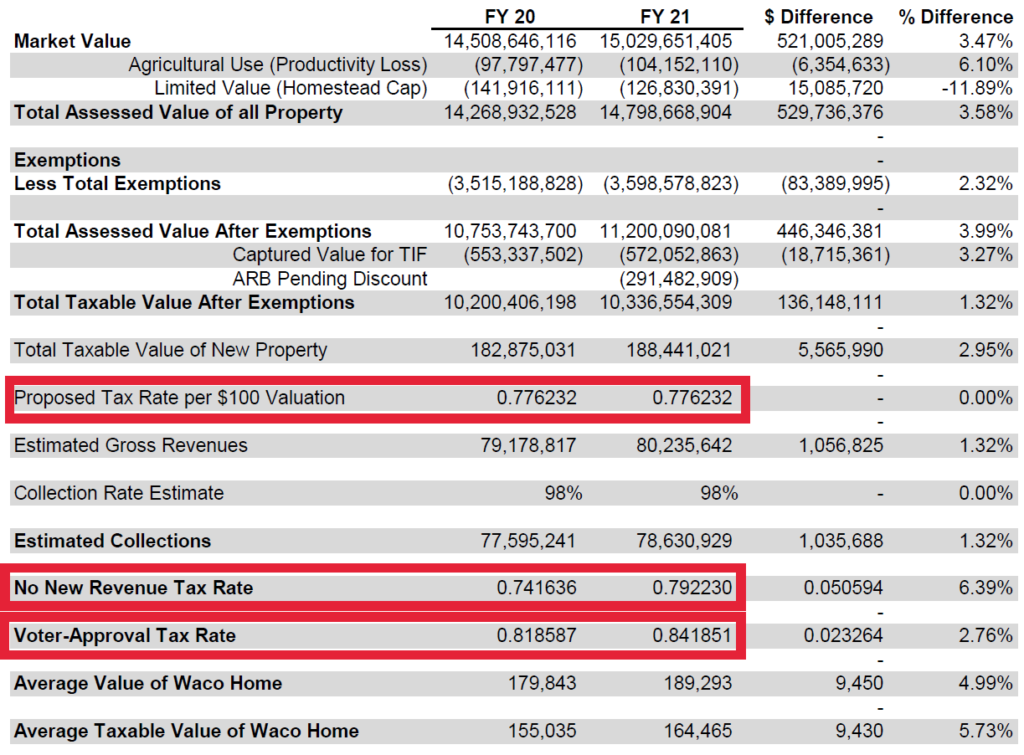
The image above comes from this week’s meeting packet and lists three kinds of tax rates: the Proposed Tax Rate, the No New Revenue Tax Rate, and the Voter-Approval Tax Rate.
Most of us are familiar with the Proposed Tax Rate – that’s the rate we would pay should it pass. The city applies this rate to the values it receives from the McLennan County Appraisal (MCAD) to calculate its property tax revenues for the year.

The “No New Revenue Tax Rate” is the rate that would generate the same revenues as the last year, taking into account changes in appraised values. In other words, if property values went UP last year, the No New Revenue Tax Rate would go DOWN – because a lower rate would get the city the same amount of revenue. If property values went DOWN last year, the No New Revenue Tax Rate would go UP – because the city would have to charge a higher rate to get the same amount of revenue. As the name implies, it is the rate that would result in “No New Revenue.”
(Note: The No New Revenue Tax Rate does not take into account new property. It looks at the property from last year’s appraisal roll, and the revenues from those properties, not new properties that may have come on the roll since.)
This year provides an interesting example. The value of taxable property from last year went DOWN compared to the year before. On net, properties last year declined in value. So, the No New Revenue Tax Rate this year is higher than the Property Tax Rate from last year. If there were no new properties, the city would expect to collect less in property taxes than it had the previous year if the Property Tax Rate remains the same.
Why does the city calculate the No New Revenue Tax Rate? Because you need that rate to be able to calculate the Voter Approval Tax Rate. The “Voter Approval Tax Rate” is the maximum rate allowed by law without voter approval. These two rates are connected by a multiplier that is decided by the Texas Legislature. The multiplier changes from time to time, but currently the Voter Approval Tax Rate is basically the No New Revenue Tax Rate X 3.5%. (I say “basically” because some adjustments are made to take into account debt service.) In other words, the city may not impose a Property Tax Rate more than 3.5% times the rate needed to collect the same tax revenues as the previous year. (The language around tax rates can be somewhat confusing. If you are interested, here is an explainer from the Texas Municipal League with much, much, much more information.)
For the past six years, the city’s tax rate for property taxes has been “0.776232/$100” or about 78 cents for every $100 of property value. The city’s income from property taxes has steadily increased over the last six years because the value of taxable property within the city limits (and the addition of new property this year) has been steadily on the rise, not because the city has increased its tax rate. In the 2019-2020 budget property taxes made up a little less than a third (29%) of the city’s operating budget.
For this fiscal year, the city is projecting to continue the $0.776232 per $100 tax rate from previous years. Since this rate is less than both the “No New Revenue Tax Rate” and the “Voter-Approval Tax Rate,” no tax-rate election will be necessary. If all proceeds as proposed, the average homeowner would pay $1,276.63 in city property taxes next year.
Here is another interesting point: the chart above shows a number called “ARB Pending Discount.” What is that? COVID-19 has slowed the tax assessment and protest process. As a result, the city has received an ESTIMATE of property values rather than a certified VALUE like they usually get. The city has accordingly subtracted about 3% of the estimated values. This is the amount the city anticipates property value protests will drive down appraised values – that is the “ARB Pending Discount.”
The budgeting process continues!
Other Interesting (to me) Items From the Agenda:
- The city is looking at purchasing a boat slip at Ridgewood Marina. This should reduce the response time of the Fire Department’s new rescue boat from 10-12 minutes to 8 minutes or less
- The J.H. Hines Elementary Sidewalk Project is proceeding. This week the council plans to approve an Advance Funding Agreement with the state of Texas. The project requires no local match and the City would be responsible solely for non-reimbursable costs and any overruns.
Jeffrey Vitarius has been actively local since early 2017. He lives in Sanger Heights with partner (JD) and his son (Callahan). He helped found Waco Pride Network and now serves as that organization’s treasurer and Pride Planning Chair. Jeffrey works at City Center Waco where he helps keep Downtown Waco clean, safe, and vibrant. He is a member of St. Alban’s Episcopal Church and graduated from Baylor in 2011.
The Act Locally Waco blog publishes posts with a connection to these aspirations for Waco. If you are interested in writing for the Act Locally Waco Blog, please email [email protected]for more information.
- « Previous
- 1
- 2
- 3