By Cheyenne Atchison
“I felt as if I were walking with destiny, and that all my past life had been but a preparation for this hour and for this trial… I thought I knew a good deal about it all, I was sure I should not fail.” In one of his most iconic quotes, Winston Churchill described what he felt after he became the Prime Minister of England in 1940.
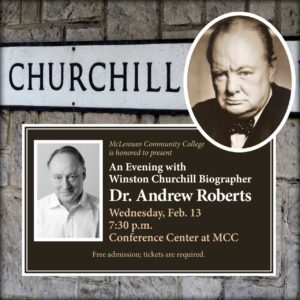
This quote also serves as the title for Andrew Roberts’ new Churchill biography, Churchill: Walking with Destiny, a New York Times best seller released last October. On Wednesday, Feb. 13, McLennan Community College will host author and scholar Andrew Roberts, as he travels the state on a promotional tour. The book has been hailed by the Wall Street Journal as “the best single-volume biography of the man.”
MCC is honored to host this popular author and an evening of learning about a prominent historical figure, with the help of Judge Ken Starr. “Our friendship with Judge Ken Starr and his wife Alice has taken the student experience at MCC to an entirely new level. Judge Starr engages with our Presidential and Honors College Scholars every semester…” said Kim Patterson, executive director of the MCC Foundation and coordinator of the Roberts’ event. “His connections in Washington and around the world are enabling us to offer MCC students learning opportunities they wouldn’t get anywhere else.”
Dr. Andrew Roberts, received a PhD from Cambridge, is a visiting professor at the War Studies Department of King’s College, London, the Lehrman Institute Distinguished Lecturer at the New-York Historical Society, and the author of 13 books.
As a journalist and historian, he has researched and written about a variety of public and historic figures, but Winston Churchill is arguably his most studied. His enthusiasm toward Churchill is obvious in the collection of memorabilia close at hand in his study, which includes a hairbrush, bow tie and invitation to the lecture at Westminster College in 1946, in which Churchill delivered his infamous “Iron Curtain” speech. Despite his interest and admiration of Churchill, Roberts makes a point to recognize the mistakes the prominent leader made in both his political and personal life. More importantly, Roberts wanted a biography that would not only acknowledge faults but also explore how Churchill grew from them. Through his missteps, Churchill developed into the historical figure he is today.
Walking with Destiny offers an understanding of Churchill from a new perspective. The last major publication about Winston Churchill was Churchill by Roy Jenkins in 2001. Since its release, works surrounding Churchill have been deposited into the archives at Churchill College. In addition to these documents, the Queen of England granted Roberts access to her father’s diaries. This marks the first time a Churchill historian has read King George VI’s personal writing.
King George VI and Winston Churchill became close during World War II, with Churchill serving as England’s prime minister under the king’s reign. Despite initial aversion toward the new prime minister, it was the efforts of the war that helped them develop a relationship. This makes King George VI’s diary the ideal collection and perspective of both their friendship and of Churchill himself. This document serves as primary evidence never seen or read in any previous Churchill biography until now.
A large reason Roberts wanted to write this biography was due to his belief that the criticism Churchill faces is a result of inaccurate sources or a lack of context surrounding specific controversies. With access to new archives and the king’s diaries, Roberts can unveil a new side of history.
“It is simply extraordinary for our students to have the opportunity to meet and hear from one of the world’s leading Churchill scholars, right here on our campus,” Patterson said. “We have always said that MCC is not like other community colleges … MCC is more like a four-year liberal arts college offering outstanding teaching and enriching experiences.”
“An Evening with Sir Winston Churchill Biographer Andrew Roberts” will be held on Feb. 13 at 7:30 p.m. in the McLennan Community College Conference Center. Admission is free to the public, but tickets must be reserved at www.mclennan.edu/andrewroberts. Copies of Walking with Destiny will be available for purchase at the event.
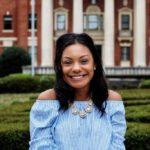
Cheyenne Atchison is a junior at Baylor University studying Marketing and Public Relations, and currently serves as an intern in the Marketing and Communications Department at McLennan Community College.
The Act Locally Waco blog publishes posts with a connection to these aspirations for Waco. If you are interested in writing for the Act Locally Waco Blog, please email [email protected] for more information.
By Khristian Howard
East Waco is a source of rich, proud history. Just a mention of revered figures like World War II hero Doris Miller or of Paul Quinn College, the oldest historically black college in Texas, reminds us of the national significance of this part of the Waco community.

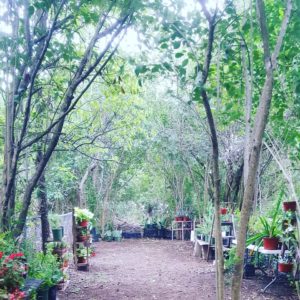
What does East Waco have to offer now? There are several gems in the community that continue to sustain the residents, preserve its culture, inspire change, and fuel its heartbeat… but you may have to look for them. One such gem is Da Shack Farmer’s Market. Located in a quaint and quiet part of the neighborhood at 925 Houston Street, “Da Shack” (like the name implies) may not impress you from the outside. However, once you walk through the doors and enter the green oasis that is their garden, you realize it is a hub for nutritious food, education, beauty, and serenity.
Donna Nickerson, a licensed psychotherapist and owner of Da Shack, sat down for a brief interview. She shared about how the farmer’s market began, and talked about her dreams for benefiting the community.
First, how did they come up with the name? “I wanted something that was catchy, something that was different. As far as the name, ‘Da Shack’ is not a place where it’s fancy…it’s just simple.” she explained. “We try to implement simple things – even with gardening. We try to utilize our resources and try to communicate that with the community as well. That way they know you can use what you have. You don’t have to be fancy with things, just use what’s available.”
What should a visitor expect from Da Shack? For Donna, the most important thing is for customers to leave with an education, even if they do not buy anything. “When they come here, they are going to learn about healthy eating, organic growing, gardening. Our goal is not to just provide healthy organic fruits, vegetables, and herbs…but also to educate them on how to grow and start gardening.” Da Shack is a place where there is something for every potential gardener. For folks who do not want to grow their vegetables from the ground, Donna and the others at Da Shack can give advice and guidance on how to start with pots, vegetable cans, or even in water.
Donna’s passion for educating people on how to improve their health shares roots with her profession as a clinical social worker and psychotherapist. Da Shack provides an avenue for addressing both physical and mental health. In fact, Da Shack is now offering mental health services to the community. Donna is registered with most insurance agencies and is also providing sliding scale and pro-bono sessions for visitors to learn about behavioral health, managing stress, and more. When asked about why she chose to connect therapy to the farmer’s market, she stated, “Behavioral health is a barrier for a lot of people. If it is not addressed, it creates walls for individuals. Healthy people understand stress and how to cope with it…If you are in good condition physically, you’ll be in good condition emotionally, and vice versa because they work hand-in-hand…not a lot of psychotherapy services are present [in East Waco] and it is a big need.” Furthermore, she wanted “people in the community to come to a place where there is serenity, relaxation, warmth, and resources.”
In recent years, Waco has been a hub for social and economic transformation. Businesses are seeing a new promising market, families are finding supportive communities for their children, and students continue to flood to one of the oldest, most respected universities in the South. The work that Da Shack does in the community could be done downtown or in Woodway or Hewitt, so…why East Waco? When approached with this question, Donna gives a nod to the importance of managing perceptions about the neighborhood. She sees promise in East Waco, she says, and wants Da Shack’s location to be a catalyst for collective impact around healthier living there. “…As long as people continue to develop, as long as people continue to have a positive outlook, there’s really a lot of potential here, it’s just going to take a lot of collaboration. A lot of the key people that are willing to do something really need to be connected.”
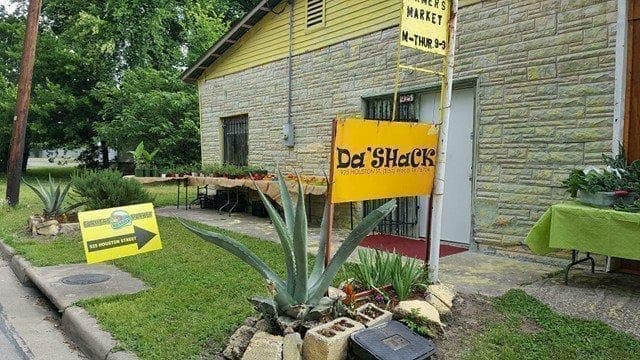
Da Shack is a special place for East Wacoans, and for the rest of the city as well. They offer organic products that range from houseplants and outdoor plants, to vegetables and herbs, to instructional sessions about plant benefits and growing.
Beginning February 2nd, they will be accepting SNAP as a way to eliminate any financial barriers for the community – though their products are already priced at a fair rate to ensure affordability. In addition to this, they will soon be implementing smoothies for those who would rather drink their veggies, greenhouse classes and tours for students and non-profits, and monthly donations to families in need in East Waco.
Da Shack Farmer’s Market has taken a creative approach to marrying hobbies with service, nutrition with mental health, and the public sphere with privately-owned business. Ventures like these build on the historic positive energy of East Waco and move the whole community of Waco toward a healthy future.

Khristian Howard is an Atlanta native and a recent graduate of Georgia State University where she earned a Bachelor’s Degree in Social Work. She has a passion for empowering communities through service, and seeks to connect advocacy to creativity. Currently, she is serving as the AmeriCorps VISTA for Texas Hunger Initiative Waco, where her work focuses on fostering collective impact to improve health and eating habits in East Waco. When she is not working, you may find her sharpening her culinary skills or exploring new poetic and artistic pathways.
The Act Locally Waco blog publishes posts with a connection to these aspirations for Waco. If you are interested in writing for the Act Locally Waco Blog, please email [email protected] for more information.
By Rae Jefferson
For nearly 50 years, Family Health Center has tended to the medical needs of Wacoans from every corner of our community. FHC is a nonprofit organization with a rich history rooted in high-quality, compassionate healthcare. We offer a number of full-scope medical services, some of which are an unexpected take on maintaining health. Here are five nuggets about FHC, the work we do, and why we are in the business of caring for Waco and McLennan County residents.
1. We believe everyone should have access to quality primary care. Regardless of background, financial status, or medical history, everyone deserves tools that will lead to the longest and healthiest life possible. FHC is dedicated to providing medical, dental, and behavioral health services to underserved communities across our region. Of the nearly 60,000 patients served in 2017:
- 97% were at or below 200 percent of Federal Poverty Guidelines
- About 9,300 indicated they were homeless, and
- 31% were uninsured.
Services at FHC are designed with patients in mind. We operate 14 clinical sites to maximize accessibility, as many of our patients have limited mobility or access to transportation. Additionally, some FHC clinics accommodate working patients’ schedules by staying open 55 hours per week, including most evenings and Saturday mornings. The main site (1600 Providence) features an in-house pharmacy that provides significant discounts to qualifying patients for brand-name prescriptions. FHC also works to maximize reach and impact through partnerships with groups like McLennan County Health Services, local hospitals, United Way, MCC, Baylor, and others.
2. We will celebrate our 50th anniversary in 2020. FHC was founded in early 1970 after local medical providers identified a gap in care for Wacoans without commercial health insurance, as well as a shortage of doctors in the Waco area. The center was developed by leaders in local business, politics, and medicine. Since that time, FHC has been committed to its mission of providing primary care to those for whom access to healthcare has been historically limited.
3. We are home to one of the most competitive residency programs in Texas. The
Family Medicine Residency Program (FMRP) began when Family Health
Center first opened. It helped address the shortage of doctors in the
Waco area and was one of the first accredited family medicine training
programs west of the Mississippi River. Today, FMRP is in the top three
percent of all programs nationally. More than half of the family
medicine doctors practicing in McLennan County are program graduates,
and more than half of all program graduates practice in Texas. The
program is widely recognized for innovation in electronic health records
for patients, curricular design, and quality of graduates.
In 2019, FMRP is a finalist for the Baldwin Award,
a national honor recognizing residency programs that teach
compassion-based patient care and provide excellent treatment of
residents – which has been historically problematic in medical education
environments across the country. Only six out of more than 10,000
residency programs across the U.S. are being considered for the award.
4. We are a Federally Qualified Health Center (FQHC). This means we qualify for special government funding, receive enhanced reimbursement from Medicare and Medicaid, serve underserved people in a comprehensive way (medical, dental, behavioral, etc.), and provide a sliding fee scale for uninsured patients (that’s #5). FHC has to meet several other requirements – like having a board of directors that is majority FHC patients – but each requirement ensures the center provides the best possible care to patients.
5. We have options for the uninsured. With registration for the Affordable Care Act falling 4 percent this past December, it’s reasonable to assume more Wacoans will be uninsured than in recent years. The Good Health Card is a sliding fee scale offered by FHC to low-income patients without health insurance. Patients qualify for one of four categories, labeled A through D. Each category determines appointment co-pay (up to $20) and the percent paid by the patient for any services rendered (up to 50%). This sliding scale payment system is required for FHC to maintain its FQHC status, but it also helps create a system where traditionally underserved members of the community have access to necessary medical, dental, and behavioral health services across McLennan County.

Rae Jefferson is a creative, Netflix binger, and marketing professional, in that order. Originally from Houston, she stuck around Waco after graduating from Baylor University with a B.A. in Journalism, PR, & New Media and a minor in Film & Digital Media. Now she’s the Communications Director at Family Health Center, where she gets to spend each day serving Waco. When she’s not working, find her at home snuggled up with her dog-daughter, Charlie, watching “The Office” for the hundredth time.
The Act Locally Waco blog publishes posts with a connection to these aspirations for Waco. If you are interested in writing for the Act Locally Waco Blog, please email [email protected] for more information.
By Jaja Chen & Bonnie Finch
Trauma can be debilitating for individuals, couples, families, and impacts our greater Waco community. We have seen from the #MeToo movement in our nation this past year ways that speaking one’s story can empower and remove stigma in confronting and talking about trauma and its impacts.
Trauma includes but is not limited to interpersonal trauma such as physical, sexual, psychological, emotional or spiritual trauma and is can be a shock to one’s body, mind, and spirit. When thinking of trauma and post-traumatic stress disorder (PTSD) recovery, we may not always think of yoga. However, researchers in the field of trauma continue to find how our bodies physically remember trauma and how body-based approaches can play a pivotal role in holistic trauma recovery.
When we become activated and triggered, our bodies go into a state of stress, also known as Fight/Flight/Freeze. We leave the present moment and may go back to when the traumatic event(s) occurred. We enter into a survivor mode – our blood pressure increases, our breathing becomes short and quick, and our heart begins to race, just to name a few of the stress responses. Once triggered, it can take our bodies nearly 8 hours to get back to optimal functioning level.
This physical body response impacts almost every system including our digestion, hormone outputs, cardiovascular system, muscles, and bones. The longer we are in the triggered response, the more physical impacts it can have on our bodies. By learning grounding and centering techniques and slowly adding mindfulness and meditation, we can teach our bodies to recover faster and move into the present moment.
Yoga also empowers us with choice.
Many survivors of trauma may continue to feel shame regarding loss of power and choice in the midst of difficult situations. Through guided, easy movements, we can work on finding ways to bring positive choice back into lives. These seemingly simple movements begin to create a BRAVE space inside us. We use the word “brave” space instead of “safe” space because we do not want to assume that our students feel safe, or that they have to feel safe. We try to help establish courage within our students to let them know that whatever they are feeling is okay.
While yoga is about coming into the present moment, it is more about ACCEPTING that moment just as it is. When we show up with courage, we begin to develop compassion for ourselves. The physical movements of yoga inspire curiosity – to not only help the body feel good – but to bring back a sense of sacredness, peace, and self-love. Learning the skill of coming into stillness allows that peace to unfold into every aspect of our lives.
While not a quick fix, these skills are what we strive to practice every day for the rest of our lives. We are eager to share these tools with you and our Waco community as well. We invite you in joining us in our practice.
At Enrichment Training & Counseling Solutions, we love providing holistic trauma recovery. Our upcoming Phoenix Yoga series provides trauma-sensitive yoga, meditation, and trauma education to participants. We will be co-leading this 8-week yoga program in upcoming weeks this spring. For more information and to register see our website: https://enrichmenttcs.com/groups-events/
Jaja Chen, LCSW, CDWF is a private practice therapist in Waco through Enrichment Training & Counseling Solutions specializing in PTSD, maternal mental health, and compassion fatigue. As an EMDR Trained Therapist, Jaja loves providing holistic trauma recovery to the Greater Waco community. Jaja can be contacted via email at [email protected] or via webpage at http://enrichmenttcs.com/meet-jaja-chen/
Bonnie Finch, is a Licensed Massage Therapist MT #129813 and a 500 Hour Registered Yoga Teacher. She has almost 3 years of teaching experience and has trained with Warriors at Ease teacher training for trauma recovery. Bonnie specializes in helping people evoke the relaxation response, to foster healing from within. Bonnie can be contacted via email [email protected] or via webpage https://enrichmenttcs.com/meet-bonnie/
The Act Locally Waco blog publishes posts with a connection to these aspirations for Waco. If you are interested in writing for the Act Locally Waco Blog, please email [email protected] for more information.
By Melissa Mullins
Martin Luther King, Jr. Day has become a day of service in many communities (including Waco), and this year I find myself reflecting on sustainability and issues of social justice. I’m thinking specifically about inclusivity and representation in environmental movements. I’m too young to remember the civil rights movement, but old enough to remember being part of the letter-writing campaign at my public school to ask congress to make MLK Day a national holiday. It’s natural to wonder at this time of year how far have we come, and how far do we still have to go, in relation to Dr. King’s dream of inclusivity.
Another thing that’s gotten me thinking about this issue is some reading I’ve been doing. Last spring, I had the great pleasure of participating in a class at Truett Seminary on the novels, poetry, and essays of Wendell Berry. Berry has cult-like status as a spiritual farmer, environmentalist, social commentator and I had read some of his works prior to the class (he is, after all, from the same Kentucky county as my grandfather). But, in addition to Berry, we also read an essay by bell hooks. I recognized hooks as a feminist writer (also a Kentuckian) but had never considered her in the context of environmental issues. The essay made me want to read her 2009 book , “Belonging: A Culture of Place“. Next month, I’m attending the annual conference of the Informal Science Education Association of Texas in Rockport, TX. The keynote speaker is Dr. Carolyn Finney. Conference attendees are encouraged to read her book “Black Faces, White Spaces: Reimagining the Relationship of African Americans to the Great Outdoors” (2014) so they can participate in a book discussion with the author. And I’m slowly (this one is very scholarly and not for the faint of heart) working my way through “The Rise of the American Conservation Movement: Power, Privilege, and Environmental Protection“ by Dr. Dorceta E. Taylor.
What have I learned from all this reading? Like everything else in our society, gender, race and class matter when it comes to environmentalism, conservation, land ownership, relationship to nature and the great outdoors — but it’s complicated and what we think we know isn’t always true. Poor communities are disproportionately affected by the negative consequences of poor environmental practices, but often have the least voice in environmental decisions made about their own communities. Marginalized people have been instrumental in environmental issues, but their contributions have often been ignored.
The final thing, and maybe the most important, that got me to thinking about this is that I went to the meeting of the Sustainable Resource Practices Advisory Board this week. I went for the same reason as pretty much everyone else there–because the Board was considering whether to advise the Waco City Council to adopt a resolution pledging to a goal of 100% green energy sources for City energy use by 2025 and renewable energy in all sectors by 2050. I found the meeting to be both hopeful and frustrating for a variety of reasons (that’s another story, one I’ll continue to follow, you can read about it yourself in the Trib). I also noticed that of the ten or so people sitting around the Board table and maybe another 50 in the room, there were definitely people of color, but only a handful. It made me reflect on the diversity (or lack thereof) of other environmental and conservation groups I am involved with or interact with in Waco – Master Naturalists, Master Gardeners, Audubon, etc. In other words, representation and inclusivity in the environmental movement isn’t just an issue in books, or in other places…
Sustainability is often considered to rest on three main pillars: environmental, economic and social (planet, profit, people). We must move Beyond Recycling: Reframing Sustainability as a Social Justice Issue and consider that sustainability is not just about picking up trash on MLK day (though I love doing that and it is kind of addictive). I’m generally not comfortable with white people asking why people of color do, or don’t do, some particular thing, but when diverse voices are not included or heard in our discussions of sustainability, this leaves out valuable perspectives that can strengthen decision-making. It is up to all of us to challenge the status quo and move the needle forward on critical issues such as climate change. For our efforts to be successful we must include consideration of topics that might be lacking from a traditional approach to sustainability – such as race and gender inequality, food insecurity, homelessness, and others.
Melissa Mullins is a Kentuckian who, as of next year, will have lived in Waco half her life. She is an aquatic scientist and environmental educator and co-author of the paper “Social and Environmental Justice in the Chemistry Classroom“ (Lasker, et al. J. Chem. Educ., 2017, 94 (8), pp 983–987).
The Act Locally Waco blog publishes posts with a connection to these aspirations for Waco. If you are interested in writing for the Act Locally Waco Blog, please email [email protected] for more information.
By Ashley Bean Thornton
This past October, as I pulled into the convention center parking lot for the Centex Hispanic Chamber of Commerce banquet, I will confess I had a bad attitude. I did not feel like pretending to be friendly and “perky.” I wasn’t looking forward to an evening of chit chat, chicken breast, and cheesecake. I didn’t want to spend my evening in an uncomfortable chair listening to a banquet speaker. I wanted to be home, flopped on the couch in front of the TV in my sweat pants, with my dog in my lap, eating macaroni and cheese.
The huge Brazos Banquet Hall filled with people, many of them familiar, almost all of them congenial. As I visited with friends and friendly folks, my mood improved a little, but I was still far from enthusiastic when…inevitably… it came time to introduce the speaker. I shifted in my chair, set my facial expression to “politely attentive,” and prepared to be bored. Then the magic happened…
Alfred Solano, President of the Hispanic Chamber, stepped to the podium. But, instead of introducing an economist or a politician or a motivational speaker, he introduced … a tenor.
Specifically, he introduced Edgar Sierra: Waco native, Waco High grad, Baylor grad, and adjunct instructor of voice at MCC… one of our own.
Mr. Sierra and his accompanist, Alex Kostadinov, performed three pieces of Spanish Opera: Bella enamorada by Soutullo y Vert, Pajarin tu que vuelas by P. Luna, and Granada by Augstin Lara. They filled the banquet hall with soaring beauty. I am not familiar with any of those pieces. I know very little about opera. I don’t speak Spanish… but, I was absolutely transported, lifted up. My eyes surprised me by brimming with tears. I had not realized how badly I needed a moment of wonder. I fell a little bit in love with everyone in the banquet hall that night, just because we had experienced that beautiful moment together.
That is the power of the arts.
The performance at the banquet reminded me that – even though I am not an artist myself – many, many of the moments when I have felt the warmest sense of community have had something to do with the arts.
I remember an extraordinary open mic poetry night at the Art Forum on 18th Street. Saddiq Granger – tall, lanky, and dreadlocked – shared poems and stories about growing up as a young black man in Philadelphia. He was followed at the mic by Gary Penney – a much shorter (sorry Gary!), older, white man in a cowboy hat – sharing poems about horses and cowboys and riding the range. Afterwards, I took a picture of the two of them hugging. They are funny and beautiful in their tallness/shortness, blackness/whiteness, cityness/countryness – both with huge smiles on their faces. That picture reminds me of how the world should be.
I remember the party for the mural on the side of the East Waco Library. We ate hot dogs and danced to Motown, celebrating this beautiful piece of art we had created together. I remember celebrating the completion of the huge “1,000 Hopes for Waco” mural on University Parks Drive. One of the high school students who worked on it stood up in front of the gathered crowd and told us it was the best thing he had ever done in his life.
I remember watching the girls from “Miriam’s Army,” a dance troop based in the Estella Maxey housing complex, perform at an NAACP banquet. Later that evening, I got a kick out of watching four or five of the girls – still dressed in their sequined, peacock-feathered dance uniforms – visiting confidently with WISD school board president, Pat Atkins.
The symbolism of an opera performance at a Chamber of Commerce event is significant. Commerce is about making a living, and art reminds us what we are living for…who we want to be. Art woven into our lives, created by us, shared with all of us — It helps us understand each other deeply and delight in each other. It binds us together. It helps us to be better humans together, a better community.
I am excited to see that on Thursday, January 24, the Community Race Relations Coalition is presenting a program called “Being Purposeful in Including Everyone in the Arts.” I’m going to try to go because I am deeply thankful for the extraordinary art-filled moments I have already enjoyed as a part of this community and I want our future together to be filled with many more of them.
Meeting Details: 5:30 to 7:30pm at First Presbyterian Church parish hall, 1100 Austin Avenue in Waco. Dinner is provided by the CRRC board, with donations accepted. Reservations are required by calling 254-717-7903 or emailing [email protected].”
This Act Locally Waco blog post is by Ashley Bean Thornton, she has lived in Waco almost 20 years now. Far longer than she ever lived anywhere else. She likes to walk. If you see her out walking, honk and wave and say, “Hi!”
The Act Locally Waco blog publishes posts with a connection to these aspirations for Waco. If you are interested in writing for the Act Locally Waco Blog, please email [email protected] for more information.
By Elizabeth Brownlee
Figuring out what you want to do with your life is difficult for a 30-year-old adult, so you can imagine teenagers have a tough time with it.
House Bill 5, passed in 2013, increased the pressure for our students to plan for their future careers at an earlier age. All ninth graders are now required to select one of the following endorsements:
- Arts and Humanities Endorsement
- Business and Industry Endorsement
- Multidisciplinary Endorsement
- Public Service Endorsement
- STEM Endorsement
An “endorsement” is a series of courses that are grouped together to support a particular career path. To implement this requirement successfully, schools have had to expand career exploration opportunities for students, and also start the career exploration process sooner.
At Connally ISD, one of the major ways we help our students find their future career path is through the Connally Career Tech Early College High School. Our campus is completely focused on students working towards their chosen future careers. We help them get started on their career path and get experience in their chosen fields before they graduate. As the counselor of Connally Career Tech I spend a lot of time with students trying to help them create plans not only for high school, but for their futures once they graduate. It may seem unrealistic to ask a fifteen-year-olds to plan out their future career paths and expect them to stick to it, and maybe it is, but getting them to start thinking and talking about a path is important.
For me helping a student choose a career path is all about building a relationship. I know in education we constantly talk about test scores and grades, but when it comes to being a counselor, you have to build relationships with your students. Getting to know my students and their interests helps me guide them along their career exploration path. I am constantly trying to get to know my students. I try to see them in their element, whether it’s while they’re in study hall, in the classroom, or just talking to their friends. I talk to parents about their student’s interests. Parents have insights into their student’s likes and dislikes that I may not see.
My relationship with a student is my most important tool for helping them. I need to know what’s important to them. Without the relationship, I wouldn’t be able to have those important, hard, honest conversations when their goals and their interests don’t seem to match.
Sometimes a student will want to study for a particular career path because an older sibling really likes it, when in reality he/she has no interest in that career. He/she is just unsure of what to do in the future. I never try to force a student in a certain direction. I give them an idea and tools to help them research it to see if it’s something they are truly interested in pursuing. If possible, I have them speak with someone in the field or someone teaching in that field.
I find a lot of students want to go into a career field because that’s all they’ve been exposed to growing up. We’ve all heard of doctors, lawyers, police officers, teachers, and similar careers. We see them all the time and they are all great career choices, but they don’t fit all students.
Each year when we have our College and Career Fair or our Recruitment Night for Connally Career Tech, I bring my students to speak to specific tables or programs that I know fit with what they want to do in the future. By encouraging a student talk to someone from a field they don’t automatically think about, I help them get exposure to new choices. While I want them to go and talk to every program or table that interests them, I want to make sure I help them see what they wouldn’t normally choose.
We also try to take our students on field trips that cover multiple career fields. This helps expose our students to different careers they may not think of right away. It is my goal to help my students find out about the lesser known, sometimes behind the scenes careers they don’t always know about. Many times I get to go with them and observe their reactions. This helps me guide them in their career choices. Students will come back from a field trip and begin to have conversations about what they saw, what they liked or didn’t like. Then we start moving forward with career planning based on what they tell me.
My students and I spend a lot of time talking about their career goals for the future and how their high school choices are helping them get to that career. Sometimes a student settles on a career choice, but then they get to experience a little bit of it. They may come and tell me that it’s not what they thought, or they didn’t realize everything that went into that career and they want to change. That is probably one of the best parts of our program. Students get to experience at least a little of what a particular career is like before they graduate from high school. They don’t have to wait until after high school and waste money and time working towards a career that they end up not enjoying. I want them to be able to make well informed decisions about their future career. For many students, the experiences we provide help them do that. I’ve seen too many students graduate from high school unsure of their future. I make it one of my goals to help my students have a plan or a vision for their career path before they graduate.
Elizabeth Brownlee is in her 4th year as the Connally Career Tech Early College High School Counselor and her 10th year in education. She has been married for just under a year. She and her husband have two pit bulls and chihuahua. In her free time, she enjoys crafting, running, and anything outdoors.
The Act Locally Waco blog publishes posts with a connection to these aspirations for Waco. If you are interested in writing for the Act Locally Waco Blog, please email [email protected] for more information.
By Lulu Henderson
As I sit and watch the women on the television recount their experiences of domestic violence, tears begin to stream down my face and I turn the television off. I cannot take the pain that is surging through my body as I relive my own past. As a child I watched my mother being abused by multiple men in her life. I also had my own experiences. The heartbreaking part is the comments I see on Facebook and posts from those who take the issue so lightly. They joke about continuing to support the man. They blame the women who are reporting the crimes years later. As one comment said, “We all was fast and tried being with an older man.” They blame the parents of children who were molested.
Is this what our society has come to that we start blaming the victims instead of the aggressors? I vividly remember my mother’s boyfriend standing over my mother’s lifeless body screaming “Where the f*** are you going? I’ll kill you and the kids before I let you leave.” To this day I am terrified of men when they start using a loud voice. I start to go into panic mode, crying inside, trying to find that safe place within myself. It took me three years and some professional counselling to realize that I was suffering from post-traumatic stress.
I’d also like to address the people who blame parents when their children are molested. “Where was the parents?” they comment. One of my most heartbreaking memories is my father crying when he found out I was being molested and had been molested over a period of time. Like most parents, both of my parents were protective and very selective about who I was around. They would have never thought the person they trusted with my safety would expose me to this predator. I didn’t say anything because who would believe a 16-year-old talking about a man who was well known in the community? He had groomed me to believe that I had seduced him, and that it was twisted act of love he was showing me by doing this to me.
We need to be more sensitive whenever someone tells us about an incident that occurs to them and not blame them. I have gone to support groups and met many others who had the same experience I did. They were assaulted by someone prominent in the community or who was respected in their circle. They were groomed to believe that no one would believe them, and that they would have no place to turn to for help. And when they finally told their story, they were not believed.
When are we going to start taking these accusations and reports more seriously and stop with the victim blaming? Sometimes our financial ties and status get in the way — no one wants to be seen as too liberal or too vocal.
When groups such as social clubs start frowning on the behavior of these predators and start taking it seriously, then we can start healing those being victimized. Then we give them a platform to voice their concerns. All too often we strip the voice of the victims and they become silent. My hope is that we will do better and try to support these women rather than victimize them again with comments and ideas that do not help their healing. We make a positive difference when we stop and educate ourselves about what’s really going on rather than commenting and speaking out of ignorance.

Louise Henderson has four daughters — one at Texas A&M (Elizabeth), two at University High School (Rachel and Naomi) and one at Cesar Chavez Middle School (Rebecca) — and puppy named Rico. She and her family have lived in Waco for six years and are very active in our community. She is a member of the Junior League of Waco, NAACP of Waco, and Waco Knight Riders. She graduated from McLennan Community College with an Associate’s Degree in Child Development and is working towards a Bachelor’s degree in Child and Family studies at Tarleton State University. She loves Taco Tuesday at Rosas Café and volunteering in Waco. She is the founder of the Central Texas Divas, a social club for women and young girls to empower and educate about them about self-improvement and our community.
The Act Locally Waco blog publishes posts with a connection to these aspirations for Waco. If you are interested in writing for the Act Locally Waco Blog, please email [email protected] for more information.
(Welcome to the Act Locally Waco/Towny blog series. Towny is an app that exists to connect consumers with local businesses. It’s loaded with answers to the question, “Why local?” Through this blog series, the folks at Towny will be sharing the stories behind some of our high-quality, local products and helping you get to know some of our energetic local entrepreneurs. We hope you enjoy it! Supporting local business is a terrific way to support the Waco economy! Plus, it’s just fun to get to know your neighbors. For more posts in this blog series, click here: Towny Waco.– ALW)
by Tori Freeman
What do hot air balloons and hamburgers have in common?
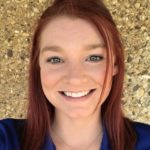
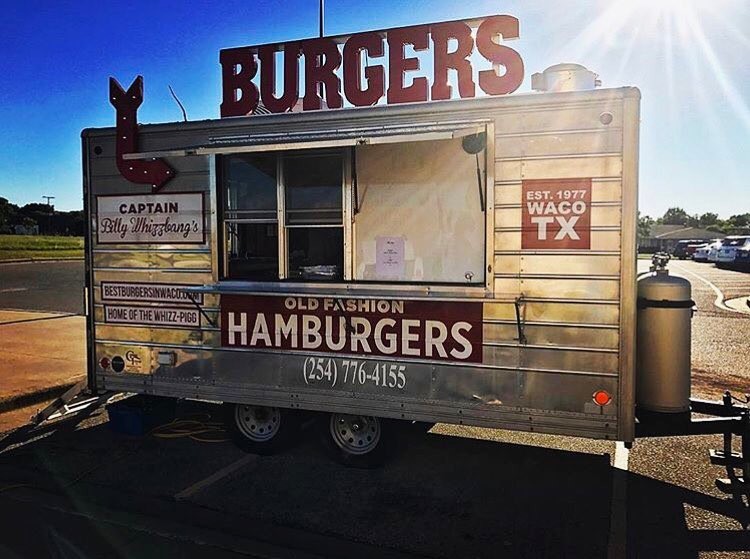
Long ago, a cross-country hot air balloon trip gone astray landed one fame-seeking, adventure-chasing Captain Billy Whizzbang in central Texas. Too ashamed of his failed attempt to return home, Capt. Billy instead invented a specially prepared hamburger and opened up Captain Billy Whizzbang’s Old Fashion All American Hamburger Stand. Or so the story goes.
In today’s post, Captain Billy Whizzbang’s honors the legacy of the famed Capt. Billy by serving up the same old-fashioned style of burgers. Owner Trent Neumann shared with us some of what’s been cooking over at his restaurant…
Can you tell me about the origin of this restaurant and how you got connected with Captain Billy Whizzbang’s?
“The business started back in 1977. A guy by the name of Mike Parton started it a long time ago. It went through a couple different owners’ hands, and I bought it in July of 2009.
“The guys who owned it before me were friends of mine and they were looking to sell it. It was actually me and my dad who went in and bought it. And then about a year and a half later, I bought my dad out of it.”
What changes have you made since you took over?
“We cleaned it up a bit but we kept the same kind of tradition. Captain Billy Whizzbang’s has been around a long time, so there’s a lot of good things that were already going on. We kept with the same old-school way of doing stuff, buying everything fresh and as much local as we can.
“For example, we buy all of our meat every day from the local meat market here in town. I call first thing in the morning, like 7 o’clock every morning, and tell them how much meat we need. They deliver that fresh every day, and then we take that meat, mix in our seasonings, and then hand patty every patty.”
What makes Captain Billy Whizzbang’s stand out from other restaurants?

“That’s the main thing that makes us, in my opinion, so much better – the freshness of everything that we do and then the attention to detail that we have. Everything we make is to order. We don’t pre-cook anything. We don’t hold anything in warmers. We don’t do any of that kind of stuff. As soon as people walk in and place their order, we make it exactly how they want it and fresh every time.
“We also have something on our menu called our Whizz-Pigg hamburger, which is a half ground bacon, half ground beef patty. It’s been one of our favorites for the about last four years.
“That’s actually the burger that was featured when the TV show, The Texas Bucket List, came in and did a special on us. That was in March of 2017.
“Then a couple months later, toward the end of their season, I got another call. They feature a burger restaurant every episode, so at the end of the season they do a special on their top five burgers of the season. They picked ours as their number one, so that was really good for us.”
Do you have any other highlights or favorite parts of running the business?
“Seeing how much we’ve grown is one thing. We went from doing anywhere from 75 to 100 hamburgers a day to now we’re making around 300 to 350 hamburgers a day. It’s pretty fun to see that kind of growth.
“Also, adding our food trucks was a big deal. We have two food trucks right now. One of them is at the Silos every day. And then the other one we use for a lot of catering and to go out to special events and different festivals.”
Are there any customer interactions that stand out to you?
“I can’t think of any individual, but we definitely have a pretty loyal following here in Waco. I would say that probably 60 or 70 percent of our customers eat here at least once or twice a week. We even have one guy who comes in almost every single day to get food. So, we have a close relationship with a lot of our customers, and to see that is pretty neat.”
What do you love most about the Waco community?
“Oh, Waco is just awesome. I mean the local people are great. They tend to really support local businesses. As many other restaurants – and especially bigger chain hamburger restaurants – as have come into our area, we have never seen it affect our business at all.
“If anything, we’ve grown at a steady pace. That alone shows that the local community really supports us, and they really support local businesses in general, which is pretty awesome. Anything that we can do to give back and to help support Waco, we try to do.”
Well, Waco, you’ve earned yourself a shout out for supporting local! Keep up the good work with the help of Towny – your free online guide to shopping local. (PS – Want it on the go? There’s an app for that!)
Tori Freeman is a Colorado native turned Texan and a graduate of Baylor University. She works as a part-time paralegal and creative freelancer with expertise spanning writing, editing, and photography. Tori knows firsthand how local businesses can change lives—she met her husband, Braden, while working at the Hippodrome! They now happily live in Waco with their spoiled golden-doodle and their even more spoiled baby boy.
The Act Locally Waco blog publishes posts with a connection to these aspirations for Waco. If you are interested in writing for the Act Locally Waco Blog, please email [email protected] for more information.
By Jessica Attas
As we wrap up the year and look to the year ahead, the Texas 86th Legislative Session looms large on the horizon and front of mind.
As the organization dedicated to the economic well-being of the area, we at the Chamber seek to actively promote policies that are conducive to growing a thriving economy and community. Our ability to help develop the economy- and your ability to help your business flourish- is impacted by state and federal policies and the regulatory environment in which we operate. For that reason, your Chamber of Commerce is active in the public policy sphere, advocating for businesses to our legislators on issues of importance to our community.
Prior to every state legislative session, we go through a process to seek input from our members on their policy priorities, and with our public policy committee together with other community stakeholders, listening to the conversations being held around the state about coming policy debates, develop a relevant legislative platform to inform and guide our advocacy work in the session and the interim that follows.
The past few months have held a great deal of conversations at the state and local levels related to property tax, school finance and workforce development. Indeed, the growth of property tax and the quality and future of our workforce are both directly related to school funding, and are in fact consistently the top concerns we hear from business members.
The manner in which schools are currently funded is too heavily reliant on local property tax dollars. As economic growth occurs and values rise, the state uses the increased local contributions to themselves pay less in per-pupil spending. The state’s budget plans on (and some might say mandates) that, and calls for increased property tax valuations ranging from 6-7% annually for each of the next two years. This allows the state to pay less, by shifting the cost down to local taxpayers. Where the state used to pay for the majority of per-pupil costs to educate our children, it has now fallen to 37% of the cost being paid by the state and the balance by local property tax payers. Without reform to the way we fund our schools, that will drop to just 30% by 2023. At a time when Texas already has the 46th highest property tax burden of all fifty states, this will inevitably mean millions more dollars that will have to be collected locally in order to offset the loss of state dollars. Every property owner can expect their local property tax bill to increase if no changes to the way we fund our schools are made.
The question of how we fund our schools also ties in with whether they are adequately funded. While money isn’t the only determining factor, it is a factor. Money matters in education, and money well-spent can allow our schools to produce the student outcomes we need. Recognizing our currents skills gap and that our student outcomes are not aligned with what our businesses need, Governor Abbott called on three key agencies- the Texas Workforce Commission, Texas Higher Ed Coordinating Board, and the Texas Education Agency- to work together on a shared vision for the workforce our state will need if we are to keep our economic strength. That vision is called 60x30Texas, and aims to see 60% of Texans aged 25-34 hold post-secondary degrees or higher by the year 2030. This is a data-driven goal; by just 2020, more than 60% of jobs created will require some sort of post-secondary degree. The current reality provides a stark contrast. At present, just over 30% of graduating students in Texas test on the ACT or other college or career readiness measures as “college-ready,” and less than 30% of high school graduates have completed any post-secondary degree six years after graduating. The implications for our future workforce- and our ability to sustain and grow our economy- if we do not act, are grave.
For these reasons, key priorities as we move into the legislative session are addressing property tax reform; opposing increases in local appraisal growth mandated by state budget planning; and increasing the state’s share of per pupil spending on public education, focusing those dollars on the strategies proven to improve student outcomes in order to build a 21st century workforce. Further, the process of appraisal valuation needs reform, and we call on improvements to include local input on valuation ranges. At present, the state sets target valuation ranges based on a sample of properties, and each appraisal district has to come near that target. Aligned with our overarching support of local control, a priority is local input on those target ranges.
Because there has been significant conversation at the state level around these interwoven issues of property tax and school finance, they are key priorities for our Chamber. However, as the organization responsible for the economic development of the area, we also have state legislative priorities regarding competitive incentives, small business and entrepreneurship, and trade and international competitiveness. We continue to support the Texas Enterprise Fund- the state’s deal-closing incentive fund- and call on the legislature to expand accessibility to the fund for existing businesses of all sizes throughout the state.
Of course, your Chamber of Commerce is a membership-driven chamber, and there are issues across the board that impact your ability to develop and grow your business. As an example, given this issue is focused on healthcare, we know access to a healthy workforce impacts day-to-day business operations. However, access to healthcare in Texas is limited, and in fact, Texas has a rate of uninsured more than twice the national average (26% compared to 11%). Further, Texas is also experiencing both a physician and a nursing shortage. Half of Texas counties do not have sufficient physicians for their population and thirty-five counties have not a single physician. For that reason, legislative priorities focused on healthcare include things like expanding access to healthcare coverage; prioritizing preventative and behavioral healthcare; supporting robust nursing programs and allowing those nurses to practice within the scope of their expertise; and given that doctors are most likely to work where they do their residency, prioritizing additional medical residency slot funding over new medical school funding.
Our legislative agenda is robust yet focused, prioritizing those topics of greatest impact to our businesses: business climate (including fiscal policy and regulatory reform); economic development; public and higher education; healthcare; transportation and infrastructure; and water and natural resources. To see our full state legislative agenda for the 86th session, please visit our website or reach out via email to [email protected]. If you become aware of a bill during session that would impact your business or your industry, please let us know. It is our charge to be the voice for the business community of Waco in Austin; we look forward to working and standing with you for the good of our community in the months of legislative action ahead.
Jessica Attas is the vice-president of public policy for the Greater Waco Chamber of Commerce. She works with key state and federal elected and appointed officials to advocate on key issues of community and economic development. Attas loves thinking about solutions for big challenges, and when her schedule allows, enjoys serving as a professor in the Baylor Interdisciplinary Core Honors College. Attas has two sons and a pup who keep her busy during “down time.”