(Press Release) An orangutan, a duck, a mammoth and a bear — the 2020 Act Locally Waco T-shirt shows off the wild side of Waco! Designed by local artist Hanna Braud, the shirts are on sale now! Order yours today and proudly show the world you are “Wild about Waco!”

Here are some fun facts about the animals on the shirt:
Razak – Razak is the youngest member of Cameron Park Zoo’s group of Bornean orangutans. He was born January 12, 2017 in Waco, Texas. He shares the orangutan habitat with his parents, Mei and Kerajaan (KJ); his aunt, Kutai; and Mukah, the other adult male orangutan at Cameron Park Zoo. You can see a statue of Razak and his Aunt Kutai at the University Parks entrance to Cameron Park Zoo. The name “Razak” means “protector.”
Wise Elephant – The Bubble blowing elephant on the top of the bridge is our nod to “Wise Elephant” one of the sculptures in the Waco Sculpture zoo. The sculpture zoo is a collection of 28 animal-based artworks along the Brazos River trail between downtown Waco and the Pecan Bottoms entrance to Cameron Park Zoo. (Find out more at the Creative Waco website.) Wise Elephant was created by artist Trevor O’Tool. It is a humorous take off on the famous Rodin sculpture “The Thinker.” Wise Elephant is life-sized, so you can sit beside him and see how big you are compared to an elephant!
Waco Mammoth – The Waco Mammoth National Monument preserves the nation’s first and only discovery of a nursery herd of Columbian mammoths. Columbian mammoths were up to 14 feet tall and weighed as much as 20,000 pounds. More than twenty-four Columbian mammoths have been found at Waco Mammoth National Monument…and counting! The Waco mammoth fossils are organized by letters of the alphabet. Staff fondly refer to Mammoth “Q” as Quincy and Mammoth “W” as Wanda.
Baylor Bear – Baylor has had a live bear mascot since 1918. The first bear, Ted, was donated to Baylor by the 107th Engineers of the Army’s 32nd Division. They were stationed at Camp MacArthur in Waco during WWI. The bears live in a special bear habitat on Baylor campus which is currently licensed by the USDA as a Class C Zoo. Since 1974, all of the bears have been named “Judge” in honor of Judge R.E.B. Baylor and Judge Abner McCAll who was president of Baylor from 1961 – 1981. The current bears are Judge Joy and Judge Lady. They are named after the wives of two former Baylor presidents. Judge Joy and Judge Lady are biological sisters and have lived at Baylor since they were cubs.
Ducks & Heron – The ducks and the blue heron represent some of the abundant wildlife, especially birds, in the Waco area. The Great Blue Heron is a huge bird with a wingspan of 5 1/2 to 6 1/2 feet! They are frequent visitors to the Brazos River and the Lake Waco Wetlands. It’s also fun to see how many different kinds of ducks come to swim on the Brazos River. Some you may see are the Black-bellied Whistling Duck, the Mallard, and the Pied-billed Grebe.

By Kelly Palmer
Affordable housing, economic development, and COVID-19 are three of the most pressing issues our District IV City Councilmember must prioritize. More than ever, we need trustworthy leaders who listen to their constituents’ needs and are well equipped to address the complex issues our city faces.
Issue 1: Affordable Housing
The rising cost of housing in our community is one of the concerns I have heard repeatedly voiced by District IV residents. Since 2015, the cost of property taxes and housing in Waco has skyrocketed while wages have mostly stayed stagnate. Nearly half of our city’s residents are “housing burdened” and spend more than 30% of their monthly income on housing. As housing costs continue to surge, folks have to move further and further from the city’s core, where many of Waco’s highest paying jobs are located. Housing is an issue where we see poverty and race significantly intersect, in everything from disproportionate homeownership rates to redlining in communities of color.
While there are several ways to address housing-related issues, I believe we will not see meaningful change enacted until housing is a priority in our city’s budget — which ultimately reflects the city’s values. In reviewing the city of Waco’s budget from the past three fiscal years, I was surprised to learn that housing and community development are consistently the least funded budget category. Year after year, housing has made up only 1% of the city’s annual budget. By allocating greater resources to housing, we can invest in solutions that will help alleviate this significant area of need in our community. If elected to the council, I would advocate for both for the development of mixed-income housing, which the data suggests can significantly benefit both communities and residents, in addition to pursuing policies that prevent gentrification and displacement of families from generational homes.
Issue 2: Equitable Development
Waco has experienced a significant economic boom over the past several years, and yet, 44% of District IV residents make under $25,000 a year. While Waco’s growth has undoubtedly benefited some segments of our community, many of our neighbors have not shared in the prosperity or growth. As the city continues to expand in the coming years, the development we pursue must be sustainable and rooted in equity.
Equitable Development is a framework that encompasses economic and community development goals, in which community members are actively engaged in the decision-making process. If elected, I would pursue economic development initiatives that seek to improve the quality of life for all Wacoans, focusing particularly on our residents experiencing financial insecurity. One way I will do this is by championing jobs that provide our residents with a living wage and supporting our local workforce development programs. Through my work with Communities In Schools, I have seen firsthand the impact that workforce development programming can have on someone’s life by equipping them with an employable skill set that opens the door to financial security.
I look forward to reinforcing partnerships like this within our city, bringing together schools, non-profit organizations, and businesses to train our residents with the specialized skill sets needed to access high paying jobs available within the Greater Waco area.
Issue 3: COVID-19 Management & Recovery
COVID-19 continues to pose a real threat to the security and wellbeing of our community. While the virus has had broad sweeping adverse effects on all of our residents, it has significantly hit our communities of color. Our Black and Latinx populations have been disproportionately affected by COVID-19, as evidenced by the positivity and morbidity rates among these demographic groups. Addressing racial disparity as it relates to the novel-coronavirus is an issue of critical importance.
While there are no quick fixes or easy answers, our city council members must continue to provide thoughtful leadership throughout the duration of this crisis. Getting up-to-date, accurate information to our residents will continue to be an important area of focus. Finding ways to access hard-to-reach populations and populations at heightened risk of contracting the virus is also vital. We need city leaders who can strategically mitigate and respond to the wide range of effects COVID-19 has on our community. Even after a vaccine has been created and widely distributed, we will likely face the virus’s ramifications for months, if not years to come. As a city, we must be thoughtful as we develop plans for the long-term multi-tiered recovery we will need.
I commend Mayor Deaver, Judge Felton, and our extensive network of local healthcare providers for the decisive actions taken since March to flatten the curve and minimize the transmission of COVID-19 in our community. The road ahead of us is long, but we can weather the storms of this virus together. My experience working on the frontlines of a humanitarian aid crisis in 2015 and 2016 has equipped me with the skills needed to effectively prioritize competing values and lead during times of collective crisis.
2020 has been a challenging year, but there is hope for a brighter tomorrow. Our community is resilient and resourceful; we will get through this together. Collectively we can build a healthy future for all Wacoans – one where our neighbors have access to needed resources, our local economy is strong, and our community thrives. As a social worker and educator, I have the tools and expertise necessary to get us there. I have been on the frontlines, showing up for our community for years, and I’m ready to serve District IV residents as their next city councilwoman.
Biographical information for Kelly Palmer
Kelly Palmer is a licensed social worker and educator running for Waco City Council, District IV. She has called Waco home since 2013, when she moved to here to pursue her Masters in Social Work for Baylor University. Kelly is running for public office to further serve the community she loves by promoting greater equity and justice through public policy and city funding. Kelly’s campaign priorities are housing, COVID-19 leadership, and economic development with a focus on impacting our most financially insecure neighbors. When she’s not working, you can usually find Kelly volunteering with a local non-profit, on a walk with her husband, or nose deep in a book from the library.
(City council, school board, planning commission, county commissioners – these groups and several others represent us. They do the day to day work of running our community. It is our responsibility to keep informed about their work so that we can help them represent us effectively. “Civic Insights” by Jeffrey Vitarius is a regular feature of Act Locally Waco. Its purpose is to help us understand decisions that shape our community so that we can participate effectively as informed, engaged residents of Waco. – ALW)
By Jeffrey Vitarius
Two weeks ago we tackled breaking down a sentence about the City Council’s Community Development Block Grant (CDBG) public hearing. During the course of the City Council’s review of that item, Council Member Sabio raised a question regarding this map of CDBG eligible areas:
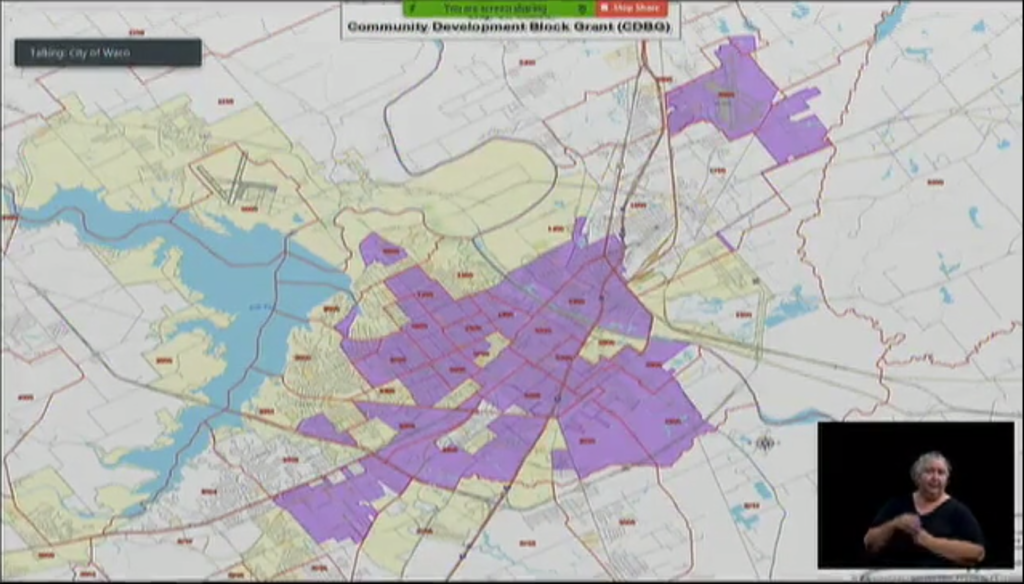
It was noted at the meeting that the borders included above come from the federal government and are based on census information. I thought it might be interesting to find out the how and why behind this map. Let’s jump right in.
The CDBG program was created by the Housing and Community Development Act of 1974 (HCDA). Section 104(b)(3) of the act identifies the three “national objectives” of the program:
- Benefiting low- and moderate-income persons,
- Preventing or eliminating blight, or
- Meeting an urgent need (this one is a little complicated)
CDBG funding has to go towards achieving one of these objectives.
As noted in the Department of Housing and Urban Development (HUD)’s Guide to National Objectives and Eligible Activities for CDBG Entitlement Communities benefiting low- and moderate income persons “is usually spoken of as the most important national objective of the CDBG program because of the related requirement that the vast majority of CDBG expenditures must be for activities that meet this objective.” Translation, most programs are directed towards the benefiting low- and moderate-income persons objective. Also, as an FYI, entitlement communities are local governments that develop CDBG programs and receive funding to implement them (like the City of Waco).
The question then becomes how does an “entitlement community” establish that a particular program or project is benefiting low- and moderate-income persons. HUD has outlined four different ways to meet this goal. A program can simply serve a limited clientele. If a particular program only or mostly provides services to low- and moderate-income folks, then it can easily be said to be fulfilling the national objective.
But what if a program or project doesn’t serve specific people? What is the “clientele” of a park? This is where the “area benefit” criteria comes into play. For this method the “entitlement community” identifies the service area of a program or project. If most of the residents (defined as 51%) in that service area have a low- or moderate-income the project can be considered to fulfill the national objective.
This possibility opens up a host of other questions. What income level makes a resident a low- or moderate-income? How do you determine a service area? What data can be used to determine if an area has low- or moderate-income residents? We’ll tackle each of these questions in more detail below. But first let’s take one quick sidestep to the remaining two criteria. Housing development and job creation programs are unique enough to warrant their own criteria. We do not have the space this week to delve into those criteria, but it’s worthwhile to know they are out there.
Back to our questions.
What income level makes a resident a low- or moderate-income?
Section 102 of the HCDA defines low- or moderate-income as 80% of the median income in the area. So first you determine an area’s “median family income.” This is the income you would find at the exact middle of Waco’s income distribution (for the math folks, we are looking at median here rather than mean or average). If you put all the family incomes from Waco in order it would be the one at the middle of your list. HUD identifies this as $65,700 in Waco. 80% of that number is approximately $52,550. Once you scale this for family size (larger families have a higher income threshold), you can determine if any given resident is low- or moderate-income. More details on these thresholds can be found at this useful tool put together by HUD.
How do you determine a service area?
Service area is the kind of idea that makes a lot of sense in theory and is really hard to define in practice. If you think back to our park example, you can probably imagine what the area served by that park might be, but if you had to sit down and draw it out on a street grid, it would get difficult fast. How far away is walking distance? Do we consider residents who can drive? Do busy streets separate “service areas” from one another?
As a result of this complexity HUD has placed the responsibility of determining service areas on “entitlement communities.” The guide I noted above states that “HUD will generally accept a grantee’s determination unless the nature of the activity or its location raises serious doubts about the area
claimed by the grantee.” Basically, as long as the service area doesn’t “look fishy” HUD will likely accept it as reasonable.
The range of what is or isn’t reasonable is very broad here. Based on the information in the City’s consolidated and annual plans (see this previous post for more info on what those plans are) it looks like Waco focuses on “block groups.” These are the smallest geographic units used by the census. You can think of them as literal groups of city blocks. According to the census, block groups typically have between 3,000 and 6,000 residents. The map at the beginning of this post breaks down Waco into these “block groups.”
What data can be used to determine if an area has low- or moderate-income residents?
So thinking of a “typical” block group of 5,000 residents. We now know that it is considered a low- or-moderate income service area if 2,550 (51%) of those residents reside in families (the distinction between families and households is interesting, but complicated and out of our reach here) that make less than 80% of median income for Waco. So how do we actually know if that is the case?
There are two ways HUD has endorsed for a community to accomplish this. The first is to use HUD’s own data (the Low Moderate Income Survey Data [LMISD]). The second is to conduct their own survey of residents following certain HUD guidance and minimum standards. Waco uses HUD’s data. That data can be found using this GIS application provided by HUD. On that application you can draw out service areas or just take a look at block groups and see which ones clear the 51% threshold (HUD provides a useful video introduction to the application here).
If we look at Waco’s consolidated five-year plan we find a section focused on geographic distribution (AP-50). In that section the city notes:
The City allocates infrastructure and facility improvements (not related to special needs populations [remember our limited clientele option]) within the CDBG Target Areas — those census block groups with 51% or more low to moderate-income residents.
This brings us back to the map at the top. There we find all of the block groups in Waco where at least 51% of the residents make less than 80% of Waco’s median income. These areas are the focus of much of Waco’s CDBG funding. Over time, as income levels move and data changes, this map will change too.

Jeffrey Vitarius has been actively local since early 2017. He lives in Sanger Heights with partner (JD) and his son (Callahan). He helped found Waco Pride Network and now serves as that organization’s treasurer and Pride Planning Chair. Jeffrey works at City Center Waco where he helps keep Downtown Waco clean, safe, and vibrant. He is a member of St. Alban’s Episcopal Church and graduated from Baylor in 2011.
The Act Locally Waco blog publishes posts with a connection to these aspirations for Waco. If you are interested in writing for the Act Locally Waco Blog, please email [email protected]for more information.
Press release – The City of Waco has contracted with Prosper Waco to administer the Homeless Management Information System (HMIS), which is the federally funded program to track homeless populations and to understand their needs.
Prosper Waco will provide data management and a reporting system for participating providers serving Greater Waco’s homeless and low-income population with a variety of services.
“We are proud to begin this new responsibility to provide data coordination for the City of Waco,” said Suzii Paynter March, CEO of Prosper Waco. “We have experience and expertise in handling data but do not provide direct social services.”
“Prosper Waco is a data driven organization and is equipped to oversee the HMIS administrator position. We are confident in the work they have provided within the community and excited to partner with them to assist in data collection for the City of Waco, “said Raynesha Hudnell, Community Services Interim Director.
The Heart of Texas Homeless Coalition uses HMIS to coordinate data upon entry into services, track services provided to people who are experiencing housing instability. This includes people who are “couch surfing,” need rental assistance, live in a shelter, or have no shelter.
Prosper Waco’s Sammy Salazar, community data specialist and HMIS administrator, will manage the day-to-day operations of HMIS. Contact Salazar at [email protected] for technical assistance related to HMIS.
One aspect of the Homeless Coalition’s work is the annual Point-in-Time (PIT) count. The 2020 figures revealed 234 people in Waco with housing instability. Prosper Waco will support the PIT count by the coalition and its partners in January.
Homeless services through a variety of providers are funded by private donations, foundations, and the U.S Department of Housing and Urban Development. The local continuum of care consists of six counties (Bosque, Hill, Falls, Freestone, Limestone, and McLennan).
Press Release – A new voucher program, Biz Bucks, will launch at 8am on Thursday, October 1 as part of the “All in for Downtown Waco” campaign put in place to help support local Waco businesses. The Biz Bucks program aims to boost shopping in historic areas around Waco and was created to help local small businesses who are suffering from the economic impact of COVID-19.
Biz Bucks vouchers can be purchased for $5 each and redeemed for a $10 purchase at participating downtown, uptown, East Waco and La Salle destinations. There will be a total of 3,000 vouchers sold which will be redeemable through November 15.
Community partners including the Greater Waco Chamber of Commerce, City of Waco, Downtown Public Improvement District, City Center Waco, Cen-Tex African American Chamber of Commerce, Cen-Tex Hispanic Chamber of Commerce and Startup Waco are working to promote the initiative through their marketing channels and will be encouraging qualifying businesses to participate in the program.
“The goal of the Biz Bucks voucher program is to provide a way for Wacoans to support local businesses in a meaningful and tangible manner,” said Kris Collins, senior vice president – economic development for the Greater Waco Chamber. “We are honored to partner with other local organizations and help support local businesses that are the heart of our community.” Biz Bucks vouchers can be purchased exclusively online at AllinforDowntownWaco.com.
Purchased vouchers will be mailed or can be picked up from the Greater Waco Chamber, located at 101 S. 3rd St. The cost difference between the $5 voucher and the $10 redemption value will be made up by underwriting partners. Participating businesses will receive reimbursement once collected Biz Bucks vouchers are submitted. Small, locally owned business merchants located in downtown, uptown, East Waco and La Salle areas are invited to participate by visiting AllinforDowntownWaco.com to fill out the application.
“We knew that we wanted to create a program that would provide fast and tangible relief to local merchants that are suffering,” said Collins. “In these rapidly changing times we wanted to develop a way for locals to show support and investment in Waco merchants that benefitted both the merchant and locals. For locals, the ability to purchase a $10 voucher for the price of $5 gives them a cost-savings opportunity. And, for participating businesses the vouchers drive locals into their stores and provide revenues immediately for merchants.”
As the impact of COVID-19 continues to impact local businesses, this Biz Bucks voucher program is hoped to help business owners drive direct local spending to merchants as well as provide a multiplier effect from consumer spending. Increasing local consumer spending is a primary focus of the Biz Bucks voucher program. Not only will it help build a community among Waco locals and Downtown Waco merchants, but will also provide immediate positive effects and build long-term relationships. To guard against fraud, each voucher comes with its own unique serial number and security features. Up to five Biz Bucks vouchers can be redeemed per customer per visit.
“There has never been a better time than now to support Local Businesses and the All in for Downtown program adds even more reasons to visit our Downtown, Uptown, East Waco, and La Salle merchants. Buy your Biz Bucks and you will immediately provide financial support to participating merchants and as a bonus you will get a great discount too,” said Alfred Solano, president/CEO for the Cen-Tex Hispanic Chamber of Commerce.
For questions about Biz Bucks voucher program, visit AllinforDowntownWaco.com or email [email protected].
By Cuevas Peacock (First published by the Baylor University Office of External Affairs)
The Waco Culture Guide highlights the districts, affinity groups, businesses, history, and more of Waco’s communities of color. The vastness of Waco’s Cultural Wealth is often missed by those new to the city. This is especially true for the faculty, staff, and students of color who make Waco home during their time at Baylor. With the Waco Culture Guide, we hope to provide a snapshot of the diversity present throughout Waco to the Baylor community and all who view it. By shining light on the opportunities to engage in Waco’s affinity groups geared towards growing leaders of color, we hope to support the pipeline of diverse leadership within our city for generations to come. By listing the churches and restaurants of color, we hope to aid you in your attempt to be both physically and spiritually fed in an inclusive setting. By telling the stories of our city’s cultural landmarks, we hope to connect you to our past pillars, strengthening your foundation for the positive future you will create.
The Cultural Wealth of Waco is strong, thriving, and has been a pleasure to highlight through the Waco Cultural Guide. Compiling the resource was a fun, collaborative process where we collected information about our community from a wide variety of listed individuals and organizations into a shared space for all to experience. Additionally, we reached out to several longtime Wacoans for what we called a tone check, ensuring that the content was both culturally appropriate and as exhaustive as possible. However, it is a process that is incomplete. There are still stories that have gone uncaptured, cultural landmarks that have gone unhighlighted, and people that have gone unrecognized. Through the publication’s release, we are both elated on what we included and reminded of what we missed. Knowing of the many things we failed to capture, we encourage viewers of the culture guide to be intentional in building a connection with Waco’s communities of color to truly experience the city’s culture.
To capture the fullness of Waco’s Cultural Wealth, we must all commit to engaging every part of our city or risk missing the multitude of contributions made by our communities of color, that make Waco great. The Waco Culture Guide is one of many attempts to do this work. We welcome all thoughts and additions to enhance the Waco Culture Guide so that it is more representative of the Cultural Wealth present in our community, and ask that any inquiries be sent to [email protected]. The Waco Culture Guide can be viewed virtually at baylor.edu/waco/cultureguide, where we also encourage you to explore the page to learn more about the work happening within Baylor’s Solid Gold Neighbor initiative.

Cuevas Peacock is a community builder with dreams of becoming a poet, for he was once told that they are life’s last true teachers. Hailing from Port Arthur Texas, the only place where oil and water mixes, Cuevas serves as the Assistant Director of Community Relations-Cultural Wealth at Baylor University. Through this role he is able to serve and support the university’s Solid Gold Neighbor Initiative which seeks to further the impact of the university in Waco through various community engagement efforts.
The Act Locally Waco blog publishes posts with a connection to these aspirations for Waco. If you are interested in writing for the Act Locally Waco Blog, please email [email protected]for more information.
By Stephen Carter
With election day on November 3 approaching, the subject of voting by mail due to concerns for COVID-19 has been notable in public discourse. What is required of local voters who want to vote by mail, known as voting by absentee ballot? How is McLennan County ensuring that the vote by mail process this year is accessible and easy to understand? What is the local government doing to ensure that ballots are requested and sent out on time, and are properly returned?
Who is eligible to vote by mail?
Texas is one of five states at this time which has not expanded vote by mail to all voters. Registered voters seeking to vote by mail must have one of the following qualifications: age 65 or older, have a disability, be confined to jail, not be in the county during early voting and on election day.
Texas election code states that “A qualified voter is eligible for early voting by mail if the voter has a sickness or physical condition that prevents the voter from appearing at the polling place on election day without a likelihood of needing personal assistance or of injuring the voter’s health. Expected or likely confinement for childbirth on election day is sufficient cause to entitle a voter to vote.”
However, the Texas Supreme Court has ruled that lack of immunity to COVID-19 does not qualify as a disability. The law is otherwise vague on what constitutes a disability, which allows anyone who claims a disability to qualify. Voters with a disability are not required to provide proof of their disability and need only to fully complete the absentee ballot application.
Important Dates
The final day to register to vote is October 5. Voter registration cards can be submitted in person at the county Elections office or mailed but must be postmarked no later than the 5th.
Requests for an absentee ballot must be received by 5:00 pm October 23. The ballot must be returned or postmarked no later than November 3. To ensure that a mailed application is received in time, it should be mailed several business days in advance.
Early voting has been expanded this year, however a lawsuit pending against Texas Governor Greg Abbott could potentially roll back his executive order, which was issued in July. Currently, early voting dates are set for October 13 through October 30, which extends early voting by six days. During this time voters may cast a ballot at any polling location within McLennan County. This executive order also extends the time voters have to hand-deliver their absentee ballot. Typically, voters may only mail in their ballot once early voting begins, however this year it can be delivered in person until the end of election day.
Requesting and Returning a Valid Ballot
An application to request an absentee ballot can be printed from the county website, obtained in person, or a request can be made by calling the McLennan County Elections Office to have them mail out an application. Voters wanting to use a computer to print their application at one of the Waco public libraries will need to schedule their visit in advance due to COVID-19 library guidelines. Additionally, voters can request an application through the Texas Secretary of State’s website which will then be mailed to them.
Once an application is received the Elections office can take up to a week to mail out a ballot, which does not include the time it takes for the postal service to deliver it.
Voters requesting a ballot due to being outside of the county during the election must have their ballots mailed to an address outside of the county.
Active duty members of the U.S. Armed Forces, their spouse, and dependents, or a citizen residing outside of the United State and claiming McLennan County as their legal residence who are absent from the county during the election may vote by Federal Post Card Application.
The absentee ballot application must be fully completed and signed to be considered valid. This information includes full name, address, date of birth, reason for voting by mail, and checking the box for the November Election.
Both an application and absentee ballot may be mailed through the postal service at the voter’s expense (a stamp and envelope) or can be delivered to the McLennan County Elections Office. It is possible to fax or email an application, however voters are still required to mail or deliver the form and it must be received within four business days to be considered valid.
When delivering an application or absentee ballot to the elections office, voters will be required to come inside the office and present a required form of photo ID. Only the voter may deliver their ballot. No one else is permitted to deliver their ballot for them. An ID is not required if the ballot is mailed to the Elections office. Acceptable forms of photo ID include Texas Driver License, Texas Election Identification Certificate, Texas Personal Identification Card, Texas Handgun License, United States Military Identification Card, United States Citizenship Certificate, or United States Passport.
Will absentee voting be expanded?
A lawsuit has been filed against the state to expand absentee voting eligibility to all voters, however the 5th U.S. Circuit Court of Appeals ruled against the expansion, which centered around the 26th Amendment and age discrimination. This overturned a ruling by a lower federal court in May which expanded absentee voting. The case could be heard by the Supreme Court of the United States, though it may not be until after the election.
Has McLennan County taken any extra steps this year?
McLennan County Elections Administrator Kathy Wolfe declined to comment regarding what, if any steps the county has taken this year to ensure that absentee voting is accessible and easy to understand; instead directing voters to review the information on the county website. Voters with questions about any part of the process can also call the Elections office at (254) 757-5043.
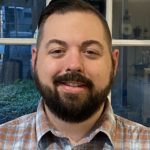
Stephen Carter is a lifelong resident of the Waco area, a graduate of TSTC, and has been an active participant in service to the community. He works in an administrative role with several non-profits, and owns a local hair & makeup business, Creative Beauty Designs, with his wife Lesley.
The Act Locally Waco blog publishes posts with a connection to these aspirations for Waco. If you are interested in writing for the Act Locally Waco Blog, please email [email protected]for more information.
By Becca Muncy
Step One: Getting Registered
Election season is fast approaching (Election Day is November 3, 2020), and there’s no better time to get educated on voting in Waco! The first step is registering to vote. In the U.S., you are eligible to register if:
- You are a United States citizen
- You are a resident of the county where you submit the application
- You are not a convicted felon (you may be eligible to vote if you have completed your sentence, probation, and parole)
- You are at least 17 years and 10 months old, and 18 years old on Election Day
- You have not been declared by a court exercising probate jurisdiction to be either totally mentally incapacitated or partially mentally incapacitated without the right to vote.
In Texas, the deadline for registering to vote is October 5, 2020. In order to register, you must fill out an application, which can be picked up at any city office, post office, city library, or at the county Elections Administrations Office (214 N 4th Street Suite 300). You can also fill out an application online here (in English) or here (in Spanish) and then print the completed application. Once you have filled out the application, mail it to the county Elections Administrator (Kathy E. Van Wolf, P.O. Box 2450, Waco, TX 76703-2450).
If you think you are registered to vote, but aren’t 100% sure, you can check your registration status here.
Double check your registration if you have moved
According to Dr. Peaches Henry with Project V.I.E.R ( Voter Information Education and Registration), sometimes people believe they are registered and discover that they are not when they attempt to vote. The most common reasons for this misunderstanding is that a person has moved and believes that the postal service will forward her voter registration card when, in fact, the card will be returned to the Elections Office. Another reason a voter might not be registered is that she might be on suspense (see explanation below). Any voter concerned that she might not be registered should simply complete a voter registration card and get it to the Elections Office by Monday, October 5, 2020 at 5PM. The card must be in the office not postmarked by the deadline.
Suspense means that the registrar is not certain of your residential address. If the registrar has reason to believe that a voter’s current residence is different from that indicated on the registration records, then the registrar shall deliver to the voter a written confirmation notice requesting confirmation of the voter’s current residence. When a Notice of Address Confirmation is sent, the voter automatically is put on suspense. As a common practice, a Notice of Address Confirmation is sent (and an individual is placed on suspense) when:
- The voter’s registration certificate has been returned as non-deliverable;
- A Jury Summons is returned as non-deliverable; or
- Any mailing that was sent to the voter was returned as non-deliverable.
- The voter registrar has received information indicating the voter no longer resides at the address on the voter’s record.
In-Person Voting on election day
In McLennan County, there are 34 voting centers. Any registered voter in the county can vote at any voting center. You are not required to go to the polling place that is in your precinct. You can vote at any voting center. You can find a list of voting centers here.
When you arrive at the voting center, you are required by Texas law to show an ID. Acceptable forms of ID are: a Texas driver’s license issued by the Texas Department of Public Safety (DPS), a Texas election ID certificate, a Texas personal ID card, a Texas handgun license, a US military ID with photo, or a US citizenship certificate with photograph.
Keep in mind that electronic devices, like cell phones, and any form of electioneering, such as campaign t-shirts, are not allowed in the voting center. You are allowed to bring a paper list of the people for whom you plan to vote.
Early Voting
Early voting in Waco is available to anyone who is registered in McLennan County. Early voting is available October 13 to October 30. Early voting is available on Saturdays (7 AM – 7 PM) and Sundays (1 PM – 6 PM) during the early voting period. For a list of times and locations, click here. Early voting locations include the Robinson Community Center, the Waco Multi-Purpose Community Center, First Assembly Church of God, the McLennan County Records Building, and Hewitt Public City Hall/Library. Early voters follow the same steps in the voting center as any in-person voter, so be sure to bring your ID with you, and leave your campaign T-shirt at home.
Absentee Voting
Different states have different rules about absentee voting (also known as mail-in voting). The rules in Texas limit absentee voting to a few specified groups. You can vote absentee if 1) you will be away from your county on Election Day and during the hours that early voting is conducted, 2) you are sick or disabled, 3) you are 65 years of age or older on Election Day, or 4) you are confined in jail.
To vote by mail, you first need to fill out an application for a mail-in ballot. You can fill out and print an application here or you can have an application be sent to you by filling out this request form. The last day to apply for a ballot by mail is October 23. After you apply, you’ll be sent a ballot, which you will fill out and return to your county’s elections office by Election Day.
Staying Safe While Voting In-Person
Due to Texas’s regulations on absentee voting, voting by mail due to concerns over COVID-19 is not an option for everyone; however, there are still many ways you can stay safe while exercising your right to vote.
Jared Goldsmith, Assistant Elections Administrator, wants to assure voters that voting centers are taking numerous precautions. “We are enforcing social distancing rules and encouraging all voters [to] wear a face covering while in the polling place,” says Goldsmith. “We have placed protocols to make the voting process as touchless as possible to help ensure the safety of our voter’s health.” Goldsmith also stresses the importance of voting early, when there is likely to be less of a crowd.
McLennan County is also offers curbside voting for those who are unable to enter a voting center without personal assistance or likelihood of injuring their health, and for those who are showing signs of COVID-19.
Christina Chan-Park, President of the League of Women Voters Waco, encourages voters to plan ahead in order to stay safe. This can mean voting early, or, if you vote in November, finding a voting center you can get in and out of quickly. Chan-Park recommends looking at past election results and figuring out which centers had the fewest voters. She says, “Going to a polling place that is frequented less might be faster. In the 2016 election Waco First Assembly of God on Bosque had over 1,500 people vote there. Waco High School, which is less than… 5 minutes away, only had around 300 voters. Even though the church will have more machines and workers based on past usage, it will probably not have 5 times as many as the high school.”
You can also prepare your ballot ahead of Election Day to reduce time spent in the voting center. You can find a sample ballot on the McLennan County elections website. You can fill out the sample ballot prior to arriving at your voting center and bring it with you. Then, you won’t have to take the time to make decisions while you’re in the voting booth. (Note: you will need to know your precinct number to select the correct sample ballot. Your precinct number is listed on your voter registration card or you can find it at this website. Login to get your voter information including your precinct number.)
A full list of health protocols that can be encouraged in polling places all around Texas can be read here.
College Students and Voting
College students who are not permanent residents of McLennan County have three options when it comes to voting: the first (and probably most common) is to vote absentee from Waco. Because you are away from home and in a different county, you qualify for mail-in voting in Texas (if you are an out of state student, check your state’s absentee ballot rules here).
The second option is to go home during the early voting period and vote early in your hometown, but that can be hard to do with a busy college schedule.
The third option is to register to vote in McLennan County. However, you can’t be registered in McLennan county and your home county, so you would need to determine if Waco is your primary residence over your hometown. Then you would go through the regular voter registration process and vote in person in Waco.
Voting- It’s Your Civic Duty!
You may have seen a lot more hype and conversation surrounding this year’s election, but voting in elections has always been important, and it has always mattered. Your vote matters. Voting holds our elected officials accountable, and every vote is significant, especially in close races. Voting lets you be an active, influential participant in your community, and it is a right that, historically, many people had to fight to achieve.
Chan-Park stresses the importance of voting and the impact it has on your individual community, saying, “Try to be an informed voter…. Don’t just vote in the ‘big’ elections for President and Senator. The results of ‘down ballot’ races can affect our day-to-day lives too.”
So get registered, get out there, and make your voice heard on November 3! (or before!)

Becca Muncy is an Act Locally intern from Dallas. She is studying professional writing at Baylor University and is completing her senior year.
The Act Locally Waco blog publishes posts with a connection to these aspirations for Waco. If you are interested in writing for the Act Locally Waco Blog, please email [email protected]for more information.
By Andrew Bryngelson, Caritas of Waco Volunteer Coordinator
In 2019, Caritas had over 2,400 volunteers give more than 37,700 hours of their time in our food pantry, in our Hidden Treasures thrift stores, and at various fundraising events and food drives. The support our volunteers bring us is invaluable and without them, we wouldn’t be able to serve and meet the needs of the community.
We have several dedicated volunteers who serve with us. Many come to volunteer at Caritas because of their own personal experiences.
“Thirty years ago I was homeless, but God took care of me and I like being able to give back. I like to meet the people everyday and brighten their day. When you pass out the food, it makes you realize how fortunate you are that you can come down and help.”
Hong Paskos, Caritas Volunteer
Since the start of the Covid-19 pandemic in March of 2020, Caritas of Waco has continued to see an increase in the number of families needing assistance due to job furloughs, layoffs, business closings, and cutbacks. In August of 2020, we served 10,255 individuals, an increase of 2,755 individuals from our usual monthly average of 7,500.
At the beginning of the pandemic, we limited our volunteers to protect staff, clients, and to practice social distancing. During that time we relied on volunteer service organizations like National Charity League and Young Men’s Service League. Both organizations are mothers volunteering with their children.
“The Young Men’s Service League values our partnership with Caritas for so many reasons. Our members enjoy the opportunity to serve the community directly with grocery distribution, and the clients are always so grateful, it really makes our members feel like they are helping make a difference. Caritas has taken such great steps to ensure volunteers’ health when bagging groceries or delivering food to clients in their vehicles, our members feel safe at all times while volunteering. Caritas is a philanthropy that does so much good for such a large number of people and we are so happy that we can assist them in their mission.”
Lorynn Divita, Young Men’s Service League, Vice President, Philanthropy
To meet the increased need for food and to practice social distancing, we shifted our pantry operations to a drive-thru model. The drive-thru pantry service is open Monday-Friday from 8:30-11:00 AM and 1:00-2:00 PM, with no appointment necessary. We need volunteers to assist with loading food into client vehicles. To practice social distancing, only trunks and truck beds are loaded, so volunteers do not have contact with clients. Volunteers need to be able to lift at least 50 pounds and be able to tolerate heat.
“I love to be able to help those in need and Caritas feeds so many people and helps them keep their independence.”
Cherry Boggess, Caritas Volunteer
In addition to our drive-thru pantry service, volunteers are also needed at our Hidden Treasures stores located at 3912 Bosque Boulevard and 3016 Bellmead Drive. The thrift stores sell household items, clothing, and furniture that have been donated by the community. Money made from sales help to fund Caritas of Waco. Volunteers are needed to help sort and process donated items. Volunteer hours at our Bosque location are Monday through Friday 9:00 AM-4:00 PM and on Saturdays from 10:00 AM-2:00 PM. Volunteer hours at our Bellmead location are Monday through Friday 11:00 AM-6:00 PM and on Saturdays from 10:00 AM-6:00 PM.
All volunteers are required to wear closed-toe shoes and to wear a mask the entire time they are volunteering. Volunteers also need to bring their own mask. To protect the health of our staff, clients, and volunteers, upon arrival to any of our facilities, your temperature will be taken and you will be asked if you have been exposed to anyone with the virus and if you are experiencing any symptoms. We ask that if you have been exposed to anyone with Covid-19 and/or are experiencing symptoms to please stay home and follow CDC guidelines.
To volunteer at Caritas of Waco, please submit a volunteer form on our website at http://www.caritas-waco.org/volunteer_application.aspx . For additional information on volunteer opportunities, I can be reached at [email protected] or 254-753-4593 Ext. 203.

Andrew Bryngelson graduated from Stephen F. Austin State University with a Bachelor of Business Administration degree in Marketing. He has been with Caritas for four years and has had the pleasure of serving as Volunteer Coordinator for the past two years. Andrew has a passion for helping others and he enjoys working with our volunteers to place them where they can use their time and talents to serve the community.
The Act Locally Waco blog publishes posts with a connection to these aspirations for Waco. If you are interested in writing for the Act Locally Waco Blog, please email [email protected]for more information.

(City council, school board, planning commission, county commissioners – these groups and several others represent us. They do the day to day work of running our community. It is our responsibility to keep informed about their work so that we can help them represent us effectively. “Civic Insights” by Jeffrey Vitarius is a regular feature of Act Locally Waco. Its purpose is to help us understand decisions that shape our community so that we can participate effectively as informed, engaged residents of Waco. – ALW)
By Jeffrey Vitarius
Two weeks ago, we took a broad look at impact fees as a policy. In that post, I noted that Waco is in the transition between the could part of the adoption process and the should part of the adoption process. This week, let’s dive into some of the details of the “could” work that has already been done.
The impact fee adoption process (both could and should)is governed by Local Government Code Chapter 395 – Financing Capital Improvements Required by New Development in Municipalities, Counties and Certain Other Local Governments. The local government code can be seen from a high level as “rules for cities and counties.” Different chapters of the code deal with different issues. For example Chapter 372 provides the rules around how PIDs are established and maintained, Chapter 102 deals with municipal budgets, and Chapter 309 addresses arts and entertainment districts.
Chapter 395 lays out in detail how a City or County could go about establishing impact fees. It, for example, defines capital improvements as facilities that are expected to last at least three years, are owned and operated by a “a political subdivision” (read city or county, though there are other kinds of political subdivisions. Incidentally this is also defined in Chapter 395), and are water supply, treatment, and distribution facilities; wastewater collection and treatment facilities; storm water, drainage, and flood control facilities (pipes), or roadway facilities (roads).
Chapter 395 identifies a six-part process in adopting impact fees (more details on these steps below):
- Establish an Advisory Committee
- Develop a Capital Improvements Plan
- Hold a Public Hearing on Land Use Assumptions and Capital Improvements Plan and Potentially Approve these Items
- Calculate Maximum Impact Fee Per Service Unit
- Hold a Public Hearing on Impact Fees
- Potentially Approve Adoption of Impact Fees
Right now Waco is between steps four and five. Step five is scheduled with a public hearing on October 6th and based on Chapter 395 step six would have to occur within thirty days of that public hearing. Let’s take a look at each of the steps that have already occurred in a little more detail.
1. Establish an Advisory Committee
Chapter 395 requires that the “governing body of the political subdivision” (in this case the City Council of Waco) establish a committee to weigh in throughout the impact fee adoption process. The code makes it clear that this committee needs to include at least one voice from the real estate, development, or building industries to speak into the impact fee process. These are the industries most likely to bear the cost of an impact fee. The code also tasks this committee with providing advice on the adoption of land use assumptions, file written comments on the capital improvements plan (more on that below), and reviewing the progress of the capital improvements plan over time.
The City Council created such a committee on July 16th 2019 and it held its first meeting on July 23rd, 2019. Since that time it has met regularly to review and provide input to this process.
2. Develop a Capital Improvements Plan
The development of the Capital Improvements Plan is likely the most complicated part of the entire impact fee process. If you remember back to the post two weeks ago, I used the simple example of a new set of homes on what used to be a farm. Under those conditions it is easy to trace certain infrastructure improvements to that specific development. However, in reality, the city needs to be able to project (theoretically) all of the developments that are going to take place over the next ten years andthe capital improvements that go along with those developments. That difficult projection work (which we will take a closer look at another time) is compiled into a Capital Improvements Plan. For right now we will just take a summary view.
From a high level you can think through the process of developing this plan in the following way. First, you need to make some assumptions about land use. You need to know how it is anticipated that land not currently developed will be used if developed. There is a big difference between a farm turning into the Central Texas Marketplace and the same farm becoming a set of one-story single-family homes. These assumptions are so critical to the process that they are explicitly listed as being part of the Capital Improvements Plan public hearing.
Once you identify how land is likely to be used, you can work on projecting how much different parts of town will grow. You combine the amount of growth and the land use assumptions together to figure out what kind of growth will occur (once again the Central Texas Marketplace and single-family suburbs are very different). Knowing what kind of growth is projected to occur, lets you know how much increased demand for water, wastewater, and roadways there will be.
Next, you compare projected need against the capacity of the current system to see what projects will be needed by the anticipated demand. Where will you need to increase the size of a pipe or lay down a new road? Finally, you establish projected budgets for the needed projects. The result (of this and some additional analysis noted below) is a two-hundred and thirty-four page study. In Waco, this work was conducted by Freese and Nichols, Inc with input from the advisory committee and various City Departments. Once this analysis is complete it is ready to be reviewed by the public and potentially approved by City Council.
3. Hold a Public Hearing on Land Use Assumptions and Capital Improvements Plan and Potentially Approve these Items
The City held a public hearing on the Land Use Assumptions and Capital Improvements Plan on March 17th, 2020. At that time there were no public comments. The City Council passed RES-2020-237 approving the Land Use Assumptions and Capital Improvements Plan at its next regular meeting on April 7th, 2020.
4. Calculate Maximum Impact Fee Per Service Unit
Once the Land Use Assumptions and Capital Improvements Plan are approved a calculation can be done that (in the broadest sense) divides the cost of the capital improvements needed by the number of new “service units” (think individual houses) generated by new developments. The result is the maximum impact fee that can be imposed per service unit. There are some details regarding this analysis that we won’t get into this week, but this provides a high-level overview. This analysis is also included in the lengthy study linked to above.
This calculation was presented to City Council on August 18th, 2020. At that time the council discussed the process. Concerns were expressed on both sides of the policy (that implementation might discourage development or that not implementing would burden resident taxpayers with the cost of these improvements). It was noted that peer cities had implemented impact fees.
That gets us caught up with the process so far. I hope to be back to with a more detailed look at that Freese and Nichols study around the time of the public hearing on the subject.
Meeting Basics – Waco Capital Improvements Advisory Committee – 09/23/20
- Regular Meeting – 12:00 pm
- For the full agenda click here
Jeffrey Vitarius has been actively local since early 2017. He lives in Sanger Heights with partner (JD) and his son (Callahan). He helped found Waco Pride Network and now serves as that organization’s treasurer and Pride Planning Chair. Jeffrey works at City Center Waco where he helps keep Downtown Waco clean, safe, and vibrant. He is a member of St. Alban’s Episcopal Church and graduated from Baylor in 2011.
The Act Locally Waco blog publishes posts with a connection to these aspirations for Waco. If you are interested in writing for the Act Locally Waco Blog, please email [email protected]for more information.