By City of Waco Public Information
CITY OPERATING WITH ESSENTIAL PERSONNEL THROUGH WEDNESDAY
Citizens are encouraged to please stay off the roads, conserve energy and be safe! Protect your family (pets included), pipes and plants.
CLOSURES
The following City facilities and operations will be closed through Wednesday, February 17th. We’ll update with changes as soon as they are made available.
Cameron Park Zoo, Cottonwood Creek Golf Course, the Texas Ranger Hall of Fame, all branches of the Waco-McLennan County Library, Waco Mammoth National Monument, all community centers (except identified Warming Centers) Cobbs Recycling Center will be closed Wednesday and then evaluated for future opening.
WARMING CENTERS
You may stay overnight if needed, COVID-19 restrictions will be in place (masks required), power is currently available, but there is a possibility of power outage at any point. Please bring your own snacks, blankets and warm clothes as needed.
Please drive safely and share with those who may need it – more locations to be evaluated.
· South Waco Community Center (2815 Speight)
· Highland Baptist Church (3014 Maple Avenue)
· Dewey Community Center (925 N. 9th Street)
· St. Alban’s Episcopal Church (enter from 2900 W Waco Drive)
TRANSPORTATION TO WARMING CENTERS
Waco Transit System is providing rides to warming centers for those in need. Please call (254) 405-4247 and they will make arrangements to pick you up safely. Available from 8 a.m. to 6 p.m. (warming centers only, please).
TRASH PICK-UP
Solid Waste Services has made the decision to cancel residential & commercial collection for Wednesday (2/17). We are evaluating when we’ll make up missed collection days and appreciate your patience. We will notify through our Waco Curbside App and post all updates. DOWNLOAD THE APP — For immediate alerts affecting your household trash service, download the Waco Curbside Services App available on Google Play and Apple App Store.
COVID VACCINATIONS
Persons who missed their appointments to receive the COVID vaccine last week and those who are due for their second dose are being called to be given an appointment for this Friday and Saturday. After those are scheduled we will contact those in the 1A and 1B phases of the DSHS directive who are signed up on our waitlist. We hope to hear about our next shipment of vaccines soon. When we do, we will continue scheduling from the waitlist.
COVID Testing
The Texas Department of Emergency Management has closed public COVID testing sites until February 18, 2021.
Urgent Need to Conserve Energy
Demand for electricity continues to be at unprecedented levels. Conservation efforts are extremely important during this historic winter storm as it continues. All residents and businesses should to continue to conserve energy to help maintain service for our most critical human needs customers.
Conservation Efforts:
- Lower your thermostat to at least 68 degrees.
- Businesses should minimize energy usage as much as possible.
- Lower the water heater temperature to 120 degrees.
- Never use an oven or a gas stovetop to heat your home.
- Unplug electronic devices and turn off lights that are not in use.
- Reduce shower time and avoid baths.
- Refrain from using large appliances like your washer, dryer, oven, and dishwasher for the next few days.
- When in use, limit opening the oven door to prevent wasted energy.
- Keep your fireplace damper closed unless a fire is burning.
- Avoid using your natural gas fireplace, if possible.
- If you have a pool, do not use the pool heater. Instead, run your pool pump during the coldest part of the day to circulate the water and prevent freezing.
CITY UPDATES:
PUBLIC WORKS: Street/ Traffic
· Treat dark intersections without signage as four-way stops.
· Due to outages on various traffic signals, road conditions, and long-term nature of the event, some lights will be in red flash around town when lights malfunction.
· Streets remains on-call all and will continue to be.
· Supervisors have been monitoring bridges and street segments routinely and will continue.
· Trucks and crews are working around the clock to sand Waco streets.
TRANSIT
· Fixed routes and Para-transit services are suspended.
Municipal Court
· Closed Monday and Tuesday.
Solid Waste
· Trash collection for residential and commercial customers is cancelled through Wednesday as we evaluate when to continue and make up the days missed.
· Cobb’s Recycling Center is closed on Wednesday.
· The Landfill remains open with limited staffing.
Water Utility Services
· Staff is expecting an increase in water line breaks and an increase in calls for emergency shut-offs because of broken private plumbing lines. Staff is ready to respond to the changing conditions by bringing in additional crews and call center staff as needed.
Parks & Recreation
· Tree crew on standby to address issues for any trees affected by the weather.
Development Services
· Inspection staff will contact anyone whose inspection will need to be rescheduled.
· Inspectors will be on call for any emergency inspections needed for gas/power reconnects/hookups.
Additional Information and Resources
· Information on outages – ONCOR
· Report an outage -or- call 888.313.4747
· Please do not travel, but if you must here are some tips from TXDOT for winter travel and driving safety: https://www.txdot.gov/driver/weather/winter-travel.html
· To report a dangerous road condition please call the non-emergency dispatch line 254-750-7500
· To report a water main break or loss of water you can call 254-299-2489. If the issue is due to frozen or busted pipes at your house, please call a plumber.
In honor of Black History Month, we are featuring interviews with local Black community leaders. These pieces were written by Baylor University students from the Department of Journalism, Public Relations, and New Media. The students asked questions about what the leaders love about Waco, and we are excited to share their responses with you this month.
By Julia-Rachel Dominguez
Dytrun Thirkill, an accountant at Cen-Tex Hispanic Chamber of Commerce, has lived in Waco since college and never left because he found the community so admirable.
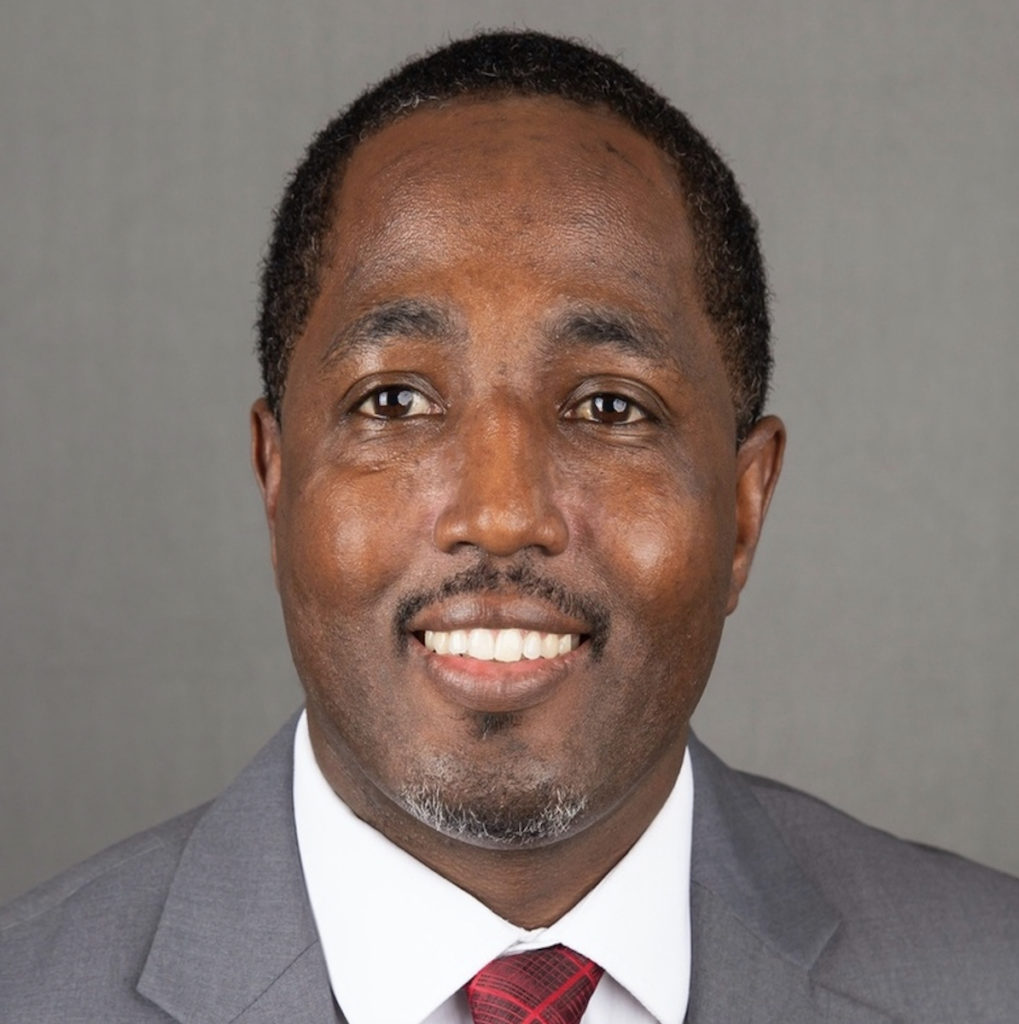
Thirkill was born two hours away in Jacksonville, and attended McLennan Community College in Waco. He studied accounting and got an internship with Cen-Tex Hispanic Chamber. He has now been working there for eight years.
“I enjoy my position a lot because it’s what I wanted to do, but also, once I got this position, it opens up more opportunities for me in the future,” Thirkill said.
Thirkill is very involved in Waco. He serves on the Economic Opportunities Advancement Corp. Board. According to its website, the EOAC’s aim is that “every individual has the opportunity to contribute to the full elimination of poverty.”
Thirkill is involved with the United Way Financial Committee, as well. On its website, United Way says its mission is, “focused on strengthening our community and creating opportunity for every resident” by fighting for “the health, education, financial stability, and safety net services of every person in McLennan County.”
He also gets involved and is able to help the people of his community through his work at the Hispanic Chamber.
“We host community events such as Christmas Toy Drive, Trunk or Treat, school backpack drives. We have The Floating Mercado, where vendors are able to set up spots to sell their items, and we host job fairs,” Thirkill said.
Thirkill isn’t just involved because it is part of his job; he says he enjoys going to community events and shopping at local shops to support small businesses in town. There are many things to do in Waco; people just have to look for them.
Thirkill urged college students to enjoy Waco while they are here and begin to get involved, as well, so they can become a part of the community.
“Anyone can get involved. You can start with a chamber. There are like seven different ones. There’s community programs, neighborhood programs, and nonprofit ones,” Thirkill said. “Also, I would say to try to serve on committees and boards on some of those chambers that you get involved in.”
The website, Cen-Tex Hispanic Chamber of Commerce for Waco, has ways to join the chamber, how to contribute to it, and its mission statement.
“My favorite part about Waco is it is not necessarily a small city, but it’s big enough that they have things here — things you can do. And also there are resources available to people.There is still a close knit community since the town is smaller, so I enjoy that,” Thirkill said.
Waco has been pegged as a developing city and has seen exponential growth over the past years, with a growth rate of around 1.4% each year, according to a KXXV McLennan County article . Thirkill said he sees a bright future for Waco.
“I hope that we just keep going in the direction that we are going so that we can create more opportunities for the people of Waco,” Thirkill said.
Julia-Rachel Dominguez is a freshman journalism major on a pre-law track at Baylor University.
The Act Locally Waco blog publishes posts with a connection to these aspirations for Waco. If you are interested in writing for the Act Locally Waco Blog, please email Ferrell Foster at [email protected].
By Gracie Ozburn
Ke’Sha Lopez, a KWTX News 10 anchor, has been an active member of the Waco community for over 10 years. In an interview, Lopez talks about how she stays involved in the “Heart of Texas.”
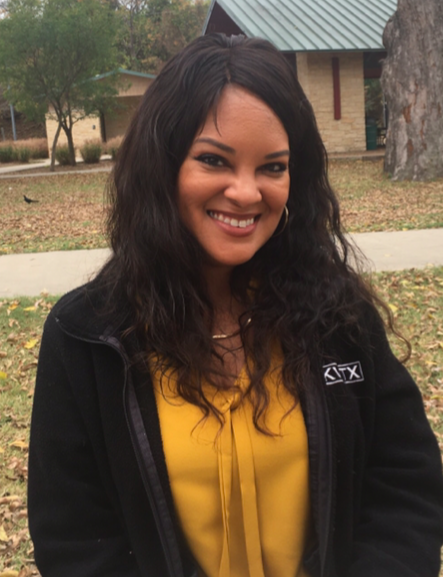
Lopez said she was first influenced to go into journalism by her cousin who had joined his college news team while growing up in Arkansas. This then inspired her to major in radio and television at Arkansas State University, and she started working on the college’s news station.
“There were two black anchors at home, and it never registered that I could do television,” Lopez said. “It wasn’t until my cousin came home … and popped in the VHS of him doing a newscast that I was like, ‘I can do that.’”
She had many internships and jobs at stations in Midwest and Southern states, including her first on-air job as a reporter for WKAG-TV in Clarksville, Tenn. Later, she found work in Dallas, which then led to finding a job in Waco.
Something that she discovered instantly when coming to Texas was the love for the state from the community. “The Texas pride is something I’ve never seen before,” Lopez said. “It’s strong here.”
Lopez has been in the business for almost 20 years. When not reporting, Lopez is working at McLennan Community College teaching a reading and writing course. She started as a substitute teacher because her mom was a teacher and encouraged her to apply. She has since stuck with the teaching path and now teaches a virtual class. It keeps her feeling connected with what is going on in the area and world.
“I feel like I have a different impact on people living here,” Lopez said. “Helping my students learn something that will help them move onto the next level, … that’s rewarding.”
Other ways she stays active is by staying involved in her sorority, Alpha Kappa Alpha. It hosts events and had one recently during the election to rally people and get them excited about voting. Pre-pandemic, her work schedule with the morning news show was always eventful, and she was always doing something with her posting about events and talking to groups of people.
“We were so busy,” Lopez said. “We were always out doing something.”
During her freetime, Lopez loves exploring the outdoors and discovering Waco. She especially enjoys walking the trails in Cameron Park. Another spot she finds herself at often is Lula Jane’s, a coffee and bakery shop on Elm Street.
“I love to just go in and see how people are doing,” Lopez said. “There are days where I will just pop in to see what’s going on just to still be in touch with the community around here.”
Lopez said she has also enjoyed watching Waco grow throughout her 10 years of being here. Even though there is construction taking place in many parts of Waco, she enjoys seeing the end result of the projects.
“It has been really interesting seeing it grow and develop,” Lopez said. “Waco has become my home.”
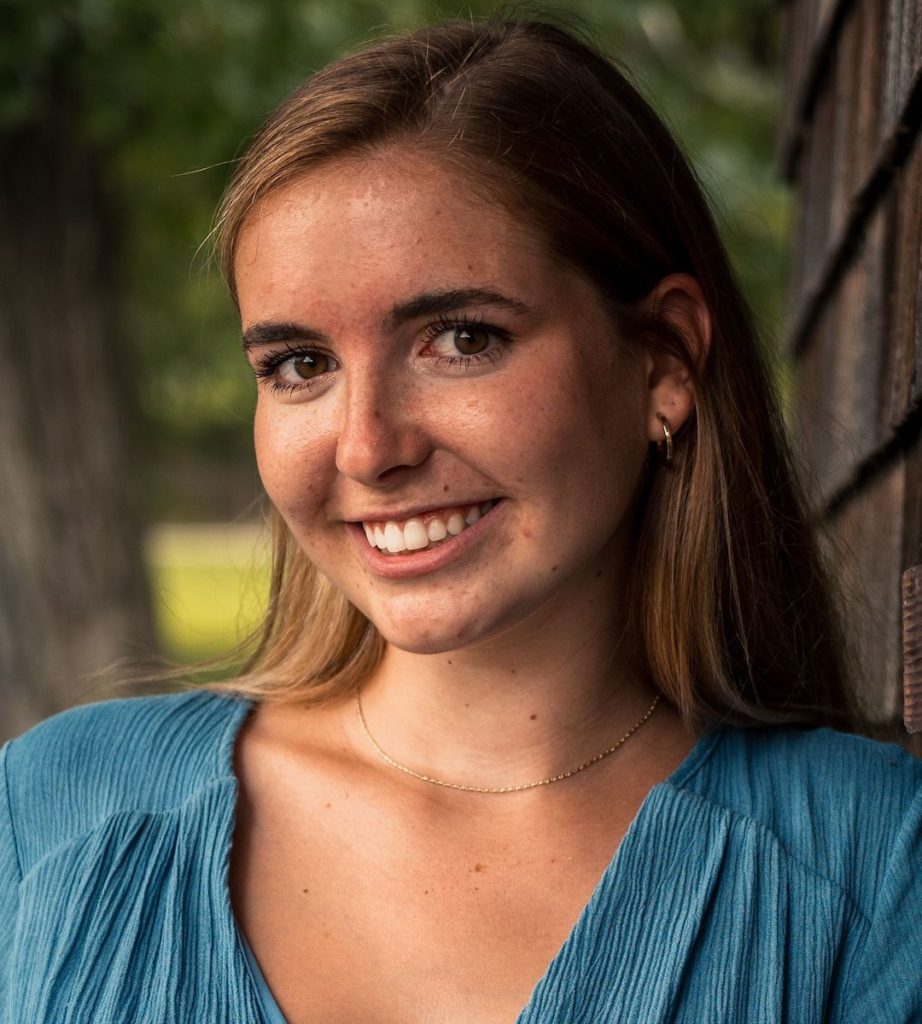
Gracie Ozburn is from a suburb of Chicago and is a sophomore at Baylor University, majoring in journalism.
The Act Locally Waco blog publishes posts with a connection to these aspirations for Waco. If you are interested in writing for the Act Locally Waco Blog, please email Ferrell Foster at [email protected].
In honor of Black History Month, we are featuring interviews with local Black community leaders. These pieces were written by Baylor University students from the Department of Journalism, Public Relations, and New Media. The students asked questions about what the leaders love about Waco, and we are excited to share their responses with you this month.
By Nicole Arentsen
Because of the pandemic, one mother and teacher used her passion to create a solution to a concern in the community. Charra Burns noticed that parents had worries for their child’s academic success with remote learning and wanted to help support them in any way. Her love for Waco has only grown more since she has become more involved in the city.

“I love how the community comes together for the greater good to make it an even greater place,” Burns said. “I love all the community initiatives, community events, the family functions, and just the creativity on how organizations have tried to adapt to COVID-19.”
Burns has been a teacher in Waco for a few years now. She created a program called READ, where she collected books for different students in the community and was able to assist in reading skills one-on-one.
But recently with the pandemic when schools in the community decided to teach remotely, an idea popped in her head to create sensory boxes for children. This idea led to her opening her new business called, Think Learn Play, where she creates custom, hands-on lesson plans for parents to complete with their children at home.
Burns had noticed the concern of parents with younger students who have been at home since spring and worried their students are falling behind.
“I also am able to support the parents because they were working or did not know how to teach certain subjects,” Burns said. “I think what makes the box unique is it really teaches the parent how to teach their kid and then also gives them ideas on what to do with their kids outside of the box.”
Her most popular audience is children under 8 years old but has custom boxes for younger toddlers and older students as well.
“I did not expect the community to respond to it the way they did, but I think COVID-19 had a really big play in it,” Burns said. “I have just been able to take part in a lot of families’ lives unexpectedly with these boxes.”
The small yet tight knit community of Waco offers numerous activities around town to stay connected and busy. The Act Locally Waco blog encourages people to explore all parts of the city and find areas to help out that sparks their passions. The blog also reminds people to have a grateful heart and to “take advantage of all the things we are still able to do,” Burns said.
There are many opportunities for someone in Waco to find something they enjoy and like-minded friends to make the town feel like home.
“Getting involved also means, for me, teaching my kids about the important initiatives, teaching them about all the positive things in our community and finding them a way to be involved as well,” Burns said.
This passionate woman was able to create a safe and unique solution for a need in the community from her own home. Things might be more difficult at times, but open your mind and think creatively because the options are endless to help the community.
“I hope that more families will learn about Think Learn Play, try out the sensory boxes, and tell a friend,” Burns said. “The feedback and responses that I have gotten have been huge. I have been expanding to even out of state and the larger community which is really important to me because I just want to do something special in our community here in Waco.”
Nicole Arentsen is a Baylor University journalism major from Orange, Calif.
he Act Locally Waco blog publishes posts with a connection to these aspirations for Waco. If you are interested in writing for the Act Locally Waco Blog, please email Ferrell Foster at [email protected].
In honor of Black History Month, we are featuring interviews with local Black community leaders. These pieces were written by Baylor University students from the Department of Journalism, Public Relations, and New Media. The students asked questions about what the leaders love about Waco, and we are excited to share their responses with you this month.
By Belle Ebner
Waco is a small city that can make a big impact, according to Cuevas Peacock, who works in Baylor University’s Office of External Affairs. It’s a place that is persistently growing and continues to make strides toward improvement.
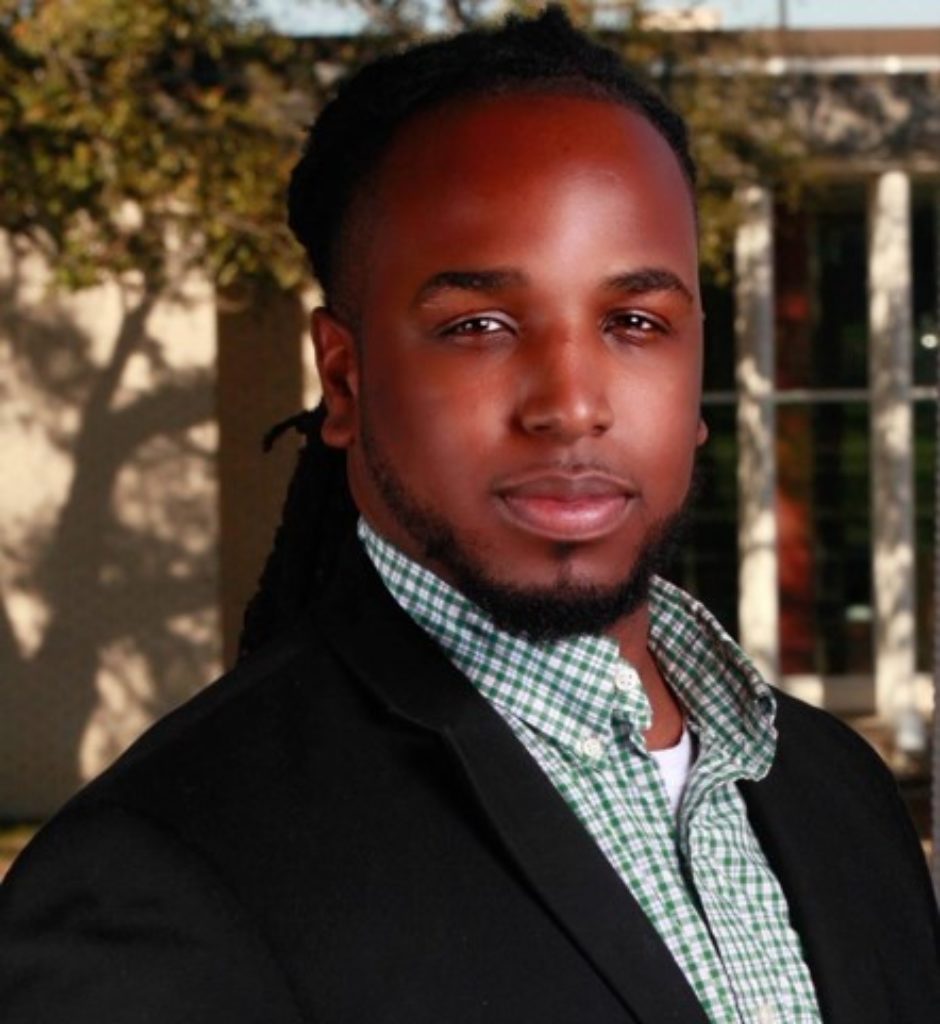
For much too long, people would say Waco is just a pit stop on a road trip to somewhere more interesting, Peacock said. But through his time working with Grassroots Community Development and at Baylor, Peacock has seen the city transform.
“By being involved in these various things, I am able to see first-hand just what can happen in Waco, and it’s exciting,” he said.
Peacock said he was a community organizer at Grassroots and was responsible for identifying opportunities for growth in the community. He was pleasantly surprised at the community’s willingness to participate in the city’s success and their receptiveness to new ideas.
In Waco, there is a strong sense of connectivity one can’t get in bigger cities, according to Peacock. People in Waco wish to find long-term solutions to issues in their community as well as working together to advance equity. Peacock said he is good friends with prominent citizens of Waco, including the mayor.
“Wow,” Peacock said. “Could you have these types of relationships in bigger cities? I don’t think you can.”
Waco is a community built on educational opportunities, Peacock said. If someone wants to gain a skill or knowledge, they have the opportunity at Baylor University, McLennan Community College, Texas State Technical College, and various other educational organizations.
Baylor University is a large part of the city’s identity, and Peacock said his job includes “bursting the bubble” that surrounds the university and integrating it more into the Waco community. By bridging the two, Peacock believes Waco can become even more culturally vibrant and progressive.
Organizations such as the Grassroots ensure that solutions are resident-driven and that the people have power, according to Peacock. By making sure the public has the resources to create change themselves, Waco has become a uniquely proactive community.
“If they have an idea, if they have a vision, if they have a thought, if they have a belief, I would encourage them to act on it,” he said.
There’s a certain Waco attitude that encourages being receptive to new ideas and supporting the idea that change is beneficial, Peacock said. Even if one is tentative to call for change or make a suggestion, there are people in the community who will help them make the necessary steps.
The connectivity and willingness to support one’s neighbors is what cultivates such a strong community in Waco. The more involved one becomes in providing solutions and improving the city, the more one becomes hopeful for Waco’s future, according to Peacock.
“I know what’s to come. I see the vision,” he said. Peacock has a vision for an ever-evolving city with a passion for change.

Belle Ebner is from Colorado and is majoring in journalism and public relations at Baylor University.
The Act Locally Waco blog publishes posts with a connection to these aspirations for Waco. If you are interested in writing for the Act Locally Waco Blog, please email Ferrell Foster at [email protected].
By Waco ISD Communications
Parkdale Elementary Music Specialist Giselle Vento is receiving national recognition as an honoree in Yamaha’s newly-launched “40 Under 40” music education advocacy program.

Vento joins 39 other innovative music educators under the age of 40 who exemplify the highest level of music education in the United States.
“I feel grateful to have been nominated,” Vento said “And I’m excited to receive this recognition for myself and my supportive Waco community, and am inspired to continue in my journey as an educator.”
The 40 Under 40 music education advocacy program was established by Yamaha to celebrate music educators at all grade levels, public or private, as well as private music instructors, selected from hundreds of music education leaders nominated by students, parents, teachers or administrators, local instrument dealers and mentors last fall.
“Despite immense challenges, educators are undertaking the most innovative, creative and impactful programs to truly make a difference in strengthening music education nationwide,” said Heather Mansell, Yamaha’s segment marketing manager in education . “Yamaha shares the same commitment to high-quality music education for all, and we look forward to supporting and encouraging the efforts of these 40 outstanding educators and the thousands more like them across the country.”

In one of her “40 Under 40” nomination letters, a colleague wrote, “As Giselle grows, her kids grow! Music has become their passion under Ms. [Vento] Banda’s guidance, and they have so many more opportunities to develop their musical arts learning because of her.”
As a Waco ISD student, Vento realized the choir room provided a safe space for her to be expressive and feel a strong sense of belonging. She wants her students to be just as empowered and valued, which is why she refers to students as “scholars.”
“I want children to be globally-minded, lifelong learners,” she said. “I also want them to know that their teachers are scholars, too. When I refer to them as ‘scholars,’ my students’ behavior shifts, and they take pride in learning.”
Honorees were selected based on one of four qualities: 1) proactively takes necessary steps that lead to a stronger music program; 2) proposes and implements new or bold ideas; 3) shows innovation and imagination in achieving plans and objectives; or 4) establishes and grows, or improves, music education in their schools and communities.
“I had the pleasure of visiting Ms. Vento’s classroom the first week of school and just adored watching her lesson.” Waco ISD Superintendent Dr. Susan Kincannon said. “Her class is such a great place for kids. She’s so passionate, and I saw how her enthusiasm directly kept her students actively engaged in class. She’s very deserving of this national recognition.”
To see what other program honorees are doing in their local communities, please visit https://yamahaeducatorsuite.com/40-under-40.
The Act Locally Waco blog publishes posts with a connection to these aspirations for Waco. If you are interested in writing for the Act Locally Waco Blog, please email Ferrell Foster at [email protected].
By Suzii Paynter March
Everybody needs it and there is not enough. Rumors fly, promises of millions are made, but national news notwithstanding, it’s only the local supply that matters. The city, the county, medical providers, pharmacies, hubs, hospitals are all at the ready… and ready… and ready. Could somebody turn on the spigot? Vaccine production, running water? It is a frustratingly bleak reminder that the systems we put in place matter.

When it comes to Waco and the meager amounts of vaccine we are being sent from Texas State Health Services, I’m wondering, “Is the State of Texas Health data up to date? Do they know Waco-McLennan has grown in the past 5 years? Is our dose allocation up to date? Or are they using 10-year-old Census data to determine the number of vaccine doses we need?” I mean, can people in Austin count?
Good people are working hard, but they are pioneers forging a way through the we-have-never-had-a-pandemic underbrush, not motorists driving down a well-travelled Interstate highway of frozen medicine delivery.
Remember the fits and starts that riddled Katrina response? The unintended health consequences for first responders from 911? Things got better when subsequent hurricanes hit, and new protections are now in place for first responders. As a nation we are not slow learners, and I take comfort in believing that we are able to learn and adapt.
Back to bathroom tissue. Last March the run on the tissue aisle at HEB meant they draped the aisle to hide the poor stock boys so they could get product to the shelves, pull down the draping and then scurry off the floor to safety before the rush of shoppers. There was an early morning hour set aside for elderly shoppers and other experimental measures employed by stores to try to meet demand and spread the essential tissue widely.
If you are 1b, are you calling and emailing every place you can think of? I am. Back in November I was prepared to wait patiently until April for my vaccine because I thought none was available…. THEN we were told vaccine was available for 1b NOW. Then I shifted from patient patient to eager patient, urgently looking for my dose!
I sincerely believe the spigot will come on and vaccines will be available. Waco has a system for delivery through public hubs and private sources, and there are many places and populations that need support. The need is going to get bigger and bigger, and we have to plan and build for tomorrow as well as today.
So my pledge is that even while I am anxious for my dose, I can still be a part of the build out – I can call, volunteer, organize my workplace, my family, keep up to date and help my friends get connected, too. The city needs volunteers as vaccinators, as paperwork and crowd management volunteers, and as ambassadors for various neighborhoods and in various congregations and pockets of the community. Call the city number to help: 254-750-1890.

Suzii Paynter March is chief executive officer of Prosper Waco, our community’s collective impact initiative. She is a graduate of Baylor University, with a lifetime of experience in organizational leadership and public advocacy.
The Act Locally Waco blog publishes posts with a connection to these aspirations for Waco. If you are interested in writing for the Act Locally Waco Blog, please email Ferrell Foster at [email protected].
By Paula Solano
In February, we observe a host of meaningful observances — Black History Month, American Heart Month, National Children’s Dental Health Month, National Weddings Month, Valentine’s Day, and more.

The seasonal fruit for this month’s Better Living for Texans blog is the avocado. Avocados are in season in the spring, summer, and winter. Avocados are native to the tropics of Central America. The United States provides 6% of the world’s avocado crop, ranking third to Mexico and Chile. California is the largest producer of avocados in the United States. An avocado tree can produce up to 400 avocados annually.
Nutritional Facts and Health Claims
Avocados are cholesterol-free; high in vitamin B6; sodium-free; high in vitamin E; and a good source of potassium, magnesium, folate, and fiber. The Dietary Guidelines for Americans and the American Heart Association recommend consumption of nutrient-dense foods, limiting the number of saturated fats, trans fat, added sugars, and sodium consumed. Avocados are considered a good source of good fat (75 percent of the fat in an avocado is unsaturated).
Hypertension & Sodium:
Avocados are sodium-free. Diets low in sodium may reduce the risk of high blood pressure, a disease associated with many factors.
Shopping, Storage and How to Cut:
— Choose avocados that are firm — which give slightly when pressed. These are normally ready to eat.
— Store unripe avocados at room temperature. To ripen a firm avocado, place it in a paper bag with an apple.
— Cut avocados in half length-wise around the pit.
— Hit the pit with a sharp knife, twist to free pit and discard.
— Cube, slice, and scoop with a spoon or knife.
Get the Facts!
Wash your hands as recommended by the CDC, and clean contact surfaces often.
The U.S. Department of Agriculture MyPlate provides recipes, tips and resources to guide you in creating a healthy eating plan. Start simple, download the MyPlate App, an easy-to-use app that will help guide you and track your progress.
Use:
Avocados can be added to salads, soups, as guacamole, on sandwiches, applied as butter on toast, a substitute for sour cream. Avocado also makes a great puree to serve as baby food.
Here are two avocado recipes from EatFresh.org — Avocado Puree and Avocado Garden Salad. The first is for use as baby food; the second one is for those of us who are older.
Share your favorite recipe with us.
Enjoy!
Paula Solano is a Master in Public Health student at Baylor University, certified Community Health Worker, an intern at the Texas A&M AgriLife Extension Service. A Waco native, she is passionate about serving her community, particularly underserved and underrepresented citizens.
The Act Locally Waco blog publishes posts with a connection to these aspirations for Waco. If you are interested in writing for the Act Locally Waco Blog, please email Ferrell Foster at [email protected].
—
Due to the continued spread of COVID-19 and the challenges it poses to communities across Texas, Texas A&M AgriLife Extension and many others continue to practice public health recommendations. Whether we are communicating online or face-to-face know that program content will always be research-backed to help individuals navigate decisions for themselves and their families. For information on resources, ideas, and programs for yourself and family visit Texas A&M AgriLife’s HUB.
USDA is an equal opportunity provider and employer. This material was funded by USDA’s Supplemental Nutrition Assistance Program. To learn more about SNAP or to apply for benefits, visit www.yourtexasbenefits.com
References:
Centers for Disease Control and Prevention (2021) Your Guide to Masks. Retrieved from: https://www.cdc.gov/coronavirus/2019-ncov/prevent-getting-sick/about-face-coverings.html
Eat Fresh (2021) Avocado. Retrieved from: https://eatfresh.org/discover-foods/avocado
Fruits and Vegetables (2021) Avocado. Retrieved from: https://fruitsandveggies.org/fruits-and-veggies/avocado/
Harvest of the Month (2011) Exploring California Avocados Taste Testing. Retrieved from: https://harvestofthemonth.cdph.ca.gov/documents/Spring/Avocados/Avocado%20-%20Educator’s%20Newsletter_Final.pdf
Iowa Nutrition Network (2020) Avocado. Retrieved from: https://idph.iowa.gov/Portals/1/Files/INN/Avocaco.pdf
By Lucas Land
Court Appointed Special Advocates (CASAs) all have their own story about how they became advocates. Not all of them start in Russia.
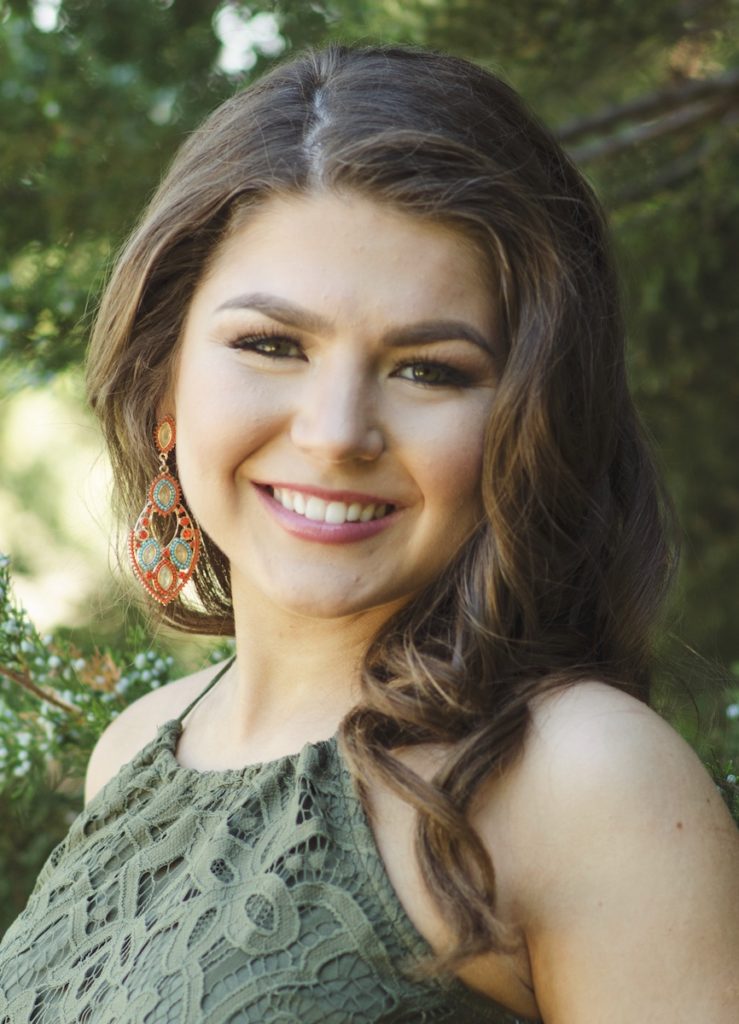
Sasha Messer is a senior psychology major at Baylor University, but when she was 4 years old, she and her brother were adopted from Russia. She grew up in Dallas and says it was often difficult growing up. “I didn’t always understand what people were saying when I was learning English and knew from an early age that I was different,” Sasha says of what she remembers from that transition.
Overall, she had a good experience and was raised in a very stable home with two good role models who provided what she needed. However, because of her experience, Sasha can understand what children in foster care are going through in a way that many of us can’t. So, when she learned about CASA on an episode of Dr. Phil, she knew she wanted to help out.
CASA is part of a nationwide organization of advocates, with 948 chapters in 49 states and more than 97,000 volunteers. CASA volunteers are everyday people – teachers, business people, retirees, stay-at-home parents, and grandparents – who are committed to making a difference for children who might otherwise slip through the cracks in an overburdened foster care system.
CASA advocates are appointed by a judge and assigned to a case where they spend time getting to know the child(ren) involved. Their purpose is to gather as much information about the child(ren), as well as all the stakeholders in their life, such as family of origin, foster placement, doctors, teachers, CPS workers, etc. All of this information is then compiled into a report for the court.
But CASA advocates have to be 21 years or older, so Sasha looked for other ways that she could help. She worked answering calls for the National Suicide Hotline, where she talked to a lot of kids and heard about the difficult things they were going through.
During the pandemic Sasha learned how to make candles, and during the summer of 2020 she started Walking Stick Candle Co. to sell them at a new market in Celina. She still wanted to give back so she decided to donate a portion of her proceeds to CASA of McLennan County.
“I looked into different organizations and knew that a lot needed extra help. Hearing stories about kids left at home in difficult situations without the usual escape of school made me want to help kids in foster care,” Sasha said.
In 2020 Sasha also turned 21 and decided it was finally time to become a CASA advocate. She applied and completed her training in October 2020, attending three evening classes via Zoom and completing many hours of online reading and work. She was sworn in by Judge Nikki Mundkowsky on Nov.3, 2020, to officially become a Court Appointed Special Advocate. She has now been assigned to her first case and is looking forward to working on it.
Sasha is also looking forward to graduating, but hasn’t made definite plans yet for after graduation. No matter what, it is clear that she will continue to find ways to help others and make a difference. If you are interested in making a difference for children in foster care, you can learn more about becoming a CASA by visiting casaforeverychild.org, calling (254) 304-7982, or emailing [email protected].

Lucas Land is director of communication and development for CASA of McLennan County. He loves living in Waco and finding ways to connect, get to know, and give back to this community. Lucas lives in the Sanger Heights neighborhood with his spouse, three kids, and their dog, Jayber.
The Act Locally Waco blog publishes posts with a connection to these aspirations for Waco. If you are interested in writing for the Act Locally Waco Blog, please email Ferrell Foster at [email protected].
By City of Waco Staff
Waco City Manager Bradley Ford announced Monday he is recommending Sheryl Victorian to be the city’s next Chief of Police. Victorian served for 27 years in the Houston Police Department rising to the rank of Assistant Chief. The recommendation goes to the city council on Tuesday, Feb. 16. If approved, Victorian will be Waco’s first female and first Black police chief.

“The search for a new chief took five months and included 43 applications from candidates in 17 states,” said City Manager Bradley Ford. “Sheryl’s depth of hands-on management experience, her educational background and her support for innovative programs all stood out.” Ford adds, “Sheryl shared our community’s vision for a leader who embraces continuous improvement, community policing and a commitment to serving and protecting all of our citizens.”
Victorian was one of four finalists for the position. The interview process included input from the city staff as well as community shareholder panels.
Victorian earned a doctorate degree in Administration of Justice from Texas Southern University and holds a master’s degree in Criminal Justice from The University of Houston and a bachelor’s degree in Public Affairs, also from Texas Southern University.
She began her law enforcement career as a police cadet in Houston in 1993. As she rose through the ranks of the department, Victorian served in or supervised virtually every major unit giving her a wide range of experience and expertise including extensive work undercover.
Victorian is a graduate of the FBI National Academy and numerous nationally recognized leadership programs. She holds a Texas Master Peace Officer’s license and has received numerous awards and commendations over her career with Houston PD.
“It is a privilege and honor to have my name forwarded to the city council,” said Victorian. “Maintaining the trust of the community, adopting and improving our department to meet the changing needs and demands of policing and keeping our officers and citizens safe are my objectives from day one if council approves my selection,” said Victorian. “It would be an honor to lead the department and I look forward to working proactively to keep Waco a great community to work, live and raise a family.”
The Waco Police Association was represented in the evaluation process by President, Ken Reeves. When notified of the recommendation, Reeves said “The Waco Police Association is happy to welcome its new Chief, Sheryl Victorian. Her reputation for fair and experienced leadership is well known within her current Department. We are eager to see what her vision will bring to the Waco Police Department and our community.”
If confirmed by the Waco City Council on February 16, Victorian will start as Waco chief in early March.