By Mia Thomas
Planning a budget, balancing a checkbook, developing a business idea and a marketing plan…is that what you did on your summer vacation when you were a kid? What if you had?
Waco get ready! Road to Damascus, Inc. (a local non-profit) and Mommy & Me Dream Bigger Tour have teamed up to bring Kidz Biz in a Box Summer Camp 2018 to the Waco area.
 The focus of this camp is to teach kids about life and interpersonal skills, problem-solving skills, basic money and budgeting concepts, and entrepreneurship. By the end of the week-long camp the kids will learn the fundamental skills to start their first business. The program is built around a structured curriculum,that will introduce camp participants to various business concepts. Each camp week will conclude with a tour to a local bank. Campers will be able to meet the tellers, step inside the vault, and open their very own kid’s savings account. The teaching is invaluable as they will learn the value of money, planning a budget, creating an investment, how to balance a checkbook, and the difference between saving and spending.
Camp breakout sessions will be led by local Waco entrepreneurs in the areas of Marketing, Branding and Business Start-ups. Every child that attends Kidz Biz in a Box Summer camp will gain a clear understanding on how to develop a business idea/or concept, market their plan and establish relationships with other businesses and organizations throughout the community. In addition campers will build their logo, website, and have their very own business cards. Each kid will walk away with a business plan that will help them to continue to grow their business.
 The idea for “Kidz Biz” summer camp was conceived by “Mompreneur” Sherrie Walton, who has spent the last 3 years traveling and teaching kids how to start their businesses. She took adult concepts about entrepreneurship and broke them down in a way a child could understand it. She first started with her own 7 and 10 years old children:”Kidpreneurs” Kai-Milan Walton ( CEO of Kai’s Cupcakes) and Christopher Walton II (CEO of CJ Speaks).
10-year old Chris Walton is a motivational speaker and is currently working on completing his first book that will launch in 2018. The brother and sister duo from Houston will be teaching a class at the camp, showing children how simple business can be with the right knowledge and how to be fearless and tap into their dreams at a young age.
The camp will wrap up on July 13, 2018 with a showcase and awards ceremony program. This ceremony will be open to parents, relatives, friends, and City Officials honoring all camp participants who have completed Kidz Biz in a Box. The children will present their finished business plan and be awarded certificates.
 There will be ongoing support for the Kidpreneurs after the camp has ended as well. In the Fall (September 15, 2018), Kidz Biz in a Box will host its 1st Annual Kidpreneurs Fall Expo for Central Texas Kidpreneurs. The expo will include a business pitch contest for children, the opportunity to market and sell their product, and to learn how to network with other kidpreneurs by building positive relationships. Families will be able to have a fun filled day full of various family activities.
Road to Damascus, Inc. is the lead Waco organization, supporting the initiative and working to create awareness about the program. But, we are quick to emphasize that with any successful project, it takes a team of committed, like-minded, and driven people to see it to completion. We are excited for the opportunity to collaborate with community partners, such as Family of Faith Worship Center, Independent Bank, and the Centex African American Chamber of Commerce. As a nonprofit organization, we understand the importance of helping future leaders to be successful. Our passion is to teach families and children the importance of building legacies and truly tapping into their dreams. Kidpreneurs have become the new wave, they are our future.
Details
 If you would like to be a part of this initiative and sponsor a child, make a donation, or have your organization represented at Kidz Biz in a Box, please feel free to contact me at (505) 402-0199 or email [email protected].
For any adult that would like to register a child, please go to www.thekidzbiz.com.
This unique business camp for kids ages 6-13 will be held at Family of Faith Worship Center, located at 4112 Memorial Drive, Waco, Texas on June 11-15; June 18-22; June 25-29; and July 9-13. The camp will be held for children ages 6-13. The hours will be Monday through Friday from 7:30am-5:30pm. The cost of the business camp is $199.00 per child and includes 2 daily meals, camp supplies and camp t-shirt.
 Mia Thomas is an Author, Certified Life Coach, Empowerment Speaker, and Entrepreneur. She is the CEO/Founder of Road to Damascus, Inc., a non-profit organization that connects at-risk children and families to various resource throughout Central Texas. She is the mother of three gifted and talented adult children, Mara, Tyrell, and Vincent Jr. Thomas. She has two beautiful grandchildren, Masen Alexander Waggoner, age 2, and Jadience Thomas, age 1. They are her heart and joy. To get more information or to reach out to Mia, you can contact her at www.pathwithmia.com or [email protected].
By Luann Jennings
Think about your favorite place and imagine you’re there. Although this place may have special smells or sounds, the odds are good that the first thing you thought about was how your favorite place looks. After all, you were using your “image-ination.”
Project for Public Spaces (PPS) is a non-profit that helps communities create great places. One of the features PPS looks at in a great place is Comfort & Image, including whether it is safe, clean, green, walkable, sittable, spiritual, charming, attractive, and/or historic. How many of those words describe your favorite place?
How it looks probably isn’t the main thing, though, that made it a favorite place for you. My favorite place is the sanctuary of a church I attended before moving to Waco. It is safe, clean, sittable, spiritual, attractive, and historic; but so are a lot of other churches I’ve been inside. My experiences there, combined with how the space looked, felt, and worked, made it my favorite place. This is why PPS’ other three criteria for a great place are Sociability, Uses & Activities, and Access & Linkages. You can find more information and a graphic here.
PPS developed the concept and practice of “placemaking,” which is “strengthening the connection between people and the places they share.” Waco is doing a lot of placemaking work right now, particularly in the downtown area. The 2010 “Imagine Waco” development plan describes a vision of a downtown that would be an “attractive and convenient place” with “comfortable and inviting” streets that would also create opportunities for people to socialize, promote activities, and be easily accessible.
Another side of placemaking is “creative placemaking,” or “projects in which art plays an intentional and integrated role in place-based community planning and development.” Creative Waco, our local arts agency, has several creative placemaking projects going on, including a Sculpture Zoo and a mural project. Learn more about creative placemaking here.
Some people think of placemaking as just the job of planners, architects, and designers, but PPS emphasizes that, “As both an overarching idea and a hands-on approach for improving a neighborhood, city, or region, Placemaking inspires people to collectively reimagine and reinvent public spaces as the heart of every community.” (emphasis added)
The Imagine Waco plan also envisioned “seamless connections between East and West Waco” and an East Waco that is “alive with historical, cultural and arts facilities, farmers markets, art shows, mixed-use housing and retail and restaurant destinations.” East Waco’s Elm Avenue will soon be the site of a new placemaking project that has started out by seeking input from the community. Tami Nutall Jefferson will tell you all about it in our next post: Placemaking in Waco – Part 2!
 Luann Jennings works part-time for Creative Waco and in various other arts-related project. She also started InSite, a creative placemaking project that produced two plays this past winter at sites around Waco. She moved to Waco two years ago from New York City to be part of all of the exciting things going on here in the arts!
The Act Locally Waco blog publishes posts with a connection to these aspirations for Waco. If you are interested in writing for the Act Locally Waco Blog, please email [email protected] for more information.
(This post is a part of a regular series “Trails & Trials,” a monthly adventure series inspiring others to experience the physical, mental, and social benefits of cycling, running or swimming in Central Texas. For more posts in this series, click here: Trails and Trials. – ALW)
By Natasha van der Merwe
“How are you doing with those New Year’s Resolutions?”
“How is that training coming along?”
Sound familiar? You may have heard the words “The Race is the Reward for all your hard work in training”. Others may say “Races prove resolutions.” Both are true, but there are many reasons to enter local races, regularly and quite often.
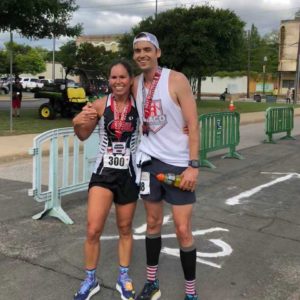 In April, I was invited to run the First Responders Half Marathon, and jumped at the chance. Apart from the fact that the course appealed to me because it would be a sneak peak of the run course for the upcoming TriWaco and Waco 70.3, I really just wanted to race.
Triathlon season typically runs from April through November in the US, due to the fact that the water temperature needs to be warm enough to swim. It had been many weeks of focused training, without the reward of a race or the opportunity to truly test my fitness in a way that no training session really could. That and I really wanted and needed to rejuvenate my motivation to train.
Well, that it did, and so much more.
Here are my top FIVE reasons I enter local races and you should too:
1. Racing forces me to set up a training schedule.
Having a set training calendar, gives me a plan and purpose for every workout. This gives me the daily motivation I need to get the work done. The argument of why triathlon is such a fantastic sport to train for, is that every day is totally different. Triathletes train for three different disciplines. The cross training impact is so much easier on the body, since the long run day is balanced with a swim the following day, which serves as the perfect recovery workout before biking and running again the day after that.
2. Racing tests my fitness both physically and mentally.
There is nothing quite like a race to show me exactly where my fitness lies. No matter how physically prepared I am, a race may expose that I still may be lacking in the mental preparation which can only be learned through race experiences. Racing also gives me insight into where my training discipline might have lacked in the build up. To me, every race is a new lesson in how well my training is actually working and I always spend a lot of time reflecting post race on how I can better prepare myself for the next one.
3. Racing presents opportunities to push myself beyond what I could possibly experience in training
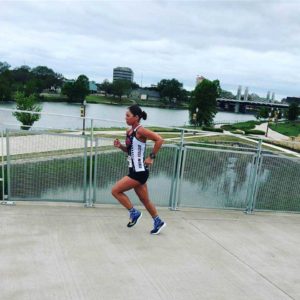 Be it a course I have never seen before, elevation higher than I’ve ever climbed, heat that I may have not been prepared for, or a time goal that I want to hit, racing always presents me with new challenges that I happily embrace. I don’t believe one can grow in the comfort zone. I will not hesitate to sign up for a “hard” race in order to push myself past what I know I can already do. Participating in a race, gives me the opportunity to push harder and get tougher. With each race comes a new challenge.
4. Racing is FUN!
In every race I participate in, I always make a conscious effort to have a big smile on my face for every race photo. Why? Because racing is always a challenge, but should always be fun! There is no better and bigger endorphin rush than pushing yourself in a race. It will bring you a lot of satisfaction and joy, together with the attitude of gratitude. Every day you get to race and use the body God gave you, is going to be a great day!
5. Racing earns a celebration of food and drink.
I am extremely structured in my daily life with my training and my food. I have to make sure that I am eating cleanly, to feel good and recover well for my training sessions so I can be ready to train again the next day. However, after a big race I will be the first in line for a large burger and fries. I feel that this post race celebration is definitely needed to acknowledge the accomplishment of what I have just done and gives me a chance to celebrate with my family who have supported me through the training. It also forces me to have that much needed rest before focusing on the next race.
Let the celebration of life, challenges and friendships entice you to sign up for the next local running race or triathlon. It’s time to put on the trainers and “Just Do it!”. You won’t regret it.
Find local races at:
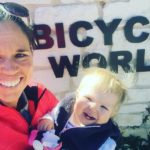 Natasha van der Merwe is originally from South Africa. She is mom to a 19-month old girl, former professional tennis player and tennis instructor, and a professional triathlete representing Bicycle World and Waco Running Company. She has multiple top 10 finishes in Ironman and 70.3 events around the world. She is Director of Team Programs for Bicycle World, Texas
The Act Locally Waco blog publishes posts with a connection to these aspirations for Waco. If you are interested in writing for the Act Locally Waco Blog, please email [email protected] for more information.
By Scott McClanahan, Ed.D.
In the spring of my senior year, I noticed a trend amongst my classmates: they were all discussing college incessantly. I, however, was not. As the son of a factory worker and a retail sales clerk (neither of whom attended college), I was not having those discussions at my house. I had not met with my guidance counselor for college advice nor had I been approached by any outside entity to help me navigate the college process. My sole source of information was the copious college propaganda that arrived in the mail each day. Impressed by beautiful pictures, stories of campus activities, and lists of amazing opportunities available at the various institutions, I tried to determine where to go, even though I knew my family did not have the financial resources for me to attend. It was not until April of my senior year that I decided on a state school 90 minutes from home; however, by that time, the dorms were full nor had I been awarded financial aid, forcing my parents and me to navigate the worlds of off-campus housing, financial aid, payment plans, and books on our own.
But that was 30 years ago. And we hope — for the large majority of today’s students — circumstances are different. However, an occasional student still moves through the high school system and never receives the message that college is both valuable and available, despite any hardships possessed.
As President of the Heart of Texas P-20 Council, I can confidently state that administrators around the region sponsor fantastic College Readiness programs to assist their students: college and career fairs to motivate students to pursue higher education, college testing (such as ACT, SAT, and ASVAB) preparation that opens opportunities at higher education institutions or in the military, and specialized career preparation classes. From rigorous Career and Technical Education programs, to Advanced Placement and Dual Credit course offerings, to Early College High Schools and early degree programs, our region is leading the charge to impact every student. Today’s local students find it increasingly more difficult to make it through to high school graduation without ever hearing about college, without receiving information about paths to college, or without their post-graduation plans being questioned (usually multiple times).
These conversations are part of our region’s efforts to meet the requirements of the State of Texas’s 60x30TX initiative, an enterprise to keep Texans competitive in the global economy. The 60x30TX initiative has four goals: increase the education level of Texas’s 25 to 34-year-old population; increase degree completion levels at Texas community colleges and universities; increase the marketable skills possessed by high school graduates; and decrease the amount of student debt accrued by college graduates. The state’s fifteen-year strategic plan encompasses these four goals, all to be achieved by 2030. Although formidable, all are attainable with intense, directed action on the part of K-12 systems, higher education institutions, and the community.
The first goal seeks to increase the number of adults ages 25-34 statewide who hold college degrees (2-year or 4-year) or national workforce certifications to 60% by 2030. In an age where the American Center for Progress reports that one in eight Americans lives in poverty, this type of goal is required. A 2012 Brookings Institute study identified two common characteristics of prosperous communities: residents either held a college degree or had earned a workforce certification, and explained this finding economically in a 2015 report: adults aged 25 to 34 who finish college degrees not only earn more annually but also contribute more to the local economies, causing the whole community to flourish. Similarly, specialized certifications allow workers access to a set of higher-paying jobs. Therefore, the goal makes good sense for all of us. However, the 2018 Texas Public Higher Education Almanac reports that in 2016 (the most recent available data) only 42.3% of Texans 25-34 held a degree or certification. Therefore, it is in all our best interests to encourage the young people in our lives to pursue one of these avenues.
The Heart of Texas P-20 council, whose focus is to collaborate, inform, and advocate for seamless pipelines from prekindergarten to career, engages local K-12 systems Waco ISD, Midway ISD, LaVega ISD, and Connally ISD, local charter schools Harmony and Rapoport, higher education partners McLennan Community College and Texas State Technical College, Prosper Waco, and numerous business representatives in active communication to remove barriers that might exist that prevent students from helping the state to achieve these strategic goals. And, our earnest work toward this mission is seeing results.
At last Tuesday’s McLennan Community College graduation, Rapoport Academy and Waco ISD graduated 13 students with associate degrees before these students had even graduated from their high school.
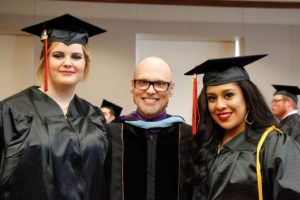
Waco ISD’s two associate degree graduates with me: Kiara Jackson, Waco High School, and Isabella Lozano, University High School. These young women have both claimed the title of first student in their high schools to graduate with an associate degree.
One Waco High School student, Kiara Jackson, achieved this feat in only three years—graduating from high school a year early and from her associate program three years ahead of schedule. The students completed these degrees at no cost to themselves, helping to meet the state’s fourth strategic goal of reducing student debt levels. These students avoided costs by participating in programs offered at their high schools that are free of charge. Rapoport Academy’s Early College High School and Waco ISD’s ACCELERATE Early Degree Program are just two innovative ways that regional educators are creating options for our students to eventually earn more as workers and contribute to their communities at higher levels as consumers.
Questions about these types of programs can easily be answered by a high school counselor or current participant; however, three main misconceptions tend to keep students from taking advantage of these types of opportunities:
How does a student have time to meet all the high school graduation requirements and complete a college degree at the same time? Do they have a longer year, go to night school, or have to attend during the summer? – “Dual credit” classes allow students to earn both high school and college credits at the same time. For example, MCC’s History 1302 can be taken to fulfill both the required credit for high school US History and to complete the U.S. History course requirement for any degree issued at a Texas public college or university. Therefore, with smart planning, students can complete classes that earn credit towards high school graduation and a college degree.
How does a student know what classes will be accepted by universities, particularly out of state? Who will help them navigate that? – McLennan Community College advisors are extremely knowledgeable about transfer credits and acceptance of classes. Advisors are required to meet each semester with students prior to enrollment, once two classes are completed. During this advising, they will ask students what schools interest them and what their anticipated majors will be. From that, advisors will determine the best classes for the students. Parents and students can always verify transfer policies for any college by calling the transfer coordinator (whose name can be found on the college’s website) to discover how transfer coursework will be accepted once the student is admitted to the university.
Does this type of program keep students from participating in other school activities? – Because students are accelerating their instruction (sometimes by up to four grade levels), they should consider limiting participation in some activities, especially those that cause them to miss school frequently or require long practice hours outside of the school day. Since grades in these courses impact the students’ high school and college GPAs, an overloaded schedule many times will avert focus from academics (or cause students to have tremendous worry about those academics) and performance suffers. This does not mean students must give up all extra-curricular activities. They can participate in activities such as band or choir, sports, and clubs; however, they should make wise choices when investing time and carefully evaluate the time commitment required of each activity before committing to it.
Perhaps if these types of opportunities had been offered when I was a senior, I would have taken advantage of them and saved myself a great deal of time, money, and stress. We have programs to help increase college access throughout our community—Communities in Schools, VOICE, Project Link, just to name a few. Parents who did not attend college should not feel embarrassed about asking for guidance on how to help their children navigate this process. We are all in this together: schools, businesses, the P20 council and the State of Texas. Together, we can meet the state’s challenge and meet its lofty goal, while simultaneously helping to make Waco a more prosperous community.
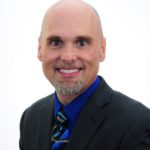 Dr. Scott McClanahan is the Executive Director of Secondary Curriculum and Instruction for the Waco Independent School District. Originally from the Chicago suburbs, Dr. McClanahan moved to Texas to earn both his Masters degree and Doctorate. He has been a middle school and high school teacher, a community college professor, and a university adjunct professor.
The Act Locally Waco blog publishes posts with a connection to these aspirations for Waco. If you are interested in writing for the Act Locally Waco Blog, please email [email protected] for more information.
By Glenn Robinson
Pop quiz. Are the Baby Boomers – people born between 1946 and 1964 and now entering their retirement years – more or less healthy than previous generations? The assumption has long been that they are.
Not only has Americans’ life expectancy increased in recent decades, we also are healthier later in life. Since the early 1990s, the average 65-year-old has gained an extra nine months of life expectancy, but gained a full year of disability-free life on average. Research bears out that the change in disability rates has been substantial. In the early 1980s, one in four elderly people had difficulty living independently. Today, there are fewer than one in five.
In addition, despite a major increase in the number of elderly in our country, the nursing home population today is virtually the same as it was two decades ago – yet another testament that the health of the population is improving, even as more people live to older ages.
David Cutler, an economics professor at Harvard University who researches disability, has reached the conclusion that people in general are in much better health right up until the last year or two of life. This is in stark contrast, he says, to previous generations in which people spent their final six or seven years of life being very sick and in and out of the hospital.
Boomers were the first generation to have greater access to healthcare and services such as regular immunizations, preventive care, and widespread use of antibiotics. They also grew up in a generally prosperous economy, and many benefitted from greater educational and employment opportunities compared with earlier generations.
All these factors positively correlate to being healthier. Research comparing Baby Boomers with people from two decades ago in the same age bracket also shows that Boomers are healthier in some important ways, including being less likely to have emphysema or suffer heart attacks.
Two critical factors have played a vital role in dropping mortality rates from heart disease. First is the slow and steady decline in smoking rates over the past half-century, which is a critical risk factor for heart disease. According to the Centers for Disease Control, in 1965 more than 42 percent of adults smoked. By 1993, that number tumbled to 25 percent, and, as of 2015, only about 15 percent of adults were smokers.
While the decline in smoking is a big win for public health, the advancements in detection and treatment of heart disease is the major success story in medicine over the past two decades. From blockbuster new cholesterol and blood pressure medications being given more often to the right patients at the right time, to groundbreaking new imaging heart technologies and minimally invasive procedures straight out of a science-fiction novel, the medical advances to manage all facets of heart disease are perhaps unparalleled in medicine.
This may all paint a bright picture, but many of these positives are offset by the negative impact of weight-related health problems. The proportion of Baby Boomers with diabetes, high blood pressure, and obesity is increasing, so the answer to whether or not Baby Boomers overall are healthier than previous generations is somewhat mixed.
One solution to this lies in the concept of preventative care.
Nine out of 10 pet owners know when their dog or cat is due for their shots. Eight in 10 mothers know their child’s sports schedule by heart, and 80 percent of men know how often they should have their oil changed. Yet only 50 percent of family health care decision makers know their blood pressure, and only 20 percent know their own key biometric numbers such as cholesterol and body mass index.
While Americans are great at preventive care for their pets and cars, it appears that is not the case when it comes to their own health. This issue puts pressure on the entire health care system because the old adage, “an ounce of prevention is worth a pound of cure,” holds true to this day.
Preventive care such as regular check-ups and practicing a healthy lifestyle help individuals avoid or delay disease. It also can help people catch a health problem early on, when it is most treatable. The Affordable Care Act requires new private health insurance plans to fully cover the costs of 45 recommended preventive services. This means patients pay no deductibles or copayments, or otherwise share costs of these services.
Unfortunately, a Kaiser Family Foundation poll found that less than half of Americans were aware of the change, meaning many people may be avoiding preventive care out of cost concerns. To make sure you’re not one of them, take advantage of these preventive services when you go in for your annual check-up.
For all the challenges surrounding health care in America, this is one of our healthcare system’s good-news stories.
This report, and other episodes, are available at KWBU.org.
 Glenn Robinson is the President of Baylor Scott & White Medical Center – Hillcrest. He has over 30 years of experience in hospital and health care management, and currently serves on several Boards associated with the Texas Hospital Association and the American Hospital Association. In addition, Glenn is Past-Chair and an active member of the Greater Waco Chamber of Commerce, and serves on the Prosper Waco Board.
The Act Locally Waco blog publishes posts with a connection to these aspirations for Waco. If you are interested in writing for the Act Locally Waco Blog, please email [email protected] for more information.
By Jordan Payne
 I have lived in Waco for most of my life and I have driven down LaSalle countless times. I regularly pass the flea market, a few taco stands, some vintage resale shops, a couple gas stations, some used tire places – but if I want to stop somewhere and hang out, I can’t. It’s time to make LaSalle a place to actually stop instead of just a place to drive by.
The City of Waco desperately needs a social gathering space for college crowds and young adults in the community. A place where friends can meet to have lunch, dinner, or maybe even a couple of drinks. A place that can be located easily and is a relatively short distance from everything. LaSalle Avenue has that exact potential. It is time to make LaSalle a place that encourages groups of different people to come have fun — day or evening — sit down with friends, and expect to see other people they know.
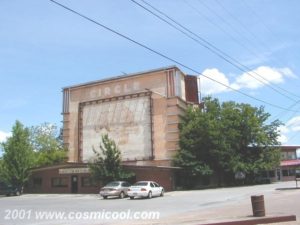 Where to start? The younger college crowd needs a classy dance club or lounge in a great location with up-to-date music and acts and good service. There are plenty of vacant lots and empty buildings along LaSalle that could fulfill this need. A simple karaoke spot or hookah lounge would be nice.
LaSalle in my opinion is also overdue for some nice restaurants. Waco is home to some wonderful locally owned restaurants like Sascee’s Kitchen, but most of that kind of development is focused around downtown Waco. LaSalle is reasonably distanced from downtown and Baylor, and has enough through traffic to support some good restaurants. Some franchises like a Bar Louie or even Bush’s Chicken could really invigorate the area.
I do not think it would be much of a stretch to organize groups of students and get them active in projects to improve the area, not only for themselves but for other locals and tourists as well. In addition to simple volunteer work, concerts and charitable events could also increase interest and entice improvement to the area. A music festival consisting of local talent is a good method for getting interest and activities started.
The powerhouses of industry in Waco should come together to take advantage of the opportunities that the LaSalle area presents. This would mean more jobs for students and young adults in Waco. In some ways the work has already started.
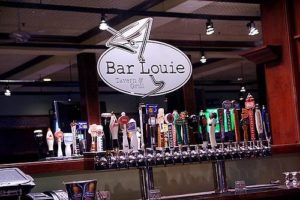 Baylor University chose to place the Ferrell Center on LaSalle. Housing has started growing and expanding in the area. At the other end of LaSalle along the Waco traffic circle, the Magnolia brand has started the Magnolia Table Restaurant. The Magnolia Brand is already a huge presence from their stores and TV show, and with this implementation of a restaurant I hope that others will follow their business model and capitalize on LaSalle’s potential. However, Magnolia draws older people and tourists. LaSalle needs businesses in the area that will bring in a young, vibrant, diverse crowd to come and stay.
Reinventing LaSalle could also usher in a new era of cohesion for the city as well. The various demographics of Waco historically have not come together for any one event or to any one place. Something new and exciting along LaSalle could change that.
This project will take the efforts of not only businesses but effort from the local community as well. We have the tools to build something great to add to our city and community. It’s time to re-breathe life into this deserted strip east of Baylor.
 Jordan Payne is a longtime resident of Waco and graduate of McLennan Community College. He is currently completing his Bachelors in Marketing Design. Jordan has been a part of various groups like the Men of Color Association which promotes community leadership.
The Act Locally Waco blog publishes posts with a connection to these aspirations for Waco. If you are interested in writing for the Act Locally Waco Blog, please email [email protected] for more information.
By Hermann Pereira
As I watch my hometown Houston Rockets play in the Western Conference Finals, I am reminded of one of my favorite memories of growing up in Houston. There is nothing better than to look out at the different views from the downtown buildings. What fascinates me the most is how the perspective changes as you climb to the top. As you go up you see more and more of the surrounding landscape, busy streets, neighborhood parks, and houses. When you get high enough you start to appreciate the view because in Houston you can see for miles.
This perspective change very much aligns with what we do as educators. We are nearing the end of the school year and teachers and students are all fatigued from the year. We gave it our all, learned a lot, and grew as a campus, but what I hope is that our student’s perspective has changed due to the supports and systems that are in place at Connally ISD. This perspective change hopefully becomes a catalyst for a shift in overall attitude towards post-secondary plans. As a principal of a CTE focused Early College High School, our mission is clear and our focus is to change our student’s perspectives about their post secondary plans. We hope to engage them in rigorous coursework that is centered on the career ready skills that they will need as they enter the workforce. One thing I forget at times is that all students need to be career ready. Their path might be straight to work, a technical school like Texas State Technical College, or maybe a 4 year university, but once they complete that step they are entering the workforce.
At Connally ISD we have made a conscious effort to give our students skyscraper perspectives and thus their attitudes about their futures have evolved. We have put a high premium on offering more dual credit courses all while giving students the support structures they need to engage in college coursework. There are a variety of reasons why we are promoting dual credit courses more with each cohort of students. We live in a city that has 2 colleges that are willing partners with all area high school students, whether that be on the college campus, the high school campus or online. Texas State Technical College and McLennan Community College have some amazing folks that want nothing more than to help public school educators offer dual credit courses that can truly change a student’s perspective. They understand that in order to change the landscape of our great city, education has to be attainable, so why not in high school? Another reason why our district and others are pushing for dual credit courses is the Texas Education Agency has made them an integral part of our accountability system. Out of House Bill 22 the A-F accountability system was birthed and now school districts will be given a letter grade based on standardized test performance, graduation rates and how many students are College, Career and/or Military Ready. Therefore, one of the many measuring sticks are the amount of students that have taken dual credit coursework in their high school careers. Offering these types of rigorous courses is also aligned with our district mission, so lots of resources have been put towards preparing students for these kinds of steps. Programs like Connally Career Tech ECHS, Advancement Via Individual Determination, and grants such as Gear Up and Upward Bound have helped give students a broader perspective to their future. This is for sure a process that takes slow and deliberate steps but so does climbing the stairs in a skyscraper in downtown Houston.
Recently we received a technology lending grant from the Texas Education Agency. We are very excited about what this will mean for our students who are trying to see a broader and higher perspective for their lives. All high school students that are taking a dual credit course will have the opportunity to check out a Google Chromebook for the entire school year as well as check out mobile hotspots as needed. Making our dual credit courses 1 to 1 will allow our students to now have tools as they engage in college level coursework. Due to our socio-economic constraints as a campus we would not typically have the ability to give students this kind of access, but now with this grant we will be able to give them the necessary tools to be successful.
I am proud to work for a campus and a school district that takes the typical barriers such as schedules, money and/or time and treats them like opportunities. These perspective changing efforts, paired with the right tools, are already yielding positive results. We don’t gauge our success based purely on data; we gauge success on how prepared our students are entering a college or career field. If at the end of the day we as a district can say that we adequately prepared our students for a college or career of their choice then we have been successful.
 Hermann Pereira is the Principal of Connally Career Tech Early College High School, CTE Director and AVID Coordinator and has been in education for 11 years. He is a Houstonian who roots for all Houston sports teams but has called Waco home for the past decade. He is married to Kristi for 14 years and has two children, Hudson who is 9 years old and Ruby who is 7 years old.
The Act Locally Waco blog publishes posts with a connection to these aspirations for Waco. If you are interested in writing for the Act Locally Waco Blog, please email [email protected] for more information.
By Josh Caballero
One thing most people seem to agree on is that it takes strong leadership to turn things around at a school. If you’ve paid any attention to the Waco Trib recently, you may have read that Waco ISD currently has 5 campuses on the Improvement Required list. Superintendent Dr. Marcus Nelson and his team have proposed a bold plan to begin making improvements on these campuses which includes a partnership with Prosper Waco.
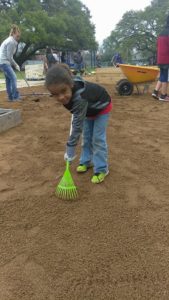 Brook Avenue Elementary School is one of those schools on the IR list and the faculty, staff, parents, and students there are also working hard to turn things around. Principal Sarah Pedrotti and her staff have implemented numerous things on campus to improve student achievement, teacher satisfaction, and parent engagement and they are already seeing success.
One thing that seems to be bringing together the leadership of the many different campus stakeholders is the development of an outdoor classroom. According to a recent article in Teacher Magazine, learning outdoors in nature not only has a positive impact on student learning, but also increases student engagement once they’ve returned to the traditional indoor classroom. (Earp, 2018). The idea for an outdoor classroom was first mentioned by a parent who really wanted to see the old school garden revitalized. Over the past year, campus administration, teachers, community members, parents, and students have all helped make this idea become a reality. Administration at the school was able to cast a vision to secure and utilize grant funding for the creation of an outdoor classroom. Teachers have brainstormed ideas about ways they could utilize the space to enhance their current lessons. Community members have offered support by giving their expertise in gardening and other needed areas. Parents have organized work days and students have already started planting in the garden area. Everyone has been hard at work planning, building raised beds, building benches, moving soil, and planting and the space is almost finished.
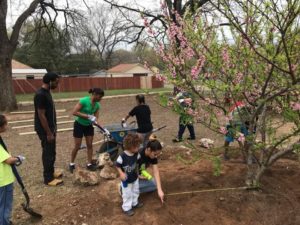 I believe we have strong leadership in Waco schools. I believe Dr. Nelson will get things where they need to be for Brook Avenue Elementary and the other schools in the district, but I also believe in the leadership I’ve seen on this campus over the past year working on this project. I believe in leaders like Principal Sara Pedrotti and Assistant Principal Jessica Torres who are dedicated educators who do everything they can to make sure their teachers and students have the tools they need to succeed. I believe in teachers like Mrs. McMeans, Mr. Jimenez, Mrs. Schuler, Mrs. Reeves, and so many more who are finding creative ways to help their students learn. I believe in the support staff like Carole Meriwether and Wade Mackey who are finding ways to provide additional resources to the campus. I believe in community members like Columbus Avenue Kid’s Hope USA Mentors, Klaras Center for Families, CIS, Antioch’s Star Mentoring Program, and the Garland School of Social Work’s BEAR Project who are finding additional ways to support the campus. I believe in parent leaders like Christy Perkins who are helping to organize efforts for the outdoor classroom space and I believe in the students at Brook Avenue Elementary. All of them are doing their part and each of them are leaders.
We hope you can join us to see our outdoor classroom space and meet some of our fantastic Brook Avenue leaders for a Ribbon Cutting Celebration on May 22nd at 6:00 pm.
 Josh Caballero is a community organizer in North Waco for Grassroots Community Development and works closely with local schools, churches, businesses, and residents in the Brook Oaks and Sanger Heights neighborhoods. Originally from the panhandle of Texas, Josh has been a Wacoan for 12 years and enjoys living in the Sanger Heights neighborhood with his wife Jennifer and daughter Millee Grace.
The Act Locally Waco blog publishes posts with a connection to these aspirations for Waco. If you are interested in writing for the Act Locally Waco Blog, please email [email protected] for more information.
References:
Earp, Jo. (2018, January). Outdoor lessons boost classroom engagement. Teacher Magazine, Retrieved from http://www.teachermagazine.com.au
By Vivek Paudel
“Makerspaces like Maker’s Edge have great promise for the 21st-century economy.” – Jessica Attas, Greater Waco Chamber of Commerce.
A hidden diamond in a coal mine can only get its worth if people who know the value of a diamond reach to it.
Located at 1800 Austin Ave, The Maker’s Edge is, to me, one of Waco’s hidden diamonds. Maker’s Edge is Waco’s “makerspace.” If you are not familiar with the concept of a makerspace, it’s like a big community workshop for making things.
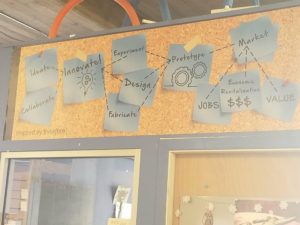 Maker’s Edge provides a space for creation, customization, innovation, and experimentation in our community. It’s a place where people from nine to ninety-nine go to make their imaginations real. Whether you are an artist who wants to do some customization on a personal item or a student who needs to build a science project, Maker’s Edge provides all sorts of guidance and an expansive variety of equipment.
 This is no small room with a few LEGO sets and a 3D printer. Maker’s Edge provides a full shop experience with more machines and space than many might realize is available here in town. Equipment available includes a CNC Router, 3D printers, plasma cutter, drill press and much more that makers can use for purposes from customizing a cell phone case to building a prototype of a new product.
Melissa Pardun, the owner of Maker’s Edge, calls it the “democratization of heavy machines.” Through Maker’s Edge, and other makerspaces, anyone can use expensive tools that otherwise they would not be able to afford. Anyone can make a prototype of the idea they have been carrying around in their head. This opens up the possibility of making tons of money as well as benefit to the community.
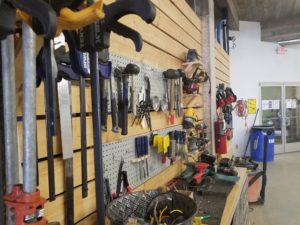 Not only does Maker’s Edge make the machines available to customize items and build prototypes, it also provides a place to connect with others and share ideas. For example, if different people take advantage of this space to customize their stuffs — which can include anything from improving the look of their cell phone case to building a bookshelf — this will not only increase the creativity of those people, but can simultaneously help in exploration of new ideas for customizing.
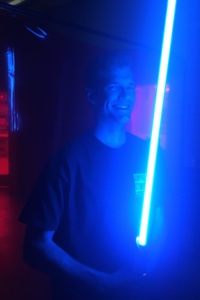 All these options and machines may seem overwhelming. But, I encourage anyone who has something in their mind to head over to Maker’s Edge and create it. The people at Maker’s Edge will provide the guidance and help to help you create your prototype. I have seen people create remarkable objects from lightsabers from Star Wars, to Harry Potter wands and much more. When people participate and work on a project, that builds up and improves creativity. At Maker’s Edge people are able to polish their arts and imaginative skills. The people at Maker’s Edge provide a helping hand and help in cases of failure because they believe in learning through failing. When people carry that perspective into the workshop, great results will follow.
It’s even a stress reliever. Taking a pottery class at Maker’s Edge and getting your hands into some clay and mud is a great way to relieve the daily stress. Getting involved in a class can also help you meet new people; some nice small talk with a new person can be a good stress reducer too. If you are dealing with anger, use that anger and put it into building something that will be productive. If nothing else, Maker’s Edge is a place where slamming a hammer on a wooden plank is considered a productive task!
Maker’s Edge is a treasure chest for Waco, and more Wacoans need to know about it and take advantage. We, as a part of community, need to invest our time in understanding about them and utilizing the things they have been providing. They provide free classes where anyone can test it out without risking finances. An engine of creativity like Maker’s Edge should be booming in the center of our community rather than being at the unfamiliar edge.
 Vivek Paudel is a student at MCC pursuing an Associate in Arts for Digital Media. He is an expert when it comes to eating and travelling, and he listens to rock music whenever he feels low. He loves to write stories that are posted on his blogspot account. He likes to interact with people about different stuff, and he knows how to fill those awkward silences.
The Act Locally Waco blog publishes posts with a connection to these aspirations for Waco. If you are interested in writing for the Act Locally Waco Blog, please email [email protected] for more information.
(Welcome to the first post of the new Act Locally Waco/Towny blog series. Towny is an app that exists to connect consumers with local businesses. It’s fairly new to Waco and is loaded with answers to the question, “Why local?” Beginning with this post, the folks at Towny will be sharing the stories behind some of our high-quality, local products and helping you get to know some of our energetic local entrepreneurs. We hope you enjoy it! Supporting local business is a terrific way to support the Waco economy! Plus, it’s just fun to get to know your neighbors. – ALW)
By Beth Whittington
 I confess I haven’t shopped for cowboy clothing since Go Texan Day in 4th grade, so I had a thing or two to learn when I walked into El Rio Western Wear at 3433 Memorial Drive. Cowboy tunes and the ringing of a landline were the soundtrack of my time with owner, Eduardo Martinez. Old fashioned reliability feels like it is baked into the walls of this place. One gets a thorough sense that the Martinez family knows what they are doing.
Eduardo’s voice is gentle and confident, a mixture of Texas twang with a memory of his family’s history. As we talked I thought, he’s someone who is going to shoot you straight — quick, and honest. Here’s a bit of what I learned…
Beth: So, what made you want to start El Rio Western Wear? What was the vision?
Eduardo: It was my parents who started it. They actually started selling statues. Then, they moved to women’s clothing and then after that kinda died down, they started selling men’s clothing and then boots, and – that’s kinda where it all started, from them tryin’ to provide a little bit of income. I’ve been working with them since I was small, since I can remember.”
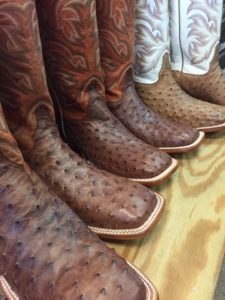 They started selling those statues maybe in 2003? And they moved to the boots and the hats in 2004-2005. And, we’ve been doing it ever since. We started selling at the flea market and things, you know, got good, and we actually opened a brick and mortar store in 2006.
We just moved over here last August. The new location is probably double the size of the old one.
Beth: So, you grew up watching your parents run the store. What made you want to be a part of this?
Eduardo: (Tilting his head, searching for an answer…) I don’t know! I’m just kind of used to it. I’m the only one of my siblings that actually, I guess, actually got into it — into the business. I saw the success…and, I just wanted to continue what they started.
They actually started in Houston, but that store failed. We had family members here and they decided to give it a shot here and that’s how it grew.
Beth: Can a customer get exactly what they want?
Eduardo: We try to keep most things in inventory, try to be different from Cavender’s. We do carry major brands – Cinch and all that, Ariat and all that. And we try to stay competitive. We try to keep in competition with Ritchie’s…
Beth: Who’s your clientele?
Eduardo: It’s a little bit of everything. Right now it’s a middle-aged, older crowd. We’re trying to get a little bit of that younger crowd to take an interest in the cowboy outfit, stuff like that.
Beth: I love hearing the history of the store, Eduardo. In terms of being a part of a local business in Waco, do you like being in Waco? And, if so, why do you like being a part of this economy?
Eduardo: Well, coming from Houston, which was a bigger city, Waco gave me more opportunity – for me to grow as a person, get involved with a lot more people, get personal, you know?
I grew up here – well, my teenage years, I grew up here – and because of the business, I’ve come to know a lot of people. You know, I go out to eat – I’m gonna know somebody, at least. Which, in Houston, that’d probably be way different.”
I like that about Waco: it’s not too big, not too small. Right between Dallas and Austin. I mean, you can easily go up there and come back. But as a community, I think I like it more than I would’ve Houston.”
Beth: On a personal level, as business owners in Waco, what’s been your greatest obstacle?
 Eduardo: Trying to get new customers. Trying to get the new traffic flowing through here. Because, like I said, it’s a small town. So, if everybody has the same thing…”
New inventory. Fresh! And sizes. I think that would be one of the challenges that we have. Trying to get new faces, trying to get new things in the store.”
Beth: How do you know if you have new customers coming in?
Eduardo: I’m here five to eight hours almost every day. I know what faces run through here all the time and which faces are new. This is basically my second home; I spend more time here than I do at my house!
I would know who comes here as a regular and who doesn’t.
Beth: What’s something you think would be surprising for people to find out about you or your business?
Eduardo: I guess…that I’m still learning. We’re still learning. I’m always tryin’ to learn – everything – new styles, new trends…”
Beth: So, El Rio, you are the fashion experts?
Eduardo: Well, we have to be attentive of what’s going – what’s in style, what’s hasn’t been in style, what’s going out of style, what’s still trending… We have to have something that’s there for people to buy, because if it’s not what they’re looking for, we’ll go out of business.”
Corporate clothing stores employ buyers whose only job is to stock up on relevant goods. For a shop like El Rio, the owner wears that hat. When clients come in, and they’re looking for something specific, Eduardo is the one who did the research. His clients benefit from all of his knowledge. El Rio Western Wear is waiting for you to reap its local benefits. Swing on by!
 Beth Whittington remembers sitting on the Waco suspension bridge as a girl, visiting family friends. Legs dangling off, watching the Fourth of July fireworks spark the sky. Been a Waco local for the better part of 19 years. Gaps explainable by the awkwardly untrue term of “ex-missionary” 🙂 Beth thrives on: generating ideas + copywriting. Can’t wait to: visit South Africa. Favorite part of Waco: Bangkok Royale + the HOTHTC. Wants: everyone in Waco to get Towny because it’ll make life better for us all if we let it.
Take your local support up a notch – pop in Towny + have a look around.
The Act Locally Waco blog publishes posts with a connection to these aspirations for Waco. If you are interested in writing for the Act Locally Waco Blog, please email [email protected] for more information.