By Magen Davis
By the end of this summer, downtown Waco will be home to a new mural. But unlike existing 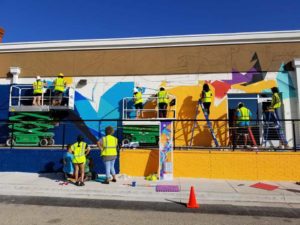 pieces in the area, this work of art will be crafted by an unlikely group of creatives: 10 Waco ISD high school students working alongside a team of professional artist mentors.
Here’s what you need to know:
- ArtPrenticeship is an internship program organized by Creative Waco, Prosper Waco and Waco ISD that will teach a group of 10 Waco ISD high school students, or apprentices, the ins and outs of managing a creative project.
- Four artist mentors will guide the apprentices from concept to completion, designing and painting a mural on the side of a newly completed building in downtown Waco.
- We’re in search of wage sponsors to serve as an accountability partner for performance throughout the summer and help provide compensation for each apprentice at the end of the program.
ArtPrenticeship has roots in the Cincinnati ArtWorks program that Waco leaders learned about on a Greater Waco Chamber of Commerce intercity visit in September 2017. ArtWorks employs professional artists and apprentices ranging from ages 14 to 21 to complete public art projects across Cincinnati, including hundreds of murals on the sides of buildings that are several stories tall.
 Creative Waco has borrowed this model and shaped it to fit our own community. ArtPrenticeship is a unique opportunity for creative students to hone their artistic abilities while also learning professional skills necessary to thrive as an independent artist. Emphasis will be placed on safety while working on a mural jobsite, calculating costs, ordering materials, and the importance of collaboration and communication between artist, client and community.
The students will work between several sites across downtown Waco, with most time spent at the mural site at 315 University Parks Drive, the shopping strip next to Bicycle World.
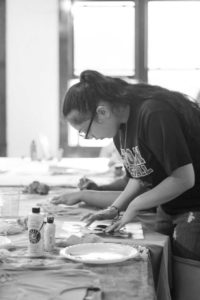 For our program’s pilot year, the students were selected from a diverse pool of applicants through Prosper Waco and Waco ISD’s summer internship program. Two teaching artists and two assistant artists will guide the apprentices through the mural process. Between them are several years of teaching experience, as well as expertise in a wide range of artistic media, including mural installation and painting.
One goal of ArtPrenticeship is to pay all participating students a meaningful wage. Creative Waco has successfully secured wage sponsors for each apprentice at $600 per student. Sponsorships not only provide a financial reward for program completion, but also ensure accountability for their productivity throughout the program.
Creative Waco would like to extend a special thanks to our sponsors: Baylor Philanthropy, Cooper Foundation, Magnolia Foundation, Waco Public Improvement District (beautification grant), Mitchell Construction, Turner Behringer Development, Terry and Elaine Stevens, 1519LLC, and Langerman Foster Engineering. ArtPrenticeship would not be possible without the enthusiastic support and resources we’ve received from these businesses and community leaders.
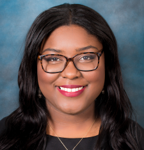 Magen Davis is a Texas-born, graphic designer and “multimedia person.” Magen graduated from Baylor Journalism in Fall of 2015 from the New Media concentration and with a minor in History. Magen is in her first year as a student of Baylor University’s journalism graduate program. Her research interests include new media implementation for organizations, apologies in image repair, and user-generated content. Currently, she also works with Midway Independent School District as a Multimedia Specialist creating videos, taking pictures, and designing district communications.
The Act Locally Waco blog publishes posts with a connection to these aspirations for Waco. If you are interested in writing for the Act Locally Waco Blog, please email [email protected] for more information.
By Laura Greenstein
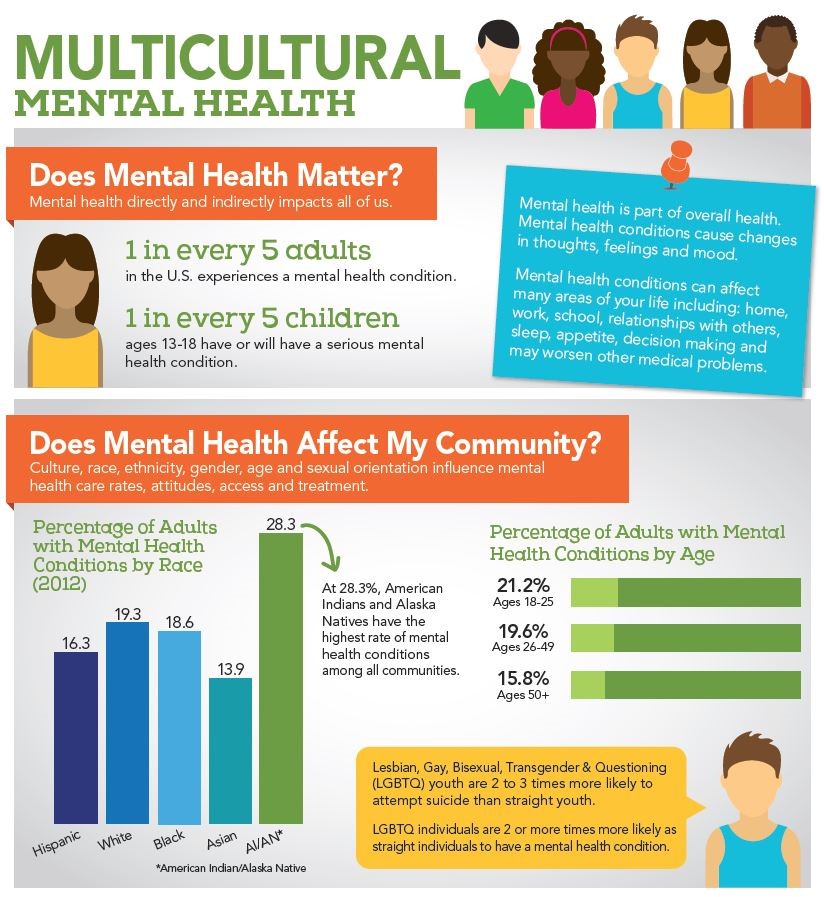
Mental health conditions do not discriminate based on race, color, gender or identity. Anyone can experience the challenges of mental illness regardless of their background. However, background and identity can make access to mental health treatment much more difficult. National Minority Mental Health Awareness Month was established in 2008 to start changing this.
Each year millions of Americans face the reality of living with a mental health condition.
Taking on the challenges of mental health conditions, health coverage and the stigma of mental illness requires all of us. In many communities, these problems are increased by less access to care, cultural stigma and lower quality care.
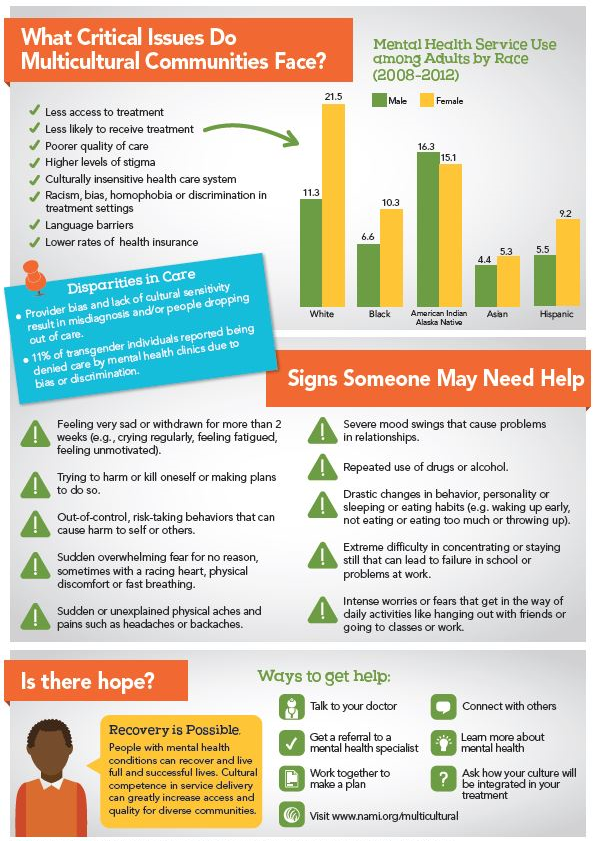
America’s entire mental health system needs improvement, including when it comes to serving marginalized communities. When trying to access treatment, these communities have to contend with:
- Language barriers
- A culturally insensitive system
- Racism, bias and discrimination in treatment settings
- Lower quality care
- Lower chance of health care coverage
- Stigma from several angles (for being a minority and for having mental illness)
These are all in addition to the usual road blocks. Many cultures also view mental health treatment as a luxury, considering symptoms a “phase” that will eventually pass. These harmful perceptions of mental illness can further isolate individuals who desperately need help.
We can all help ignite change against these disparities and fight stigma this Minority Mental Health Awareness Month. It starts with learning more about mental health and informing your community.
Consider Giving A Presentation
Starting conversations about mental health in your community may feel intimidating—especially if your community views mental illness as a personal fault or weakness. But the more we talk about mental illness, the more normalized it will become. And NAMI is here to help!
Consider giving NAMI presentations to your community, like Sharing Hope for the African American community and Compartiendo Esperanza for the Hispanic and Latino communities. These presentations go over the signs and symptoms of mental health conditions as well as how and where to find help. If neither of these presentations fit your background, feel free to use them as models to create your own presentation tailored to your community’s needs.
Emphasize Treatment
Make sure to stress the importance of a culturally competent provider. These mental health professionals integrate your beliefs and values into treatment. To find a provider that does this, you may have to do a significant amount of research. In addition to searching online, you can also ask trusted friends and family for recommendations or ask for referrals from cultural organizations in your community (like your local AKA Chapter).
In your first session, make sure to ask any questions you may have about the professional’s cultural competence. For example:
- Do you have any experience treating someone from my background?
- Have you had any cultural competence training?
- How would you include aspects of my identity into my care?
Be confident when disclosing relevant information about your beliefs, culture, sexual orientation and/or gender identity that could potentially affect your care. Your provider will play a vital role in your treatment, so make sure you feel comfortable and can communicate well with them before committing to them. Remember: If you feel like your provider doesn’t understand you, it’s okay to leave. Cultural competency is very beneficial to effective treatment. It might take a bit of effort to find the right fit, but recovery is worth it.
Share Your Story
When a person experiences symptoms of mental illness, one of the most helpful and comforting feelings is knowing that they’re not alone. It can be incredibly reassuring to know in this moment right now, someone else is going through similar struggles as you are—regardless of where they are, who they are, or how they identify.
If you’re ever feeling isolated or that your community doesn’t understand mental illness, explore story-sharing platforms like Ok2Talkand You Are Not Alone. On these platforms, everyday people write about their deepest struggles with mental illness and their hopes for recovery. If you feel comfortable, post your thoughts and feelings about or experiences with mental illness—it’s rewarding to know you are helping others feel less isolated.
Minority Mental Health Awareness Month is an opportunity to raise awareness and stop stigma in diverse communities. It’s time to improve the harsh realities minority communities face when it comes to mental illness treatment. In fact, it’s long overdue.
 Laura Greenstein is a passionate writer with a personal mission of raising mental health awareness. In her current role, she writes for the blog and Advocate, assists the editorial process and provides any needed support to the Marketing & Communications team. A travel enthusiast, Laura has been to six continents and previously worked with Traveler’s Today magazine. She holds a B.A. in English with a concentration in creative writing and a minor in journalism from North Carolina State University.
The Act Locally Waco blog publishes posts with a connection to these aspirations for Waco. If you are interested in writing for the Act Locally Waco Blog, please email [email protected] for more information.
By Bruce Huff
There was so much trash on our streets, something had to be done! On November 25, 2016, GROUP W BENCH LITTER PATROL was formed, and to date, volunteers have picked up almost 90,000 pounds from Waco streets, alleys, highways, lake and rivers. Our accomplishments include: 25 organized cleanups throughout Waco, 1056 Facebook members in 29 countries following what we do, being granted an Adopt-A-Highway section, helping initiate and get Texas House Bill 1884 on litter passed, and receiving awards from Global Revive and Keep Waco Beautiful. We have also been fortunate to partner with Waco River Safari and Waco Paddleboard Company, who provide transportation for our river clean-ups.
After speaking before Waco City Council numerous times and pleading for help with the litter problem, we wanted to extend our message. We decided to elect a board, cement our goals, and become a non-profit. In the meantime, we fast-tracked a partnership with the McLennan County Probation Department by taking their seminar and signing a contract of expectations. Two months into this program, we have signed off on 6 probation volunteers and are working with 14 more who have helped us pick up 9000 pounds of litter, tires, TV’s and garbage all over Waco and Mart.
On June 12, after board member Randy Truett presented our progress report to city council, Waco City Manager Wiley Stem asked if we would be interested in talking further. On June 22, Randy and I met with Mr. Stem, Anna Dunbar of Solid Waste, and Chuck Dowdell from Public Works. They gave us insights to what is happening now and what is planned for the very near future for river trash and debris cleanup with updated equipment, as well as how the new Big Belly solar-powered litter compactors were being used in the downtown area. Also discussed was a partnership with Keep Waco Beautiful and how our two organizations could benefit from each other. Randy and I left the meeting feeling like we won the lottery!
Next, on July 2, Randy met with Ashley Millard, Executive Director of Keep Waco Beautiful, to combine calendars and plan for our alliance. Randy will apply for a board position with KWB and attend their yearly business meeting.
Come and join our next effort! Waco River Safari V Brazos River Cleanup will be August 12th, 8:00 A.M.—11:00 A.M. at Waco Suspension Bridge. Fourteen very lucky people will ride up river on the boat! They will be the first 14 new members who join our Facebook page GROUP W BENCH LITTER PATROL after this article appears and write, “I want on!” Also a limited number of kayaks and canoes will be available for the first who reserve them.
Waco is on track to becoming America’s Cleanest City! We just have to create more awareness and get the community involved in not throwing out litter, using less plastic, and caring about the environment. Thanks especially Anna Dunbar for her professionalism, Mr. Stem for his commitment, and Chuck Dowdell for not giving up on GROUP W BENCH LITTER PATROL.`
 Bruce Huff has Multiple Sclerosis, is semi-retired and now an activist in Waco, Texas
The Act Locally Waco blog publishes posts with a connection to these aspirations for Waco. If you are interested in writing for the Act Locally Waco Blog, please email [email protected] for more information.
By Christina Helmick
In 2014, the City of Waco commissioned a study to identify innovative economic development strategies that could concurrently enhance the local economic base and provide a sustainable pathway for economically-disadvantaged Waco residents toward full-time employment. That study, called the Upjohn Economic Development Study, provided City officials with 80 pages of potential evidence-based strategies to improve Waco’s economic development efforts, which would also enhance efforts to decrease Waco’s poverty rate.
One of the strategies identified in the 2014 Upjohn Economic Study was the need for an employer resource network. The concept of the employer resource network is to connect the needs of local employers to social service agencies supporting individuals looking for jobs or needing assistance in keeping the jobs. To those who know her, it is no surprise that Ashley Bean Thornton took the lead and created the first phase of Waco’s employer resource network, called WFEN (Waco Foundational Employment Network) at the time. For about a year and a half, local employers, social service agencies and staffing agencies met to discuss how each entity can work together to keep individuals in jobs.
 Combined with the findings of the Upjohn study and the success of WFEN, the City of Waco provided pilot funding to Caritas of Waco and Heart of Texas Goodwill to be the lead implementing partners of the Waco Employer Resource Network (WERN) in late 2017. WERN’s mission is to provide holistic, personalized support to local employers and employees, ensuring a strong, sustainable workforce for today and for the future.
The Network is led by a Success Coach, Spike Burt, and Liaison, Katy Schulz. The Network provides:
- Confidential, personalized one-on-one case management for an individual employee facing challenges
- Connection to local support services that are beyond the employer’s scope of work.
The hope is that this holistic support will result in Increased employee retention and productivity. The collaborative efforts of organizations involved in WERN are working to improve Waco’s median household income. Right now, the median household income in Waco is $37,722.
Spike Burt, the Network’s Success Coach, supports, assists and encourages each employee to overcome barriers to retaining employment. He connects employees to company, public and nonprofit resources such as:
- Childcare
- Transportation
- Housing
- Education (GED, ESL)
- Utility assistance
- Job training
The Network’s Liaison, Katy Schulz, is the central point of contact for employers. She works with organizations involved in WERN, sends out career opportunities to the Network, and coordinates the monthly Network meeting. The monthly Network meetings are focused on bridging the gap between local employers and local resources to support employees.
If you would like to join WERN (as an employer or partner agency), please email Katy Schulz at [email protected]. You can follow WERN on Facebook to keep up-to-date of the Network’s activities!
 If you’d like to learn more about WERN and other efforts addressing quality of life in Waco, visit The Work page on the Prosper Waco website!
 Christina Helmick is the director of communication at Prosper Waco. She is a recent graduate of Baylor University with a BA in Journalism, Public Relations & New Media. Originally she is from Washington, D.C., but has stayed in Waco post-graduation. She is an active mentor at J.H. Hines Elementary School, enjoys spending time with her family and watching Baylor football. Sic ’em Bears!
The Act Locally Waco blog publishes posts with a connection to these aspirations for Waco. If you are interested in writing for the Act Locally Waco Blog, please email [email protected] for more information.
By Jessica Emmett
You can do more with your Waco Library card than ever before! We have been hard at work, listening to you and making changes that fit your 2018 lifestyle. Whether you are trying to use more local resources, improve your life or just entertain yourself, we are here for you. You can visit the library to check out books, movies and more, use computers and free WiFi, and attend awesome programs. You might know all of that—but did you know how much you can do using our website? Here are 10 things you might not know!
1. Access your library account online!
Your phone buzzes. Is it the cute guy you met at the coffee shop? Nope. It’s us telling you your book is almost due! Using our website, you can access your account to check that due date, renew your book and breathe easier. You can also view your reading history, make “to read” lists and more! Never be surprised by fines again!
2. Reserve items (in so many ways!)
When you hear about something that sounds good to read, you can go to our website right away and see if we have it. You can use the website to request it and have it sent to the location of your choice. We’ll hang onto it for up to a week, so you can pick it up.
You can even have books sent to another library in McLennan County (Hewitt, Mart, McGregor, Moody, West). Just talk to the librarian at that library and you can pick up that hot release in your hometown.
If we don’t have the book, you can do an interlibrary loan, where we borrow the book from another library in the US. Just search our catalog using the Interlibrary Loan database and you can place a request for just about anything!
3. Ask us anything!
When you’re working on a project and need one more source, we can tell you where to find it! When your ebook was there and now it’s not, we can help you! When you want to know where to find old issues of the Trib, we’ll point you in that direction! Visit our website and you’ll see a link to Ask a Librarian. Click it and ask your question—any question—and we will do our best to answer it. You’ll get your answer via email, so you can continue your important work.
4. Get your hands on a Museum Pass!
Have you used our Museum Passes? We have passes for the Mayborn Museum, Dr. Pepper Museum, Texas Ranger Hall of Fame, Texas Sports Hall of Fame, Mammoth National Monument and the Cameron Park Zoo! They check out just like a library book, so all you need is your library card. They are so popular, though, that it pays to check if they’re available before you head to the library. Just click this link, or visit our website and search Museum Pass and you can check the availability from your phone, tablet or computer.
5. Read and listen to books and magazines on your phone!
Amazon addicts, listen up! Even though you only read eBooks, we’ve got your back! Search our catalog for the books you want and you can see if they’re available as eBooks, eAudiobooks (no changing CDs!) or both. Isn’t it great to get stuff for free?
We also have eMagazines. They’re just as beautiful and shiny as the print version, but you won’t have a stack of them to sort through every time you move! You can pick the issues you want and even “subscribe” by signing up for alerts when a new issue comes out. Catch up on your hobbies, news or even celebrity gossip (we won’t judge).
6. Learn the difference between a faux pas and foie gras!
There are so many reasons to learn a new language. Planning a trip, starting a new job, impressing your foreign-born in-laws—you never know when the skill might come in handy! We’ve got an online tool called Pronunciator that can help you learn 87 different languages. There are also ESL programs for 51 non-English languages. Access Pronunciator from our website on any Internet-able device. There’s even an app! You will sound so cultured, and we are glad to help.
7.Master the job market!
Sending out résumés and not getting a lot of bites? We have an amazing tool called Learning Express Library that can help you build a killer new résumé, plus hone your job-worthy skills, like business writing, math and time management. You can practice for tons of entrance and occupational exams—real estate, law enforcement, CDL—and even learn about workplace etiquette. This self-paced, free resource is here to help you be your best you and get your best job!
8. Discover a new passion!
Do you cook, bungee jump, play drums or collect coins? There are so many hobbies out there and keeping up with new information and trends can get expensive! We’ve got databases to help you stay on top of your current hobbies or find new ones. Databases, or eResources, aren’t just for school projects. They’re basically a big filing cabinet of information about any topic you want! If you love fixing cars, history, model airplanes or anything in between, you can learn more about it wherever you are.
9.Uncover your roots!
Are you looking for the hidden secrets of your family history? We’ve got a great Genealogy Center at the West Waco location, so definitely visit them for maximum research support. If you’re doing your research at home, we’ve got some tools to help you out, too! Resources like HeritageQuest, Fold3 and Newspapers.com can provide you with great family history info. Set aside some time and be prepared to journey down a research rabbit hole, but you’ll have a blast learning about your past.
10. Reserve a library space for your next meeting!
Are you planning a meeting for a non-profit organization? We’ve got space for that! Each of our four locations has a meeting room for large gatherings and a conference room for smaller meetings. Our Central and West Waco locations have large study rooms, too, that you can reserve for a really tiny meeting. You can use a projector, a whiteboard and make yourself comfortable! Visit our website and click the Book a Room link to get to the self-serve room booking module. You can see what dates are available at each location and request the room. You’ll get a response via email in a couple of days. We love to be the hosts of your awesome get-togethers!
BONUS! Put your card on your phone!
Keeping up with cards can be a challenge, but keeping up with the times is easy for us! We’ve got scanners that can scan a barcode on your phone and it works just like having your physical library card. So if you leave your card at home or you have everything saved on your pocket personal assistant, we can handle it!
So, what are you waiting for? If you don’t have a Waco Library card, now is the time to get one! They are very valuable and totally free. For more information about the Library, visit wacolibrary.org.
 Jessica Emmett is the Community Services Supervisor for the Waco-McLennan County Library. She loves “preaching the gospel of the library” and has been doing marketing, promotion and outreach for the Waco Library for almost three years. Before joining the Library team, Jessica worked for a decade in public education, as an aide, teacher and librarian. She loves how her job lets her teach people of all ages about something she loves—the library!
Jessica enjoys lots of hobbies, including cooking, disc golf and running. She loves to read (of course) and usually has three or four books open at a time. When she’s not doing outreach, Jessica spends a lot of time in a very lonely office, so be sure to say “hi” if you see the Library table at your next Waco event!
The Act Locally Waco blog publishes posts with a connection to these aspirations for Waco. If you are interested in writing for the Act Locally Waco Blog, please email [email protected] for more information.
By Alfred Solano
Hello Waco! While I am certainly not new to Waco, I do feel like I am re-introducing myself. As the new President/CEO of the Cen-Tex Hispanic Chamber of Commerce (CTHCC), I do feel like I am looking at my hometown through a new lens. And, while I am a long-time member of the CTHCC, even serving as board chair for a few years, I am looking at the Chamber through a new lens as well. I am trying to get a focus on how Waco sees us…how YOU see us.
I am also learning as much as I can, as fast as I can, about this fine organization so that I can share that information with you. I want to convince you to get involved with the work we are doing, either as a member, a partner or a supporter. With that in mind, here are five things I have learned, that I think everyone in Waco should know about the Cen-Tex Hispanic Chamber of Commerce.
- We are open to everyone. – The CTHCC was founded in 1975 and is a nonpartisan business membership organization open to the entire community. Our belief is that the Central Texas community will continue to benefit from the economic advancement of the Hispanic population the fastest growing market segment of Central Texas. Our membership roster includes individual supporters, some representing large National Businesses, with the majority of the members representing Small Businesses.
- We are a key source of information for the community. – The CTHCC hosts a Monthly Luncheon, Annual Banquet and many other events that are open to the Chamber members and non-members alike. At the luncheons local leaders from the public sector as well as local business women and men share their initiatives in a comfortable group setting. City, County, State, and Nationally elected officials are regularly represented at and actively participate in luncheon programs. The Annual Banquet regularly hosted at the Waco Convention Center brings together hundreds of people representing all areas of Central Texas and features local or nationally known public and private sector keynote speakers. ABC news correspondent John Quinones and Former San Antonio Mayor & HUD Secretary Henry Cisneros are examples of the caliber of speakers we have featured at our banquets.
- We are terrific partners. – The CTHCC partners with the Cities of Waco and Bellmead, LULAC (League of United Latin America Citizens), various local initiatives including City Center Waco, Start-Up Waco, and Prosper Waco. We are an active participant within the McLennan County Chamber Alliance (a ten Member Chamber alliance), numerous local foundations (Cooper, Waco, Rapoport and United Way), and TAMACC (Texas Association of Mexican American Chambers of Commerce) to name a few partners. The purpose of these partnerships is to enhance the economic prosperity of the Greater Waco area by collaborating with as many resources as is necessary.
- We help Wacoans find good jobs. – The CTHCC regularly hosts job fairs at our activity hall on LaSalle or at the Bellmead Civic Center. We work to host these fairs in conjunction with Workforce Solutions of the Heart of Texas, and Workforce Management Partners Group. As a Chamber of Commerce our overarching goal is to improve economic development in Central Texas and the focus on quality employment opportunities is the cornerstone of our efforts. We will continue working with educators in Waco ISD, McLennan Community College, TSTC and Baylor, Tarleton and Texas Tech to play a role in the advancement of our local students, so that they may realize their potential.
- We have space to rent. – As a community organization, we know that finding the space for meetings and events is sometimes an issue in Waco. The CTHCC offices at 915 LaSalle and the 2,400 – square foot activity hall is available for rent 7 days a week. The hall is used for monthly luncheons, business meetings, job fairs, Birthday parties, our Back-to-School bash, and our neighborhood Christmas party for families and many other events.
As a new member of the Staff it is my hope that by sharing a snapshot of the past and present efforts of our Chamber we may encourage others to join our efforts. Our team, both staff and our tremendous volunteer network, are ready to assist where our talents may enhance the community. The future of the CTHCC is bright because we have a solid foundation of membership, community partners and friends due in large part to the efforts of past leadership. Twenty-two days on the job and I couldn’t be more excited for the work, and humbled by the support. See you around town!
 Alfred Solano is the new President/CEO of the Cen-Tex Hispanic Chamber of Commerce as of as of June 1, 2018. Alfred was raised in Waco and enjoys spending time downtown with his wife Rachel. After 35 years in the copier industry, he is looking forward to working with local community partners from the CTHCC perspective.
The Act Locally Waco blog publishes posts with a connection to these aspirations for Waco. If you are interested in writing for the Act Locally Waco Blog, please email [email protected] for more information.
By Tami Nutall Jefferson
Thirteen. Nineteen. Thirty. Those are the number of public posts that the Facebook post search function yielded for “Waco’s Juneteenth parade” for the years of 2016, 2017, and 2018, respectively. As Luann Jennings touched on the basics of placemaking in the first segment of this series, we are seeing firsthand the impact that organized and grassroots placemaking is having on the Elm Avenue district. Image is a big part of that. We are witnessing placemaking in action – live and in living color.
As with everything in life, there will always be two sides to the practice of placemaking. Whether you are on the “gung ho – let’s go” side or the “SOoMYB” (stay out of my backyard) side, I commend the City of Waco for proactively making a public forum available to the friends and neighbors of East Waco to voice their concerns and opinions about these projects as they move forward. The first of one of these forums took place on May 8th at the Multi-Purpose Center in East Waco at the Elm Ave Streetscape Project Public Meeting. The well-attended meeting included many familiar faces of Waco leadership, and importantly, many friends and neighbors who care about preserving while developing the East Waco neighborhood. Led by Community Liaison Chris McGowan of CMC Strategic, plans and action items were set forth for the impending upgrade of the Elm Avenue Corridor.
The City of Waco detailed their sidewalk and street improvement plans for the portion of Elm Avenue that runs from Martin Luther King Blvd. to Garrison Street. This stretch of improvements will launch the City’s physical efforts to extend downtown life into East Waco and connect both sides of the City with each other – bringing to life the 40-year ImagineWaco Plan. The initial plan is to improve the street crossings, create and enlarge sidewalks, enhance pedestrian, biker, and community safety, add accessible ramps where required, and ultimately add more vehicle lanes and on-street parking.
Feedback was also solicited to help design the cosmetic improvements of the project. These types of improvements are often make or break factors in the end acceptance and use of public spaces by us – the general public. Think of those times when developers laid beautifully, smooth stone surfacing – that slicks over when it rains. Or when developers build new street-fronting businesses with no or small windows in eye-burning colors. Or when city transportation officials removed bus sheds and street lamps on busy streets where the majority of neighbors utilize bus services – such as at the corner of Elm Avenue and East Church Street. To prevent these types of unwelcome or underutilized designs, the design and engineering teams presented participants with inspiration boards featuring several options of colors, street surfacing, and landscaping styles that they could vote on using their red (‘NO”) and green (“YES”) stickers. The project architect, RBDR Architects, would then take this feedback into account when laying out their landscape and architectural design and making material selections.
This initial $3.1 million dollar project, jointly funded by local TIF investment ($700,000) and grants from the State of Texas ($2.4 Million), is slated to begin in the winter of 2019 and finished by the spring of 2021. Even with the completion of this, though, we are only at the very beginning stages of the work and the conversations. Expect several more public information meetings to occur along the way and many more chances to contribute your voice to the shaping of East Waco.
This project is a great start. It’s exciting to imagine that the 2021 Juneteenth Parade and festivities might possibly be the most vibrant and well-attended parade of its kind across Texas, showcasing to the world just how well good design and community-centric placemaking efforts can bring life to main street cities and bridge gaps across cultures and communities.
 Tami Nutall Jefferson is an older, non-traditional student with a professional real estate background. Tami begins her first academic year at Texas A&M University pursuing a Bachelor’s Degree in Urban Planning and Land Development while commuting between Waco and College Station. Her hope that every Wacoan – from all corners – can engage in and contribute to the growth and success of the city. You can connect with Tami at [email protected] or on Facebook at https://www.facebook.com/tami.nutall1.
The Act Locally Waco blog publishes posts with a connection to these aspirations for Waco. If you are interested in writing for the Act Locally Waco Blog, please email [email protected] for more information.
By Rebecca McCumbers Flavin
While low voter turnout is a problem across the United States, Texas’ voter turnout rates are especially disappointing. According to statistics reported by the Texas Secretary of State, there are more than 15 million registered voters in the state of Texas, yet fewer than 3 million of these voters cast a ballot in the March 2018 Primary. The turnout was lousy for both major parties. In the Republican Party primary, just over ten percent of registered Texas Republicans voted, and approximately 7 percent of registered Texas Democrats voted. The Texas Secretary of State estimates that nearly twenty-four percent of the voting age population (VAP) in Texas is not registered to vote, which means that less than eight percent of Texas’ VAP voted in the March 2018 Primaries. With the local community’s help, the League of Women Voters of Waco hopes to improve these numbers for the general election this November.
In ALW blogs earlier this year we introduced our chapter, but in case you missed those, let us (re)introduce ourselves. The League of Women Voters (LWV) is a non-partisan organization that for nearly 100 years has advocated protecting the right to vote and encouraging the exercise of that vote. LWV pursues this mission by both lobbying elected officials and providing non-partisan voter education materials and programs for citizens. In Waco the LWV had an active local chapter for decades, and after a several year hiatus, the Waco chapter was reformed in 2017 as a League-at-Large under the auspices of the LWV-Texas. In the past year LWV-Waco has hosted several events, including a voter candidate forum for the March 2018 primary election and voter registration drives.
For our next event, we are excited to team up with Waco Walks on Saturday, July 14 for a walk that will be part educational and part social. We will be strolling the border of one of Waco’s most interestingly-shaped voter precinct boundary lines, the “dog leg” border that separates voting precinct 8 from precincts 4 and 7. This “dog leg” also forms part of the boundary between McLennan County Commissioner Precincts 1 and 2. We chose this area for the walk not only based its shape, but also for its general walkability in terms of distance, sidewalk availability, and access to shade. On our walk, which will take us through downtown Waco along Austin and Franklin Avenues, we’ll chat about a number of topics, including the history of redistricting in the United States, how the redistricting process works in anticipation of the redistricting that will occur in the states after the 2020 U.S. Census, and how invisible political boundaries have tangible effects on our everyday lives.
Now, you may be asking yourself, “what does walking a voting precinct boundary line in the middle of the scorching hot Texas summer have to do with increasing voter turnout?” Great question. We would submit there are at least three connections.
The first connection is related to voter education, generally. According to a 2016 survey by the Pew Research Center, non-voters reported being less knowledgeable about politics than “consistent voters” (those who vote in both presidential and mid-term elections) and “drop-off voters” (those who vote in presidential elections but who tend to miss mid-term elections). Similarly, the survey found gaps in political knowledge between drop-off and consistent voters. In this and numerous other studies, there is a positive correlation between the level of political knowledge and voter turnout rates.
The second connection is related to learning about redistricting, specifically. In the U.S. there is a long history of legislators drawing district lines in an effort to protect their own political interests. When districts are gerrymandered to diminish the influence of an opposing political party or community of interest, by “cracking” (dividing voters in the opposing party across different districts to dilute their impact) or “packing” (concentrating voters in opposing party into a few districts so that they win there by overwhelming margins), this can have a negative impact on electoral competitiveness. Political scientists have found that voter turnout tends to be higher in areas where elections are more competitive. Moreover, increasingly sophisticated mapping software makes it easier for elected officials to effectively choose their voters during the redistricting process.
The final connection between walking and talking about voting is that while the act of casting a ballot takes place in the privacy of the voting booth, voter mobilization to increase turnout is necessarily social. If voters encourage nonvoters, for example, this could help foster a culture of voting in McLennan County. Whether you have never missed an election or never voted in an election, we hope you will come share your story with your neighbors during the walk.
So join us on Saturday, July 14 for Waco Walks! We will meet at the Waco-McLennan County Central Library at 1717 Austin Avenue at 8:00 AM. The walk will be less than two miles. Bring a bottle of water and sunblock. Dogs are welcome, but please be prepared to clean up after your pet. Our only ground rule for the walk is that in keeping with the LWV’s strict non-partisan stance, we ask you to leave political party or campaign materials at home. LWV does not support any political parties or candidates for office.
 Rebecca McCumbers Flavin serves as Co-Communicator for LWV-Waco, leading the taskforce that focuses on voter registration and get out the vote activities. Dr. Flavin is also a Senior Lecturer in Political Science at Baylor University. To join or learn more about LWV, follow us on Facebook by searching for League of Women Voters of Waco, or contact the local chapter at [email protected].
By Glenn Robinson
When it comes to technology that makes our lives better, the trend has been smaller, faster, and better. When it comes to next generation medical procedures being rolled out nationwide, that trend has largely been mirrored.
Procedures that once took hours, now may take only minutes. Procedures that once involved long, unsightly incisions, are now being conducted with tiny tools that may only require an incision the size of a razor nick.
Perhaps nowhere have these advancements been more pronounced than in heart care and orthopedic medicine. Take, for example, procedures to repair or replace damaged valves in the heart. Ten years ago, these procedures often involved major invasive surgery, a week or more in the hospital, and months of recovery.
Today, many of the nation’s leading heart programs – including right here in Texas – offer solutions for certain valve problems that are so minimally invasive, qualified patients can leave the hospital in as little as one day and be fully recovered within a matter of weeks.
Similarly, major orthopedic procedures, particularly in the field of joint replacement, have come a long way since the turn of the century. Advances in pre-procedure imaging, artificial devices, and operational technique have led to artificial hips and knees that feel as good as the original with a fraction of the recovery time.
These and many other innovative procedures are creating better outcomes and giving more patients the opportunity to improve their quality of life. But how do scientific studies performed in labs turn into these actual medical treatments?
Translational medicine transforms basic scientific discoveries into innovative therapies for patients. This kind of research, often referred to as “bench to bedside,” seeks to implement evidence-based medicine safely, effectively, and as quickly as possible.
One of the most challenging aspects of translational medicine is gaining widespread adoption of new, evidence-based medical practices. It takes the complete commitment of an organization’s top management to recognize and reinforce the importance of this kind of research and its comprehensive, consistent application.
Many leading health care organizations are represented through research institutes, which facilitate translational medicine. These institutions focus on basic science, clinical trials, and healthcare quality-of-care research. They seek to understand the basis of a disease, identify potential treatments or preventive therapies, and enroll patients in research trials.
The institutes’ objectives are not only to make new scientific discoveries, but to implement research successes into community-based healthcare practices and then promote proven prevention and treatment strategies throughout the entire organization and greater healthcare community.
These institutes have been responsible for creating several novel therapies right here in Texas and have attracted millions in grants from U.S. and international government agencies to support important research efforts – turning laboratory research into new standards of care for the entire industry.
Another new trend in the world of research is the use of artificial intelligence, or A-I. A-I can solve complex problems that exceed human capabilities. Through its ability to access vast troves of data, A-I algorithms can both exceed the knowledge of experts, and augment the abilities of non-experts.
A-I already is disrupting transportation, marketing, and financial services, among other sectors of the economy. In healthcare, this technology is gaining momentum and has the potential to significantly alter the industry not only by developing new treatment options, but also by streamlining back office operations.
As care providers look to better engage patients and improve efficiency, many are turning to artificial intelligence to help them succeed. A-I powered medical assistants can book appointments, remind patients to take their pills, monitor a patient’s health status, and perform other time-intensive tasks.
A survey of health consumers found 55 percent are willing to engage with A-I and robots for healthcare needs. At a recent South by Southwest conference, Mark Rolston of Argo Design said artificial intelligence and virtual reality will be important parts of healthcare’s future.
Likewise, Oscar Salazar, of the app Pager, said that A-I gives nurses “superpowers.” He predicts that A-I increasingly will take over decision-making for healthcare triage and diagnosis, dramatically changing the roles of healthcare professionals.
Don’t expect your doctor to be going away anytime soon though. Like many technologies, A-I works best when paired with smart, capable people.
This report, and other episodes, are available at KWBU.org.
 Glenn Robinson is the President of Baylor Scott & White Medical Center – Hillcrest. He has over 30-years of experience in hospital and health care management, and currently serves on several Boards associated with the Texas Hospital Association and the American Hospital Association. In addition, Glenn is Past-Chair and an active member of the Greater Waco Chamber of Commerce, and serves on the Prosper Waco Board.
(This post is a part of a regular series “Trails & Trials,” a monthly adventure series inspiring others to experience the physical, mental, and social benefits of cycling, running or swimming in Central Texas. For more posts in this series, click here: Trails and Trials. – ALW)
By Brandi Grissom Swicegood
No matter how fit you are, how hard you trained or how mentally prepared you think you are, some race days just don’t come together the way you imagined. How do you keep it together mentally and stay positive enough to push to the finish, when your goals fade from reality?
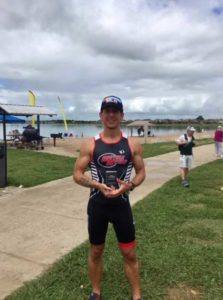 Justin Siegel, an athlete coached by Natasha van der Merwe, Director of Team Programs for Bicycle World, Texas, had an outstanding race in Pflugerville, but just a week earlier at Ironman Boulder, the day unfolded much differently than he expected. It was his third full Ironman race, and he was hoping for a personal best time. It didn’t happen.
Despite the challenges of a brutally hot day, Justin said the race was his best Ironman yet. How could that be?
Justin learned the most valuable racing lesson: It’s not about the numbers on the clock; it’s about the gratitude in your heart.
Q: Why’d you choose to race Ironman Boulder?
A: Boulder’s amazing scenery, coupled with the altitude and hills, put it on my short list from the beginning. The decision to race it this year was pretty last minute. I signed up a week before the race. Originally, I had planned to support my friend who was racing. But after a disappointing race at Ironman Texas a few weeks earlier, I was eager to take a second crack at it.
Q: What was your training like for Boulder and how was it different from your previous races?
A: Since I was coming right off a big build for Ironman Texas, I tried to focus on a few of the things that I felt were missing in my preparation for Ironman Texas. First, I forgot that racing and training are two different things, so I raced a few sprints. Second, since it was so cool this spring I did a lot more of my training outdoors to acclimate to the heat. Third, I worked on my nutrition plan.
Q: What were your goals going into Boulder?
A: My No. 1 goal was to race with gratitude and enjoy the experience. My second goal was to finish. My third was to set a personal record. My fourth was to nail my nutrition, in particular on the run. I got three out of the four.
Q: At what point did you realize the day wasn’t going to go according to your plan?
A: The day was absurdly hot. It hit 90 before 11 a.m., so I knew from the start it was going to be brutal. During the second loop of the bike, I saw people walking their bikes, which is something I’d never seen before. Others were passed out on the side of the road. At that point, I told myself I was going to make whatever adjustments I had to make to finish. My bike time was a bit slower than I’d hoped, but I was OK with it considering the heat, headwinds, altitude and hills. Five or six miles into the run, I managed to start hitting a pace that would set me up for a PR. But around mile eight or nine, I realized it wasn’t going to cool off anytime soon. I walked for a bit with a pro who was too wiped out to run. At that point, I realized I was not going to PR. In fact, I realized I probably wouldn’t finish if I forced myself to run much more. It was time to focus on finishing and enjoying the opportunity to be out there racing in such epic conditions.
Q: How did you deal with that realization mentally?
A: For a relatively brief moment, I was really disappointed that I wasn’t going to hit all my goals. While it was easy to point to the conditions, the reality is that some people had fantastic races that day. That wasn’t going to be me if I defined a great race by time. I bounced back because in my heart I knew that I’d given my all, executed my race plan, and I remembered that my top two goals were to be grateful and to finish. Those things are what I focused on until the end. I thanked every volunteer at every aid station. I soaked up the amazing scenery. I helped a struggling athlete finish. My friend’s daughter joined me for a few of the final miles. And I crushed the final 1/2 mile into the finisher chute!
Q: What did you tell yourself to keep going when the going got rough?
A: Positive self-talk is probably the skill I need the most work on deep into a race. I reminded myself that I can handle the pain, and that the pain will ebb and flow, so I just needed to persevere.
Q: What was the best part of the race for you?
A: As we lined up for the swim, with an amazing sunrise to the east and snow-capped mountains to the west, I realized how cool it was that I was about to do my second Ironman in six weeks, and by far my most challenging. I knew without a doubt that I had the depth of fitness and training to do it. I felt unstoppable.
Q: What did you learn about yourself during the race?
A: That I have to enjoy the experience. Racing can’t always be about the time or the result.

Brandi Grissom Swicegood spent nearly 20 years in the news business and quit to chase her dream of being a professional triathlete. Her work has been published in Dallas Morning News, The New York Times, the Los Angeles Times and Texas Monthly, among others. She is chronicling her journey as triathlete in a column at dallasnews.com and on her blog at https://www.brandiswicegood.com/. Email her at [email protected] and find her on Instagram at @brandiswicegood.
The Act Locally Waco blog publishes posts with a connection to these aspirations for Waco. If you are interested in writing for the Act Locally Waco Blog, please email [email protected] for more information.