By Madison Albee
Summer is the perfect time to have unique experiences and learn something new. MCC Continuing Education is committed to the development and enrichment of Waco and McLennan County. Our continuing education programs are designed to help individuals grow, explore their interests, develop their skills, or help them shift careers. Check out what we have to offer!
Community Programs
There are many different kinds of classes that are open to the Waco and McLennan County community, including but not limited to:
- Arts & Hobbies
- Culinary
- Fitness and Wellness
- Languages
- Travel & Special Events
- Kids College
Classes range from “House Flipping 101” to “Country Western Dance.” You are guaranteed to find a class that interests you, and even something that interests the kids! MCC Kids College offers classes such as “Babysitter Basic Boot Camp” and “Minecraft: Travel to the Future.”
Corporate Training and Workforce Education
For those interested in further developing their skills or wanting to shift their careers, MCC offers corporate training and workforce education over the summer with classes in the following areas:
- Auctioneering
- Computers
- Professional Development
- Law Enforcement
- Telecommunications
- Teacher Certification
- Truck Driver
Online courses are also available for corporate training and workforce education.
Health and Human Services
If you have always had an interest in the health and medical field, this summer is the perfect time to start your journey at MCC. We offer classes for those wanting to pursue positions such as:
- Activity Director
- EKG Technician
- Nurse Aid/Medical Assistant
- Massage Therapist
- Pharmacy Technician
- Personal Trainer
- Medical Coding Specialist
Some health and human services courses have entrance requirements such as immunizations and background checks. For more information, please call 254-299-8590.
Highlander Ranch
MCC’s Highlander Ranch offers some summer activities for members of the community interested in horses, horseback riding, and spending time outdoors.
- Clinics
- Pony Club
- Horse Shows
For more information about Highlander Ranch please visit www.mclennan.edu/highlander-ranch.
To see ALL the classes MCC Continuing Education will offer this summer, please take a look at our online brochure.
A summer spent with MCC Continuing Education will be a summer well spent. Register now before classes fill up!
Online: Go to our home page at www.MCCandYOU.com and click on How to Register.
In person: Register at the Continuing Education Office. Office hours are 8 a.m. – 6 p.m. Monday – Thursday and 8 a.m. – 5 p.m. Friday.
Phone: Call 254-299-8888 from 8 a.m. – 6 p.m. Monday – Thursday and 8 a.m. – 5 p.m. Friday. Payment must be made by American Express, Discover, MasterCard or Visa.
MCC hopes you have a sunny and educational summer!
 Madison Albee is a senior at Baylor University from Fort Worth, Texas. She is studying journalism/public relations with a concentration in marketing and is graduating this coming May. Currently Madison works for MCC as a public relations intern in the marketing and communications department. She is also the public relations assistant for Luca Magazine.
The Act Locally Waco blog publishes posts with a connection to these aspirations for Waco. If you are interested in writing for the Act Locally Waco Blog, please email [email protected] for more information.
By Russell Ritchey
We moved to Waco in 1990 and raised four beautiful children born and raised on what to me is now hallowed ground. My wife, Angie, passed away last year, God rest her soul. But she poured her heart and soul into our kids. It was so beautiful. (She was actually born in Waco in 1964, her dad, Ira Thompsom, being a Methodist Minister at that time). I penned a poem (actually a song) in 2003 as I pondered the ways of God, and life, as I listened to the cicadas in the lone oak tree above, and in Cameron Park all around, cradling my newborn son, Wesley, in my arms, nicknamed then as ‘Bug’. So now, after all these years, I want to share how the summer sound of the cicada has impressed upon me a strong and enduring memory. I hope you find my poem (song) a pleasant and pleasurable read and that it will compliment the melody of the cicada bug in your Waco trees this summer, and all the summers to come, and ultimately, in your many memories.
Here’s to my children, and especially my ‘bug’, and to my late wife Angie.
————
That Cicada Summer Love Song
Cicada, cicada, singing that summer song,
Cicada, cicada, singing all summer long.
The sound of summer fills the air,
Gently soothing every care.
Cicada, cicada.
The sun is shining bright outside,
It’s wonderful to be alive.
And now and then there is a breeze,
Whispering sweet memories.
Cicada, cicada.
So many summers from the past,
Oh how I wished each one would last
Just like this moment here with you,
I hope it is a memory too.
Cicada, cicada.
As summers come and summers go,
I hope your love for me will grow.
And when you hear them in the tree,
I hope you will remember me.
Cicada, cicada.
The sound of summer fills the air,
Gently soothing every care.
Cicada, cicada …
———–
Tempo: Grave – very slow (25–45 bpm) Just like the ‘dog days of summer’.
Use a guttural vibrato on the ‘ca’ in ci-ca-da using the vibrations of the epiglottis. Hold ca——- for about three seconds (like gargling with water but with air instead) to emulate the sound of the cicada. Pitch goes from low to a little higher to fading out (just like the sound of the cicada).
Interestingly, Cicadas have a two to seventeen year life cycle, depending on the species. Their familiar sounds during the ‘dog-days’ of summer are sometimes pleasant, sometimes annoying (depending on your frame of mind). However, the cicada’s time in life is as brief as a midsummer’s night, and it comes and goes before you know it.
Just like the wondrous moments of youth, which swiftly pass along, and then are gently locked away in the never changing realm known only as memories. May it forever be that we only have pleasant ones, and all that may be otherwise be gently washed away by the sound of the cicada.
 Russell Ritchey may not be a native son of Waco Texas, but how close can you get? His wife, Angie, of 27 years (God rest her soul) was born in Waco, 1964. And their four children, Nathan, Le’Anna, Kristina, and Wesley all breathed their first air in the Heart of Waco on Texas soil. Russell took a job at L-3 in 1990 (then Chrysler Technologies) and has enjoyed his home in Waco ever since, and his family that brought him there, and his job at L-3 that made it possible.
The Act Locally Waco blog publishes posts with a connection to these Aspirations for Waco. If you are interested in writing for the Act Locally Waco Blog, please email [email protected] for more information.
By Jennifer Alumbaugh
The integration of creative process with therapy has been a long tradition in the mental health field. It is used to “explore feelings, reconcile emotional conflicts, foster self-awareness, manage behaviors, addictions, and coping, develop social skills, improve reality orientation, reduce anxiety, and increase self esteem,” according to the American Art Therapy Association, “the goal in art therapy is to improve or restore a client’s functioning and their sense of personal well-being.” The creative process using visual arts of writing, painting, drawing, sculpture, mixed media, music, and other expressions, allow people to connect with their subconscious and to other parts of themselves beyond where language can take us. For some people who experienced trauma at pre-verbal stages of development, or during a time when they were learning their first language, but now only speak a second language, engaging in a visual process facilitates that connection to feelings and experiences for which a person may not have language.

(Original mixed media canvas by Jennifer Alumbaugh, LMFT)
The physical act of creating, using our hands to make, to shape, to move a medium around a page or a canvas or a block of clay, also connects us to different levels of our selves which allows for insights, awareness, and coping that is accessible beyond traditional “talk therapy.” In working with couples and families, creative process engages people to complete tasks, to work cooperatively, to see glimpses of the other’s thoughts and experience in fresh ways that can move a couple or family through conflict, through grief, through challenges, through communication toward a place of healing and wholeness.
When I consider the realm of mental health, I gather into that the following experiences: mental illness, grief and loss, and trauma recovery. Because while grief is not a mental illness, the experience of loss can result in mental health concerns. And while having survived a trauma incident or complex trauma is not a mental illness, the resulting PTSD, cPTSD, and other diagnoses are mental health issues. One of the things I love about using creative process in session with clients, is how art can help disrupt patterns of automatic thinking and can boost a client up out of a rut. Sometimes we create a visual representation of the emotion they are most struggling with: fear, sadness, anxiety, grief, anger. Sometimes it looks like a monster; sometimes it is a looming shadow; sometimes it is a silly creature that makes a client laugh instead of being afraid; sometimes they are small, pocket-sized beasts; sometimes they are great larger-than-life manifestations.
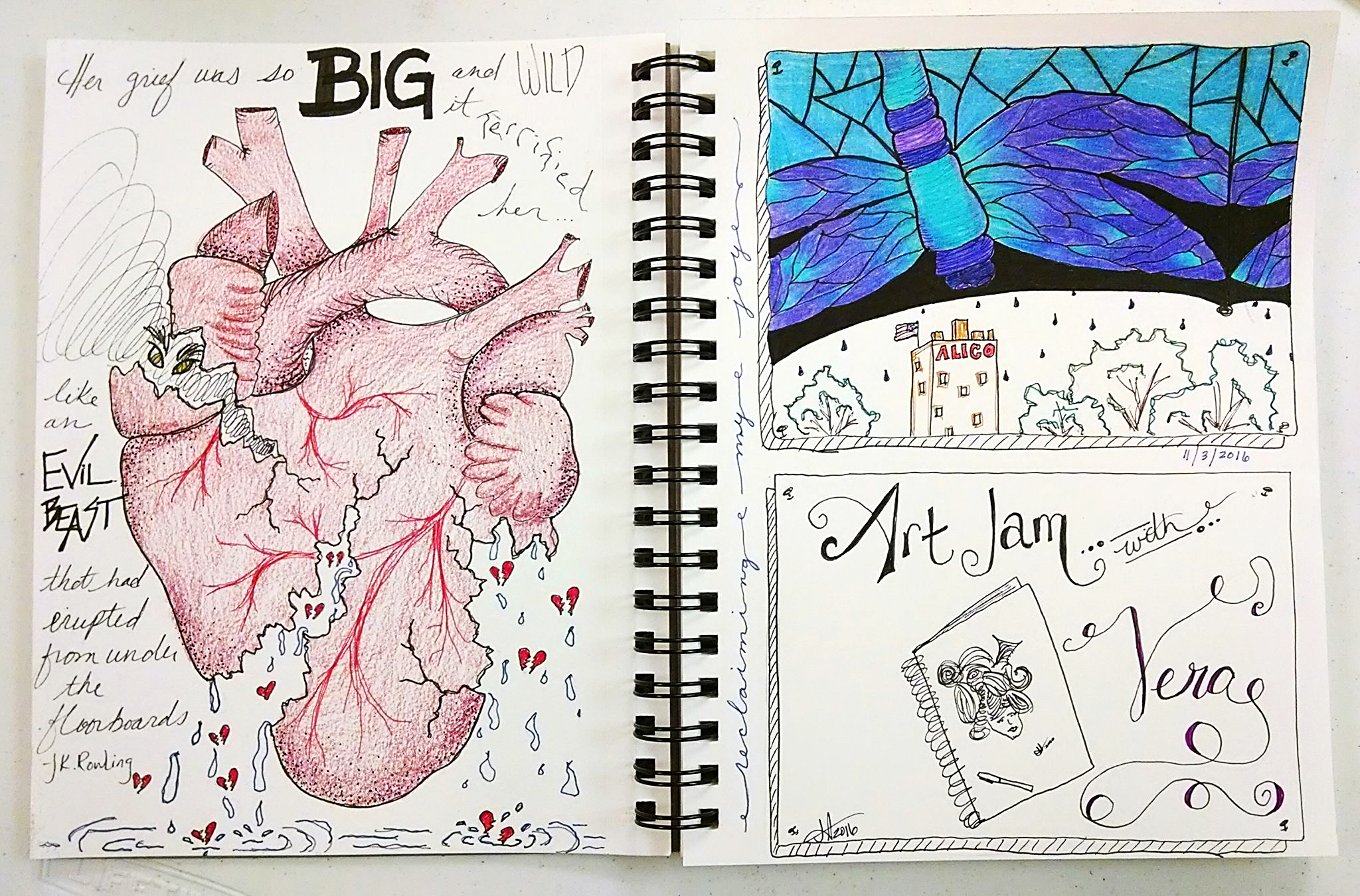
(Original mixed media drawing by Jennifer Alumbaugh, LMFT; quote by J.K. Rowling)
Naming those feelings—actual people names—and creating a visual image of them, helps to externalize the process. For me, grief is Harold and depression is Gertrude. They show up often, like uninvited guests, and over stay their welcome! But when I create caricatures out of these feelings, and create goofy personas to go with them, it shifts the power balance and gives me the chance to call the shots—to decide whether or not I let them in, or how long they get to stay. It is the same for clients. When we name and externalize our struggles, it separates them from us—so we are not afraid, fear is visiting us. We are not depressed; depression crashed our party. We are not anxiety; anxiety interrupted our meeting. Art gives us the tools to create a tangible, concrete representation of that with which we are coping bringing it out of the abstract and into the finite. Once we accomplish that, then we can feel more empowered to cope, manage, and control our feelings and experiences.

Original mixed media artwork and poem by Jennifer Alumbaugh, LMFT, 2016
There are many people who engage in creative expression outside of the context of a therapy session and who find that process to be therapeutic. There is something deeply satisfying about creating with our own two hands. For many, the act of creating is a soothing, meditative, practice. For me, I call it a “mind vacation,” because when I am making art, that is the only thing my mind is thinking about. I feel joy. I feel peace. I feel delight. Even when I mess up—which is often, I appreciate my process and everything I learn along the way.
I’ve been a poet and spoken-word artist for a long time and I found incredible release in exploring my grief, depression, and trauma recovery, through the medium of poetry. But I have found that the process is twofold—there is the creating, and then there is the sharing. I found that it wasn’t enough to create for myself and by myself and that as I began to share my work with others, I found this extraordinary, medicinal “me too.” Sharing my creative expression, my interpretation, my attempts to make meaning out of my experiences, it connected me with others who had also survived, struggled, and coped with similar things. I learned that I am not alone. And I learned that my creative expressions give others permission to feel and to question and to work through their own experiences. I realized that when we share our process of healing, coping, recovering, with others, there is no place for shame to grow and fester. Alongside all of the therapy work I was doing, sharing and listening and seeing others’ creative process moved me along the healing path as well.

(Original mixed media collage and poem by Jennifer Alumbaugh, LMFT)
Waco has a unique opportunity to engage, as a community, in creative process exploring the intersections of heart, mind, body, and soul in the upcoming Central Texas Artist Collective (CTAC) EKPHRASIS Exhibit. The call for artists will open May 1-31st and will invite both visual artists and poets to enter to be paired with a buddy—visual artists with poets and poets with visual artists. Each duo will then have 4 months to collaborate creating a visual piece and a poem which will be displayed together in shop windows along Austin Avenue and other downtown areas opening on the 1st Friday in November 2017. The theme for each creative pair will be to explore mental health, grief and loss, and/or trauma recovery. This will be a powerful experience in the process, in the exhibit, and in the viewing. The goal is to bring many stigmatized realities to light, normalize mental health experiences, and empower one another in our coping. For complete details on how to enter EKPHRASIS Waco! please visit the CTAC information page here.
 Jennifer Alumbaugh, MS is a Licensed Marriage and Family Therapist providing clinical and professional development consultation services at Enrichment Training and Counseling Solutions. She has extensive experience working with adolescent and adult survivors of psychological and spiritual abuse, trauma (sexual violence, childhood trauma, interpersonal violence); and complex PTSD. These, along with grief and loss work are her areas of specialization. Jennifer practiced as a mental health clinician throughout Los Angeles County working with children, youth, and their families from 2007-2012. In Central Texas, Jennifer has worked as a Site Coordinator with Communities in Schools of The Heart of Texas at G.W. Carver Middle School; as an independent consultant and professional development trainer; and conference speaker. In 2016 Jennifer created an implemented a therapeutic creative writing program, Brave Young Voices, at Klaras Center for Families and at the Texas Juvenile Justice Department correctional campus at Mart, TX. She may be reached at: [email protected] or 254-405-2496.
The Act Locally Waco blog publishes posts with a connection to these Aspirations for Waco. If you are interested in writing for the Act Locally Waco Blog, please email [email protected] for more information.
By Robin Wilson
Students enrolled in the Advancement Via Individual Determination (AVID) classes in Waco Independent School District (ISD) have increased over 200%! In the school year 2014-2015 just fewer than 400 students were enrolled in the Waco ISD AVID classes. The current school year has AVID enrollment over 800 students in the 7th -12th grade classrooms.
What is an AVID classroom?
 The AVID classroom focuses on developing students’ critical thinking, literacy, and math skills in all content areas. Academic behaviors, including organization, time management, and goal setting, are also taught as part of the AVID System. The goal of AVID is to develop and strengthen these skills and to empower students to take responsibility for their own learning and to close the achievement gap by preparing all students for college and other postsecondary opportunities. It assists students in developing confidence and encourages them to take academic risks. AVID provides a personalized learning environment that focuses on individual needs and creates opportunities for students to develop meaningful social networks and relationships. The AVID elective class also provides test-taking skills, assistance in preparing for and completing the college application process, and cooperative study/tutoring groups.
AVID Elementary
Waco ISD offers AVID at each of the middle school and high school campuses. AVID has also extended to four of the WISD elementary campuses. What does AVID look like at the elementary campus? AVID elementary is campus-wide initiative with a focus on developing organizational skills for all students, instilling student success skills, creating a college going culture, inspiring belief in academic rigor and success, providing professional development for teachers, and providing students a smoother transition to the next school.
Waco ISD AVID student accomplishments
 The Dell Scholars program, an initiative of the Michael & Susan Dell Foundation, recognizes students who have overcome significant obstacles to pursue their educations. Waco ISD is proud to announce three winners and two of the students are AVID students. Dell Scholars receive $20,000 each to complete their higher education over the course of six years. Each student is also provided technology, a private scholar networking community, resources, and mentoring to ensure they have the support needed to achieve their college degrees.
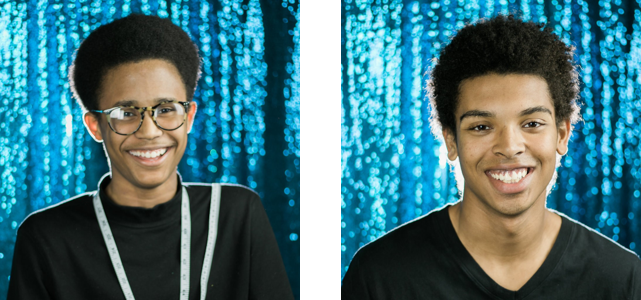
- University High School AVID student and Dell Scholar Winner – Sammy Ortega Rangel; future college: Texas A&M
- University High School student and Dell Scholar Winner – Alexandra Castillo; future college: University of Texas at Arlington
- Waco High School AVID student and Dell Scholar Winner – Khristian Allen; future college: University of Texas
Other Waco ISD Student Accomplishments:
- Over 90% of the Waco High AVID Seniors were accepted to 4-year universities in the school year ending June 2016. June 2017 will be the first AVID Senior class for University High School.
- Increased enrollment of AVID students in advanced placement or dual-credit courses from 2014-2015 to the current school year.
- Increased grade point average (GPA) for AVID students after enrolling in the AVID class.
- AVID students out perform non-AVID students on all state assessments for the 2015-2016 school year.
AVID Professional Development for Teachers
AVID has not only been a great success story for our students but has provided meaningful, research-based instructional professional development for teachers. AVID professional development emphasizes the training of teachers and other school professionals in the use of specific instructional strategies focused on writing, inquiry, collaboration, and reading. These strategies are taught in a three-day summer conference or through additional trainings. Campuses provide additional AVID professional development throughout the school year led by the AVID district director, campus coordinator, elective teacher and/or teachers who attended summer institute.
Last summer Waco ISD had over 100 teachers attend the AVID Summer Institute Conference in San Antonio. This year there will be over 120 teachers attending the AVID Summer conference.
AVID School-wide
Waco ISD AVID provides a structure to close the achievement gap that exists between groups of students. The WISD AVID elective class provides a school-based network that not only supports academic development but also provides information about issues directly related to postsecondary education. Although the AVID elective class only serves 10-15% of the campus population, the goal is to provide all students access to the core AVID concepts such as organizational and study skills, enrichment and motivational activities, and college preparation through the implementation of AVID school-wide.
Think you might be interested in working with AVID students? – Each year we hire individuals to be AVID tutors to work with our middle school and high school students. Starting salary is $12.50 an hour for college students and up to $22 for retired teachers. Hours are flexible. Recruitment for the 2017-2018 AVID tutors begins June 1, 2017. If interested, please email Robin Wilson at [email protected].
 Robin Wilson is currently completing her third year as the AVID District Director for Waco ISD. Before becoming the AVID District Director, she served as a campus principal in the district for eight years. She is also currently a third year PhD student at Baylor University in the Educational Psychology Department. Her focus is college readiness and child development. She plans to graduate in May 2018.
The Act Locally Waco blog publishes posts with a connection to these aspirations for Waco. If you are interested in writing for the Act Locally Waco Blog, please email [email protected] for more information.
By Melody McDermitt
Please don’t stop bringing Meals on Wheels to me… I’m not sure how I will make it without you,” has been the most common call we have received since the media attention focused on Meals on Wheels funding. We are reassuring our clients that their meal service will continue and making sure our donors and volunteers know how important they are to our ability to serve.
For fifty years our agency has served the community’s most vulnerable populations and because of our strong community support, we will be here to continue caring for the people of Waco, McLennan, Hill and Falls Counties.
Below is information about our budget, program, and how you can help:
- We receive approximately 45% of our funding from federal and state sources. Most of the funds are through the Older Americans Act, administered by the US Department of Health and Human Services. We match these funds with private dollars to serve people meals. The combination of federal, state, and private funding is a great example of successful public-private partnership.
- We have a waiting list of 87 people. Because funding is limited, we have had to start a waiting list. In January we had a list of 50 people, but this list is climbing due to increased need. We need community support to stop the wait and start the meals.
- The average age of our clients is 80. If you were to deliver meals, you would most likely meet an eighty year old woman, who is living independently and alone.
- Growing over time. Eight years ago, Meals on Wheels served approximately 650 people daily. Today, we prepare approximately 1,000 meals daily, the majority of these meals are delivered to client’s homes and the rest are prepared for senior centers.
- Meals on Wheels is a compassionate program, but it’s also a fiscally responsible investment with proven success. It costs us $6/day to produce and deliver a meal. Research shows our program keeps seniors healthier, allowing them to stay in their homes instead of a Medicaid nursing home ($150/day) or being hospitalized for malnutrition and dehydration ($1,500/day). We can feed a senior for one year for approximately the same cost as one day in a hospital.
- You can help by volunteering! For every route a volunteer delivers, we are able to save enough money to feed a senior for a week. We love volunteers who can deliver weekly, monthly, or during holidays. To sign up, go to our website mealsandwheelswaco.org.
- You can help by donating! For just $30, you will feed a senior for a week. For $120, you’ll feed one new client for a month. Every gift is appreciated and needed. Please consider a monthly gift. Donations can be made at mealsandwheelswaco.org/donate or mail to Meals on Wheels, 501 W. Waco Drive, 76707.
- Share your Meals on Wheels story with friends and the community. As a client, volunteer, or donor, you are our best advocate. Please share your experience – in person and on social media. Tell your story or share ours. Our Facebook page – MealsandWheelsWaco and Twitter – MealsWheelsWaco – are great places to leave your comments.
If you’d like additional information or have a story to share with us, please contact me at [email protected] . Thank you for your support!
 Melody McDermitt is the Executive Director of Meals and Wheels. She came to the agency in 1980 to work with the rural Senior Center Program. She came to Meals & Wheels from the Area Agency on Aging where she worked with programs in a six county area. Prior to her work in Waco Melody was an Extension Home Economist in Oklahoma. She has a degree in Home Economics and has done graduate work in Public Administration. Melody’s gifts are for building a team of employees who value older adults, and work to help older adults be seen as valued members of the community.
The Act Locally Waco blog publishes posts with a connection to these aspirations for Waco. If you are interested in writing for the Act Locally Waco Blog, please email [email protected] for more information.
April is Earth Month! To help us get in the spirit of sustainability, Anna Dunbar, Recycling and Public Outreach Administrator for the City of Waco Solid Waste Services, shares some tips, expertise and hopes for our community in a series of four blog posts. For all the posts so far, click here. Thanks for writing, Anna! – ABT
By Anna Dunbar
Painting is a relatively inexpensive way to update a room. It seems that every DIY show starts with picking colors and repainting (or doing a faux finish painted walls). Then, the question is, what to do with all of the leftover paint?
Storage
Most people think of the garage as the place to store paints. The problem with that idea is that paints typically become unusable when exposed to extreme hot or cold temperatures. This is especially true of latex paint. So, store your paint in the house or in an insulated cabinet in the garage. To seal the can, place plastic wrap over the paint lid and hammer it down. Some recommend storing the can upside down but I personally have not had the nerve to do that!
Think before you toss and try to donate it.
In Waco, try the Habitat for Humanity ReStore if you have unopened, usable latex paint with readable labels. Learn more at http://www.wacohabitat.org/restore/ or call (254) 756-0131. Habitat for Humanity ReStore is a great place and if you are doing a painting job you should start there! The store usually has a great paint selection.
Schools, religious groups, community groups, and theater groups may accept unopened cans of latex paint, especially white paint. Even a neighbor may need some extra paint. Remember, if your paint is lumpy or smells bad, it should not be donated.
Dry it out before you throw it away.
When you cannot use up or donate leftover paint, dry it out and dispose of it with your regular trash. All residual/leftover paint must be hardened or dried before putting in your trash.
If there’s only a small amount of paint in the bottom of the can, leaving it out in the sun should do the trick. If there’s a bit more, mulch, kitty litter, or shredded newspaper can be used as a bulking/drying agent. If you are in a hurry, buy some commercial paint hardener such as Waste Paint HardenerTM or a similar product to dry paint quickly. This product is available at many paint and hardware stores. When mixed with paint as directed, it will dry even large amounts within a couple of days. A paint can with totally dried paint (no liquid) can be put in a bag with your regular trash.
Take larger quantities of paint to Household Hazardous Waste Day.
As I mentioned last week, if you are a resident of Waco, Hewitt, Lacy Lakeview, Lorena or Woodway, you can save paints, auto fluids and other hazardous stuff for Household Hazardous Waste Day on May 6. The event is from 7 AM until 1:30 PM at 501 Schroeder Drive, which is the Waco Solid Waste Operations Center. It is near the Baylor elevated water storage tank. When you arrive you may need to wait in line. Have your water bill from your city of residence and your driver’s license at the ready. You will need that for proof of residency.
Paint makes up most of what is brought to Household Hazardous Waste Day! In 2015, we collected 85,387 pounds of paint and in 2016, we collected 31,285 pounds of paint. I am grateful that so many people are willing to do the right thing and dispose of paint properly. Still have questions? Please call Waco Solid Waste Services at (254) 299-2612 or email me at [email protected]
 This week’s Act Locally Waco blog post is by Anna Dunbar. Anna is the Operations Administrator for the City of Waco Public Works. She is responsible for informing Waco residents and businesses about recycling and waste reduction opportunities as well as solid waste services in Waco. Her husband is a Baylor professor and her daughter is a graduate student at Baylor University. She is president of the board of Keep Waco Beautiful and is a member of The Central Texas Audubon Society and Northwest Waco Rotary. If you would be interested in writing for the Act Locally Waco blog, please email [email protected] .
By Jessica Padrón Meehan, Ed.D
Each semester I have my students journal about their experiences with English learners. As one can imagine, they have a range of experiences. Inevitably, there is an individual that expresses uncertainty about being in my ESL/Bilingual Foundations course. The students disclose that this uncertainty comes from their lack of knowing another language. They express things like, “I don’t know Spanish and I am nervous that I will not do well in this class.” I reassure my students that they do not need to know another language in order to be successful in the course. Only students seeking bilingual certification need to know another language. Remarkably, these students have been a part of the American educational system their whole lives and their semester with me will be the first time they will truly understand the differences between ESL and bilingual instruction. These students are not alone. There are parents, grandparents, and even some educators that have never experienced ESL or bilingual classes for themselves nor have they ever had a need or a reason to explore them. If this is true, then these same individuals are unaware that bilingual education is not just for English learners but can be for them too!
There is a distinct difference between English as a Second Language (ESL) and bilingual education. An ESL program uses specialized strategies with English instruction and focuses on the development of listening, speaking, reading, and writing skills. This instruction is provided by an ESL certified teacher and is done either in a homeroom or in a pull out scenario. This type of program can be found in local school districts such as Robinson ISD or China Spring ISD. A bilingual program, on the other hand, utilizes both English and the students’ native language to teach English as well as all of the other subject areas. This allows for students to gradually learn English while learning critical academic knowledge in their native language. A bilingual individual that is bilingual certified delivers this instruction in a self-contained classroom. In the Central Texas area, the students’ native language is typically Spanish. However, this is not always the case. In other cities across the United States, bilingual programs may include native languages such as Cantonese, Korean, or Mandarin. In Texas, Ysleta ISD in El Paso offers a dual language bilingual program that adds a third language to the students’ repertoire. At the Alicia Chacón International School students learn English, Spanish, and can learn Russian, Chinese, Japanese, or German as a third language.
Historically, bilingual education was initially implemented to help transition English learners into mainstream English speaking classrooms. Over the years, best practices have been established, programs have progressed, and philosophies have evolved. Presently, there are a variety of bilingual programs that a school district can choose to implement. Early exit transitional programs, for example, move students into mainstream English classrooms in the early grades. The goal of this type of program is assimilation and is viewed as a subtractive program, where a new language replaces the old one. Locally, this type of bilingual program can be found in Midway ISD and in Waco ISD.
A school district can also choose to provide English learners with a late exit developmental program that transitions students in the later elementary grades. A developmental program encourages the preservation of the students’ native language. The aim of this type of program is bilingualism and biliteracy. A developmental program is viewed as an additive program, where a new language is added to the students’ native language without replacing it. Locally, there are no school districts in the Greater Waco area that implement this type of program.
A third alternative is for a school district to implement a two-way dual language program. This type of program differs from the others in several ways. First, the program is not designed just for English learners, but for native English speakers as well. These programs have mixed populations in the classroom, where native English speakers learn another language, and English learners acquire English. Two populations are immersed in another language for a portion of their school day. In addition, the goal of a dual language program is not to transition either population into one particular language. Rather, it is designed to develop bilingual and biliterate individuals. Schools in Dallas, Austin, Houston, and in South Texas have successfully implemented this type of program. In the Central Texas area, a dual language program can be found in Temple ISD at the Hector P. Garcia Elementary School.
While I was a teacher in Austin, I had the opportunity to work in a dual language program. Classrooms contained mixed student populations where every child in the school was learning a new language. At this school, value was placed on every student’s background. As a positive by-product of the program, students developed empathy, dependency, and respect towards their classmates. Every child experienced being the language learner while at the same time, every child was considered a valued asset in the classroom. Students were dependent on one another when their native language was not being spoken. In addition, students learned to respect each other and developed friendships with classmates of different ethnic backgrounds. I count myself fortunate to have been a part of such a positive learning environment.
With the voucher system encroaching on the public school system, a two-way dual language program could be an attractive selling point to local constituents. It would behoove local school districts to explore the option. In the state of Texas, school districts must implement a bilingual program when there are 20 or more English learners in any language classification in the same grade level district-wide. If a school district must invest time and money into a bilingual program anyway, why not utilize the opportunity to attract monolingual English speaking families and implement an additive program for everyone. Currently, there are no private, public, charter, or magnet schools in the area that provide this service.
 Jessica Padrón Meehan, Ed.D., is an Assistant Professor in the Department of Curriculum and Instruction at Tarleton State University. Dr. Meehan teaches language and literacy foundations and methods courses. Prior to this, she worked with the Waco Independent School District serving elementary English learners. She is an advocate of bilingual education and of culturally relevant instructional methods. She lives in Waco with her husband, Todd, and their two children, Jack and Luca.
The Act Locally Waco blog publishes posts with a connection to these aspirations for Waco. If you are interested in writing for the Act Locally Waco Blog, please email [email protected] for more information.
By Lindy Reamer
What is the most iconic kid business there is? A lemonade stand of course! Lemonade stands are fun…but that’s not all. Just think about everything a kid is learning when she puts together and runs a lemonade stand…
Where do great businesses come from? From people who have a dream and the business savvy to bring that dream into reality. Where do those people learn how to bring their business dreams to life? For some of them, it starts when they are kids. And for some of those kids it starts with that lemonade stand! The goal of Lemonade Day is to grow the next generation of entrepreneurs by using lemonade stands to start kids down the road of understanding how business works. Plus…it’s fun!
“Lemonade Day” is a strategic lesson-based program that walks kids from a dream to a business plan, while teaching them the same principles required to start any big company. Inspiring kids to work hard and make a profit, they are also taught to spend some, save some and share some by giving back to their community. Since its launch in 2007 in Houston, Texas, Lemonade Day has grown from serving 2,700 kids in one city to 1 million children across North America. Lemonade Day sparks the spirit of entrepreneurship and empowers youth to set goals, work hard, and achieve their dreams. Lemonade Day started by Houston entrepreneur and philanthropist Michael Holthouse in 2007. It has since grown to over 50 cities nationwide…including Waco! Lemonade Day Waco will be Saturday, May 6th 2017
I want my kids to participate in Waco Lemonade Day! What do we do?
Signing up to participate in Lemonade Day is easy and it’s free! The first step is to register for the Lemonade Day on-line “business school” called “Lemonopolis.” Register today at https://lemonadeday.org/waco/.
Once you and your child register, you can help your budding entrepreneur work through a series of fun, interactive lessons where he/she will learn how to create a budget, set profit-making goals, serve customers, and repay investors …among other important business skills.
Then, on May 6, it’s “go time.” Launch your Lemonade stand along with the other Lemonade Day participants in Waco. That’s it…all there is to it is to do it! For the kids, one of the best parts is that after covering their expenses and paying back their investor, they can keep what they earn! The Lemonade Day program encourages them to spend some of their profit on something they enjoy or want, but also to save some and share some. Here’s a link to the Lemonade Day National website that’s full of ideas and information: Lemonadeday.org. (Just remember that while National Lemonade Day is May 7, Waco Lemonade Day is May 6!)
Our church/organization/club works with kids and we would love to help them participate in Lemonade Day! What do we do?

Lemonade Day is already a tradition at Toliver Chapel Baptist Church here in Waco!
Terrific! We have resources and ideas for groups who want to work with kids on Lemonade Day. Contact me, Lindy Reamer, at [email protected] or by calling 254-710-8334. I’ll help you get going!
I’ve heard Lemonade Day in other cities is a big deal! How do we make it a big deal in Waco?
With Lemonade Day the sky is really the limit! Some communities have rallied around their kids in an inspiring way and made Lemonade Day a big event for the whole community. Here’s a video from Lubbock Lemonade Day 2016 that will give you a “taste” of how great Lemonade Day can be. Despite terrible weather, the kids and the community really came through. Watch out: Important life lessons ahead…
We are in the early stages of growing Lemonade Day in Waco and there are lots of ways everyone can get on board!
Right now Local sponsors are needed to offset program and material costs so all youth are able to participate free. To sign up to be a sponsor contact me at [email protected] or by calling 254-710-8334.
We also need people who want to help promote Lemonade Day, and property owners who are willing to let kids have their stands on your property.
Lemonade Day is an annual event, and while 2017 Lemonade Day is almost here…it’s already time to start thinking about Lemonade Day 2018 and beyond. If you think this is a terrific idea for Waco and you want to help get it rolling in a big way…we need you! Contact me at [email protected] or by calling 254-710-8334 and we will get you in the loop and put you to work!
Most importantly…if you want Lemonade Day to be a big deal in Waco, and if you think it’s exciting and important to help our kids learn what it takes to run a business… get out there a buy some Lemonade on May 6!
 Lindy Reamer is the Coordinator of Special Projects for the Division of Constituent Engagement at Baylor University. Her work includes assisting with Baylor’s Continuing Education program and implementing and attending events for the Division of Constituent Engagement. One of her special projects includes working on Lemonade Day Waco. She is a recent graduate of Baylor University and loves the Waco community.
By Jordan Wallace
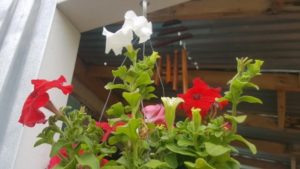 Gardening can be many things. Most people find puttering around in their gardens therapeutic, others do it for the aesthetic beauty. Some do it to be self-sustained or even to just grow produce to save money at the grocery store. Why do you want to garden? There is a complex plant world out there and we are a part of it. By being observant and paying attention to our plants we can be guided by them in innumerable ways.
“Location, Location, Location!”
 I always start my plants in pots so they can tell me if they are happy where I have placed them in the yard. It takes time. Occasionally, a plant looks happy only to be fried to a crisp in the bright afternoon sun a few hours later. At this point the plant can be “rescued and relocated” as I like to say. That is when having it in some form of container becomes invaluable. There are many signs a plant will display if they are receiving too much/too little sun. Blackened edges and wilting point towards too much sunshine while pale leaves and lack of growth depict not enough. Each plant is different so careful research on individual species is important.
Timing
 “Timing is everything!” Luckily, we live in Texas and our growing seasons are among the longest in the nation. Due to our semi-equator-like climate in Central Texas you can almost plant year-round! In fact, with a greenhouse you can indeed plant whatever you want, whenever you want. Never limit yourself; it is always worth a shot! I had fresh mustard greens, cabbage, spinach, beets, radishes and every kind of herb you can think of growing this past December. With the spring rains fast approaching this is actually the ideal time to plant. Go get dirty!
Spacing
 It is also important to look to your plant’s future. Is it a vine? Does it need space to climb or does it prefer to cover the ground? How big will it get? Will it create shade for other plants? I will never forget when I planted my Passion Vine in the ground beneath my favorite tree. It shot up, climbing and covering the 30 foot tree in less than a month! Beautiful blossoms and a pleasant surprise for me but some would consider that invasive and undesirable. It really depends on your own preferences and the amount of space you have to utilize. Many variations of climbing flowers and vegetables exist for those with limited space. You may consider lattice, trellises and strategically planting near railings or other structures to maximize space and give your plants room to flourish. This is called Vertical planting and deserves an article all unto itself.
Stagger Planting
At this point, stagger planting is worth mentioning for the serious gardener. Stagger planting is essentially just separating sowing sessions by a few weeks so you can harvest for an extended period and always have fresh produce at your fingertips. For instance, I planted 1 row of corn, tomatoes and beans each (among other veggies but these are what my family eats the most of). I carefully left room for additional rows to be added at later dates. In a few weeks I will plant another row of each and a few weeks after that I will plant another row of each. Thus, successfully ensuring continued harvest through the season for my small family, some for preserves and salsa, some for the “critters” as they take their due and also, enough to share with friends and occasionally, to sell.
Coupling
When planting vegetables and herbs it is good to note that some plants have preferences about who their neighbors are, just as people do. Beans and tomatoes grow well together because the nutrients they claim from the ground are opposite of one another. This means they complement one another rather than competing. (Just be sure your bean vines do not wrap their hands around your tomato stalks, give them a pole to climb instead and guide them up that).
Plant Care
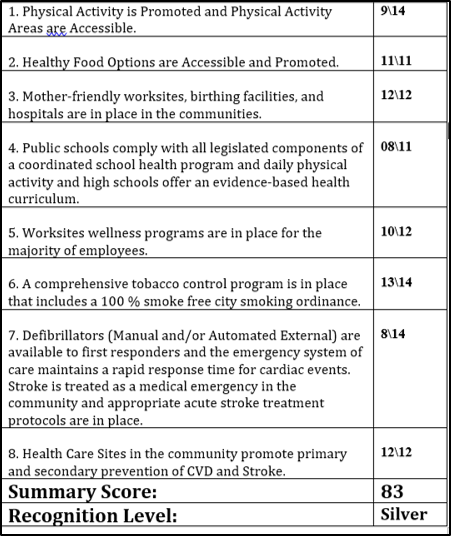
A lot of people think gardening takes a lot of effort, but that all depends on how you define “effort”. I have a zealous determination for growing every kind of plant I can get my hands on. Therefore, daily watering and a little weeding here and there are nothing to me, but may be tedious, monotonous work to others. Now is a great time to ask “what kind of gardener am I?” Please consult my chart:
Watering

My roses haven’t been watered in years!
Unless you are leaving the responsibility of watering up to the forces of Mother Nature, you are going to be required to water your plants occasionally. Each plant is different, just as humans are. It is easy to set a timer or turn on a sprinkler and just soak ‘em all if you have that luxury. I have seen beautiful gardens thrive this way, but it is worth taking the time to meet your plants individual needs. I prefer rain water which contains more natural minerals and much fewer harsh chemicals. My plants seem to respond better to this. Long periods with only the water hose for sustenance has shown poor growth and malnourishment in my personal assessment. We collect rain water in large containers and I take the time each morning to personally water each plant, bucket by bucket, plant by plant. While this can be time consuming it allows me to monitor my plant babies closely. I notice pests, deterioration and general unhappiness amongst the vegetation almost immediately and can then remedy it as I see fit. Sometimes certain plants need more water, others need less and root rot is a real concern. A good rule-of-thumb is the “knuckle trick”. Simply push your finger about an inch into the soil. If it comes back wet/muddy/dirty then let the plant dry out for another day and try again, but if your finger comes back spotless or with minimal/dry dirt then it is probably a good time to water. Most often, you will not water every plant every day. Some require more, some less!
Composting
Depending on your location, it may be beneficial to add compost to your garden prior to planting and in between crops. Your plants draw nutrients from the soil and can deplete it over time so replenishing the earth is not only logical; it is balance, give and take. Plus, plants can grow much bigger and heartier with this added step! An often unnoticed difference in soil: topsoil is NOT COMPOST, nor is it valuable in this consideration. Topsoil is only a waste of money in my opinion, no different than the dirt you are already working with in your yard. In fact, it is sometimes less nutritious than your common garden soil. Plain Jane Organic Compost or Humus is the best way to go.
 Jordan Wallace lives off the grid and is currently starting his own self-sustainable farm. “I have a long way to go but the journey is often more fun than the destination,” he says. “I have been fortunate enough to be surrounded by a family of gardeners and plants my whole life. I never give up on my plant babies and am known for bringing them back from the dead! I always feel there is much more to learn and yet I could fill a book with what I know.” If you have any questions please feel free to contact Jordan at [email protected]!
The Act Locally Waco blog publishes posts with a connection to these aspirations for Waco. If you are interested in writing for the Act Locally Waco Blog, please email [email protected] for more information.
By Fred Hills
Preparing local students for successful journey through school and college to careers is critical to the well-being and growth of our community. Started 8 years ago, the HOT P-20 works to promote streamlined, transparent degree pathways for students to move quickly and successfully through their education and onto college and/or a career. The Heart of Texas (HOT) P-20 brings together representatives from the independent school districts (ISD), institutions of higher education (IHE), Region 12 Education Service Center, industry and government across six counties: Bosque, Hill, Falls, Limestone, Freestone and McLennan to work towards this goal. Among the higher education representatives are McLennan Community College, Texas State Technical College, and Hill County with representation from both Tarleton State University, Texas Tech through MCC’s University Center.
The HOT P-20 mission can best be summarized as follows:
- Collaborating by building cross-community team to address education and career possibilities for all students.
- Informing our diverse communities about ongoing initiatives, best practices and available resources.
- Advocating for educational best practices with at the state and local levels.
Some of our ongoing projects include:
- Academic Vertical Alignment Training and Renewal (AVATAR) program that brings together faculty from the high schools and post-secondary institutions who teach Math, English, College and Technical education, and STEM to discuss differences in instructional techniques and ways to better prepare students for college-level work while in high school. AVATAR also include high school and college counselors to address ways to better advise students in preparation for their transfer to college and/or a career.
- Building closer ties between education and industry under our Groundhog Job Shadowing initiative celebrated on February 2 each year promoting job shadowing, internships, externships, career fairs and industry visits.
- Partnering to support local educational initiatives and programs such on Region 12 ESC’s Connect 3, Teacher’s Gone Tech, Girls in STEM, career fairs, etc.
- Building collaborative agreements among secondary, post-secondary and industry to offer degree pathways and college preparation courses for students while still in high school.
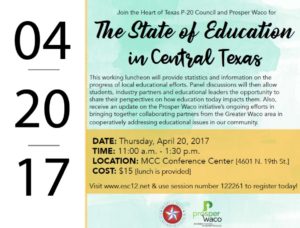 Providing an annual forum on “State of Education in Central Texas” in the Spring to share ongoing educational initiatives and career preparation opportunities. This year’s event is scheduled for April 20 from 11:30 to 1:30 PM at MCC’s conference center. All are welcome.
- Working with Prosper Waco and the Waco Chamber to inform them on ongoing educational initiatives and promote education to career programs.
- Surveying the community for ways to better serve all partners in this effort.
HOT Regional P-20 operates as a voluntary organization. For more information on the HOT P-20 and its programs, check out our webpage at http://www.hotp20.org
 Dr. Fred Hills is the current president of the HOT P-20 and Dean of Arts, Science and Business at McLennan Community College. He has worked and lived in the Waco community for over 20 years and has served on the HOT P20 for the last four years.
The Act Locally Waco blog publishes posts with a connection to these aspirations for Waco. If you are interested in writing for the Act Locally Waco Blog, please email [email protected] for more information.