By Eric R. Jeter
In the midst of the opioid crisis, communities across the country face increased demands for prevention and substance use services.

According to the CDC young adult’s heroin use has more than doubled within the past decade. More than 90 percent of people who use heroin also use at least one other drug, 45 percent of people using heroin are also addicted to prescription opioid painkillers and that prescription opioid drug overdoses has increased threefold in the last three years. In addition, an estimated 2.1 million people in the United States are afflicted with Opioid Use Disorder (OUD) related to prescription opioid pain medicines in 2016. There’s an increasing number of infants born with opioid dependency and rising rates of diseases such as Hepatitis C, and HIV. It is safe to say that the United States is facing a very real crisis.
The silver lining in this cloud is that there are effective medications to treat opioid use disorder. The use of these medications in treatment is called MAT, which stands for Medication Assisted Treatment.
Many treatment programs and behavioral health providers are increasingly now provide MAT. Cenikor Foundation, a leading treatment provider with locations in Texas and Louisiana, offers MAT as one of multiple treatment methods.
In August 2018, Cenikor’s Waco Facility began offering MAT (Medication Assisted Treatment) services for Opioid Use Disorder (OUD) in its 3015 Herring Avenue location. Opened in 2012, Cenikor Waco provides treatment services for individuals affected by substance use disorders in its detox and short stay residential programs. With the addition of MAT to its treatment services, Cenikor Waco is widening access to treatment for the community and providing patient-focused treatment designed to meet individual needs, thereby changing and saving more lives.
The goal of the MAT program offered by Cenikor’s Waco Facility is to support an individual’s efforts to remain abstinent from opioids and other drugs of addiction through the use of counseling, medication and case management services. The philosophy of the program is one of compassionate care with an emphasis on participant safety and personal responsibility.
Medicated-Assisted Treatment (MAT) is the use of FDA- approved medications, in combination with counseling and behavioral therapies, to provide a “whole-patient” approach to the treatment of substance use disorders.
As we seek to provide services to help those with an opioid use disorder achieve lasting sobriety, we recognize that no treatment is “one size fits all”. Cenikor is committed to partnering with patients to design a treatment that best meets their needs. At Cenikor, we use new ways to gauge success beyond simply whether a patient in recovery has stopped using opioids. Our comprehensive approach aims to reduce relapse overdoses and infectious disease transmission among numerous outcome measures.
We continue to work with our referral partners as well as health care professionals to ensure individuals with opioid use disorder continue to have access to the most effective therapies.
Cenikor is a 501(c)(3) nonprofit organization, proudly serving over 1,000 clients per week to achieve better health and better lives. For more information please visit www.cenikor.org or call 1-888-CENIKOR.
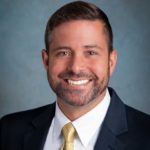 Eric R. Jeter has been with Cenikor Foundation since 2012. As Construction Manager he oversaw the construction and opening of Cenikor’s Waco facility. After successfully running the Waco short stay and detox program he advanced to Regional Director. Eric now manages the Waco, Austin and Tyler locations. Eric is deeply committed to Cenikor’s mission and helping those in need achieve better health and better lives. Additionally, Eric is the President & Owner of locally owned business Jeter Property, a custom home building and remodel company located in Waco.
The Act Locally Waco blog publishes posts with a connection to these aspirations for Waco. If you are interested in writing for the Act Locally Waco Blog, please email [email protected] for more information.
By Rebecca McCumbers Flavin
Early voting is underway! In this blog post, we provide important information to help you make your plan to vote.
1. Plan when to vote:
Early Voting begins Monday, October 22 and continues daily through Friday, November 2. Polls are open:
- Monday, October 22 through Friday, October 26, 8:00 AM – 5:00 PM
- Saturday, October 27, 7:00 AM-7:00 PM
- Sunday, October 28, 1:00 PM-6:00 PM
- Monday, October 29 through Friday, November 2, 7:00 AM-7:00 PM
That means you can vote anytime beginning October 22nd until Election Day EXCEPT for November 3, 4, and 5. If you miss early voting, then plan to cast your ballot on Election Day, Tuesday, November 6; polls are open from 7:00 AM to 7:00 PM.
If you received a ballot by mail, those should be returned by 7:00 PM on Tuesday, November 6.
2. Plan where to vote:
McLennan County has vote centers, and you may vote at ANY center, not just the one closest to your house.
During early voting, you have 5 vote centers to choose from:
- McLennan County Elections Administration Office
214 North 4th Street, Suite 300, Waco, 76701 - Robinson Community Center
106 W. Lyndale, Robinson, 76706 - Waco Multi-Purpose Community Center
1020 Elm Street, Waco 76704 - First Assembly of God Church
6701 Bosque Blvd., Waco, 76710 - Hewitt Public Safety Facility
100 Patriot Court, Hewitt, 76643
On Election Day, there are even more vote centers to choose from.
Choose a place and time that is convenient for your daily commute. Keep in mind that lines are often shorter during Early Voting.
If you need a ride to the polls, Waco Transit is offering free rides on Election Day. Simply present your voter registration card, or an “I Voted” sticker to the driver to obtain free passage. In addition, Uber and Lyft are offering free or reduced-price fares, depending upon where you live.
3. Plan what you need to bring to the polls and what you should leave behind.
Plan to have the proper ID. Texas law requires that voters present a photo ID at the polls. There are seven forms of photo ID accepted at Texas polling places:
- Texas Driver’s License issued by the Texas Department of Public Safety (DPS)
- Texas Election Identification Certificate (issued by DPS)
- Texas Personal identification card (issued by DPS)
- Texas Handgun License (issued by DPS)
- U.S. military ID card that includes your photograph
- U.S. citizenship certificate that includes your photograph
- U.S. passport book or card
These IDs will be accepted if they expired less than four years ago, with the exception of citizenship certificate, which must be up to date. If you do not have one of the required photo IDs, you may present an alternate form of supporting identification. You will also be asked to complete “Reasonable Impediment Declaration” to accompany this alternate form of ID, as described here.
Things to leave behind.
Texas law prohibits the use of electronic devices within 100 feet of a voting station. You may not bring electronic devices into the polling places, nor may you take photographs inside the polling places. If you use the Vote 411 voting guide, plan to bring a paper copy with you; you will not be able to use your phone to access the guide. If you take a selfie, make sure you are more than 100 feet beyond the polling place.
You are not permitted to bring or wear campaign material into a polling place. Leave hats, buttons, t-shirts, etc. supporting candidates in your car.
4. Get informed about the races and candidates on your ballot.
VOTE411 is a non-partisan online voters’ guide provided by the League of Women Voters Education Fund. Just plug in your address at Vote411.org, and you will receive personalized election information, including a list of races and candidates and races on your ballot. Vote411 has a great feature where you can compare candidates’ positions side-by-side. You can print out your ballot with candidate choices and bring it with you to the polls.
Once you have made your plan to be a Waco, TX voter, share your plan friends and family members to help them make their plan to vote, too!
 Rebecca McCumbers Flavin serves as Co-Communicator for LWV-Waco, leading the taskforce that focuses on voter registration and get out the vote activities. Dr. Flavin is also a Senior Lecturer in Political Science at Baylor University. The League of Women Voters (LWV) is a non-partisan organization that for nearly 100 years has advocated protecting the right to vote and encouraging the exercise of that vote. The Waco chapter was reformed in 2017 as a League-at-Large under LWV-Texas.
In the past year LWV-Waco has hosted several events, including a voter candidate forum for the March 2018 Primary and the November General elections, voter registration drives, a movie night, and an educational walk co-hosted by Waco Walks. To join or learn more about LWV, follow us on Facebook by searching for League of Women Voters of Waco, or contact the local chapter at [email protected].
The Act Locally Waco blog publishes posts with a connection to these aspirations for Waco. If you are interested in writing for the Act Locally Waco Blog, please email [email protected] for more information.
By Cheryl Allen
If you have a child in the public school system, you probably already know — this is Red Ribbon week!
Red Ribbon is a national campaign observed annually on the last week of October. It highlights the benefits of living drug-free. It also provides a valuable opportunity for adults to engage children and youth in dialogue about making positive life choices, including avoiding harmful substances. This year’s theme “Life is a Journey, Travel Drug-Free” reminds us of the importance of avoiding substance abuse throughout our lives.
The Red Ribbon campaign began in 1985 when drug dealers killed DEA (Drug Enforcement Agency) agent Kiki Camarena. Camarena grew up in a dirt-floored house with hopes and dreams of making a difference. He worked his way through college, served in the Marines and became a police officer. When he decided to join the U.S. Drug Enforcement Administration, his mother tried to talk him out it. He told her, “I’m only one person, but I want to make a difference.” After his death, his friends began wearing red ribbons to honor the sacrifice made by Camarena, and as a symbol of their commitment to live drug-free lives.
The movement spread and in 1988 Congress established Red Ribbon Week to bring awareness to the value of living drug-free, and to pay homage to all men and women who have made sacrifices in support of our nation’s struggle against drugs.
Many schools have special activities planned, and VOICE is assisting them by conducting educational presentations and distributing red ribbons, banners, and other items.
The Red Ribbon campaign is an important, but small, part of VOICE’s work. As a nonprofit funded by the Texas Health and Human Services Commission, VOICE offers a variety of free programs in schools and the community. Using an evidence-based curriculum, we teach healthy living skills, including tobacco, alcohol, and drug prevention. Visit texasschoolsurvey.org/report for data that reflects the critical need to reach children and youth at an early age.
VOICE also provides support for VASA (Voices Against Substance Abuse). This coalition is comprised of individuals from a variety of sectors who meet regularly to address ways to create a drug- and alcohol-free culture for youth in McLennan County. We encourage anyone who is interested in serving to contact us.
One of VASA’s initiatives is to encourage residents to dispose of unused prescription medication properly. On October 27, the DEA (Drug Enforcement Agency) is conducting a Drug Take-Back Day in our community. Please visit takebackday.dea.gov for times and locations. Another option is to take the drugs to a permanent disposal site at the Baylor Police Department or come by the VOICE office where we can provide disposable bags.
When children and youth choose not to abuse drugs, the communities and individuals benefit. Students who remain drug-free do better in school, are less likely to end up in the judicial system, and have a better chance of becoming productive citizens. With that in mind, effective drug abuse prevention education is a good bargain for our communities. The cost of a school-based prevention program is approximately $220 per student compared to the $4,000 per student costs associated with substance use treatment, emergency room visits, lost productivity, etc.
Please visit voiceinc.org for information about programs that address substance abuse prevention in our community.
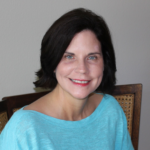 This Act Locally Waco blog post was written by Cheryl Allen. Cheryl has served the community professionally and as a volunteer for many years. She is the Director of Program Development for VOICE and is an adjunct lecturer in Civic and Community Service at Baylor University.
The Act Locally Waco blog publishes posts with a connection to these aspirations for Waco. If you are interested in writing for the Act Locally Waco Blog, please email [email protected] for more information.
The Historic Waco Foundation has launched a strategic process to understand Waco’s story from a number of perspectives in order to form future partnerships and programs that would offer the greatest benefit to the community. This post is one in a series to share with you how that work is progressing and how you can get involved. For the rest of the posts in this series, click here: Historic Waco Foundation Series. — ALW
By Patricia Scott, President, Historic Waco Foundation Board of Directors
This is a great time to be part of the Waco community. Waco is growing. We have a vibrant downtown and almost every weekend there is a concert, festival, sporting event, art festival or convention bringing visitors to town. With all of the excitement around town, it is easy to focus on the future, but we must also look at Waco’s past if we are truly going to understand Waco today.
Historic Waco Foundation’s mission is to preserve and present the history of Waco and McLennan County. As an organization, we are the first to acknowledge that though our mission is broad our focus has been narrow. We have focused on the historic homes and the people that built and lived in those houses – and that has limited Historic Waco Foundation to the late 1880’s and a very small group of people in Waco. It is time to look beyond these beautiful houses and focus on the history of Waco in its entirety.
To begin this process, Historic Waco Foundation recently hosted a gathering to gain information and provide direction from the community at large. The gathering attendees came from all sectors of our community and most had no previous knowledge of or participation in Historic Waco Foundation activities.
Prior to the gathering, Historic Waco Foundation sent an online survey to community members and asked that they share it with their networks, and so on. The survey asked respondents to answer three open-ended questions (1) what is important to the people of Waco, (2) what is distinctive about Waco and (3) about what do Waco-area residents care.
In total, Historic Waco Foundation received 37 survey responses. Using those responses as a basis, Historic Waco Foundation developed four additional questions to guide the community gathering conversation.
Question 1: Which untold stories need to be told?
Discussion ranged from an unbiased and full telling of the Jesse Washington lynching to what Waco-area residents have done for recreation through the years. Attendees also mentioned the importance of delineating the history of Waco’s schools, including unique stories like the tunnel under La-Salle, then a two-lane main road, for elementary school children. Conversations also focused on the importance of recognizing the contributions and daily lives of Waco’s African American and Hispanic communities.
Question 2: What are some ways Historic Waco Foundation can tell these stories?
The community gathering attendees offered several fantastic and thought provoking suggestions for how Historic Waco Foundation can share some of the previously untold or rarely told stories with the community. Overall, the suggestions centered on involving more media and technology in our storytelling. Plays and performances are a common way to presented history – think Shakespeare and his Henry plays—and many of the attendees agreed. There was discussion about Historic Waco Foundation collaborating with the arts community, be it visual or performing arts, and involving students who can write, produce, act, sing or perform historical interpretations.
Question 3: What organizations can or should Historic Waco Foundation collaborate with in the future?
Acknowledging the stories that need to be told and employing creative ways to present them is only the first step. Historic Waco Foundation will also engage in robust collaboration with community groups to identify additional stories and truthfully and effectively present them. Thanks to this enthusiastic group of community leaders, Historic Waco Foundation now has an extensive list of possible partnerships.
Question 4: What are some ways Historic Waco Foundation may be able to use its houses in the future?
Historic Waco has struggled with the upkeep of its current houses and has investigated alternative uses for the historic homes. Historic Waco Foundation asked attendees for suggested uses for the homes, and many of the responses mirrored possibilities already discussed and investigated. Stay tuned for more on this. Historic Waco sincerely wants to present the houses in ways that benefit the entire community and accurately capture the stories of all Wacoans.
This community gathering was just the first step in finding our niche within this community. Historic Waco Foundation will take the many suggestions to heart and act on them in ways that will benefit the sustainability of our organization and Waco’s many citizens.
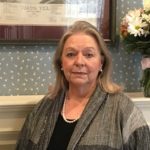 Patricia Scott is President of the Board for Historic Waco Foundation and a native of Waco. Patricia has been a member of Historic Waco Foundation since 2010. She is a Docent at McCulloch House and has served on the Historic Waco Foundation Board for the past three years and as President for the past two years. Patricia and her husband love to travel and make it a point to find a Museum wherever they go. She loves to read and needlepoint, but her greatest joy is her granddaughter, Grace.
The Act Locally Waco blog publishes posts with a connection to these aspirations for Waco. If you are interested in writing for the Act Locally Waco Blog, please email [email protected] for more information.
By Graham Duncan
If you’re like me, one of the first things that pops into your mind when you think of local government is the small town of Pawnee, Indiana, home of NBC’s hit comedy Parks and Recreation. In the show the politics of Pawnee are quirky, unreasonable, and unique. While the show may not be based on a real town, local politics can be all of these things. I imagine the politics in Waco are no exception. Sometimes situations can create quirky political solutions. Other times, political, social, or legal realities can force decisions that may be considered by some to be unreasonable. And Waco is unique; the city has its own history, its own problems and its own way of solving those problems in the political arena.
But sometimes it can be hard to know what is going on locally or confusing to figure out how things work in the city. I’m new to Waco and I wanted to learn more about how local politics work here. And I wanted to share what I found with everyone! So, here goes!
City Council
Waco’s local government is set up in a council-manager model. What does this mean? Basically we, as Wacoans, vote to elect council members to represent the five districts in the city. The “mayor” is elected at-large and becomes the sixth member on the council. The mayor serves as the head of the government for ceremonial and emergency purposes. The mayor is also the only council member with a term limit. No one may be mayor for more than three two-year terms. So, the council has six members, five directly represent each district, and the mayor represents the city as a whole. All council members and the mayor are volunteers, by the way. They don’t get paid for their service.
These elected officials, working on behalf of their constituents (the citizens of Waco) hire a professional public administrator (aka the city manager) to be the planning and executing arm of the government. The city manager is in charge of executing the vision the council has for the city. Day-to-day operations, making sure the city is responsive to the needs of the citizens of Waco, and providing feedback to the council on how things are going are part of what the city manager does for the city. So, in a nutshell, the city council provides a forum for the people’s voice to be heard in the legislative process of the local government. They are the elected representatives of the people and have a certain function granted to them by the city charter. The city manager provides the city with an executive power, granted that position by the elected members of the government.
So what does this mean in a practical sense?
I spoke with Councilman John Kinnaird, who represents District Three, about the relationship between the council and the other parts of city government. The council, as mentioned above, provides a vehicle for the people’s voice to be heard. Whenever there is a problem in the city the public has the opportunity (and the responsibility) to let the city know about it. The council ensures that taxpayers’ dollars are being put to use on projects the public cares about. One practical example of this is the roads in Waco. People have been bringing up issues with the city’s roads and the council has begun responding. Typical road maintenance costs the city about $3.5 million in a given year. When I spoke with Councilman Kinnaird I learned that, in response to citizen’s complaints about the roads, the city is putting $16 million this year towards road repairs. The council decides how the money will be spent and works to ensure the different parts of city government are working to accomplish the tasks desired by you, the citizens of Waco. The response may not always be as quick as we would like, but the council listens to the citizens and works to make sure problems in the community are solved.
Another example is the local animal shelter. There was an increasing demand on the limited services provided by the Waco Humane Society. They were taking in 10,000 animals per year and two-thirds of those animals were being euthanized because the shelter could not keep up. The council saw the need and worked to help provide support for the shelter. The council worked to fundraise money, they partnered with nonprofits in the community providing excellent care to the animals of Waco to learn how those organizations were serving the needs of those animals. There was a concerted effort to make the public humane society work for the community and for the animals that found themselves without a home. As a result of all this collaborative work, more recently the shelter was taking in around 6,000 animals per year and had a more than 90% live exit rate. That’s pretty cool.
Local government may not always be “sexy”; it may not always be exciting or even interesting. But what happens on the council affects each and every one of us. Talk to your city council representative. They want to hear what you have to say, and they are members of the community just like we are. They care about what happens here and they want you to care as well. Find out who your representative is. All of the information is available at www.waco-texas.com/council.asp; you can find district maps as well as the names and contact information of the council members.
You can also attend the city council meetings, which happen the first and third Tuesday of each month with the “Business Session” starting at 6 PM. There is always space made for citizens to address the council at each meeting. Get to know your representative. Get involved. Help make the Waco community better and stronger.
 Graham Duncan is 24 years old, recently married, and recently moved to Waco. He graduated from Asbury University in Kentucky in 2016 with a degree in Political Science. Since graduating, he spent a year as a full-time service volunteer in Tucson, Arizona, and after that started working at The Home Depot. His wife is currently studying for her Master’s in Higher Education at Baylor and he is doing his best to support her!
The Act Locally Waco blog publishes posts with a connection to these aspirations for Waco. If you are interested in writing for the Act Locally Waco Blog, please email [email protected] for more information.
By Alicia Pesina
I have been the instructor for El Ballet Folklorico Las Estrellas de Waco for 16 years. Ballet Folklorico is a traditional Mexican dance which highlights local culture from various regions and states in Mexico. The costumes, styles of dance, and music vary from state to state.
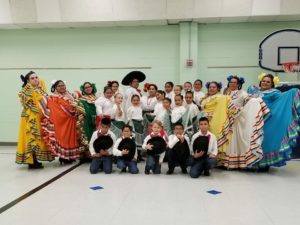 Our group was organized in October 1998 to help promote Mexican Culture in the Waco Area. We began with one group comprised of four young ladies; we have now grown into three groups ranging from the age of seven and up. Some members of our older group have been dancing for more than 25 years.
My mom, Mary Lou Pesina, has been the organizer, dressmaker, director, recruiter, dress fluffer, and so much more. She coordinates every performance and manages all members of the group. Mary Lou Pesina is the one who wanted to start the group. With hard work and determination, she has made the group what it is today.
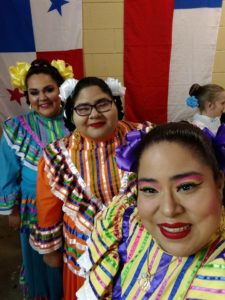 When we first began our group, we would often go to workshops in Corpus Christi. These workshops included Maestros (instructors) brought from Mexico to teach songs from their native state. They would also include a seminar which demonstrated the traditional costumes, hairpieces, and accessories needed for each State.
We sought out a local instructor several years after the group was established. We met Veronica De La Rosa while she was attending Baylor University. She was able to help us in so many ways. Her mother had organized a Folklorico group in Seguin, Texas. Veronica taught us various dances from all different states and shared her expertise in different Folklorico costumes and designs. She eventually became a part of our family! She married one of my cousins and they now have four beautiful children together.
All members are volunteers from our local community who have a passion for dancing. Our beginner group starts at age seven and we require no previous dancing experience. However, for the Intermediate (Ages 12-17) and Advanced Group (Ages 17-and up), we require previous dance experience. These beautiful dances are difficult and require challenging skirt work, footwork, and choreography. Our dances require hours of practice to perfect, we rehearse every week and also learn new songs every year.
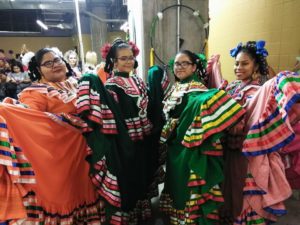 We have a yearly membership fee of $50. Each member is also responsible for purchasing Folklorico earrings and ballet shoes. Our group provides all costumes for our members free of charge. Our costumes are sewn by my mother or purchased from donations we receive from our performances and membership fees. As our group has grown, the costs of costumes have become a major expense.
We practice and perform eight months out of the year. We begin practicing in March and we start scheduling performances in April. Our performance schedule begins in April and our final performance is held at the Fiesta de La Raza at St. Francis Church. We love performing for all types of events around the Waco area. Sometimes I don’t realize some people have never seen a Ballet Folklorico perform. It gives me a greater appreciation for our group and our ability to share these beautiful dances with the Waco community. One advantage of having a larger group is the ability for us to showcase the diversity of Mexico.
This group is a major labor of love, especially since everything is done on a volunteer basis. Most of our dancers and parents work full time. Parents usually rush from school to dance practice. Some students come from outside the Waco area, and some families have multiple children in each group. I teach dance class after work for 3 hours back to back, and at times, it is very overwhelming. What pushes us each day is our passion for dance and the love for our group.
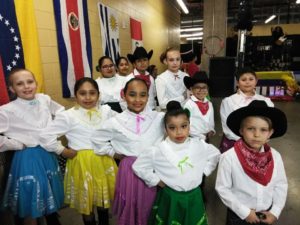 This group is our second family. I love all my students as if they were my own. I’ve taught members in school, seen them graduate, go on to college, get married and now have families of their own. I’ve watched families grow and I’m always so happy to hear, “As soon as my baby is old enough, we are putting her in the group with her brother/ sister!” We are much more than a group, we are a Folklorico family.
Our main goal is to share our culture with everyone. We have to remember and represent our culture and we hope to inspire those around us. We are a country of immigrants and we can share the love and beauty of our Mexican heritage through Ballet Folklorico. This year we celebrate 20 years of dancing for Waco and the surrounding areas.
When people recognize and appreciate the work we put into the group, it makes us feel proud. I have to thank my dancers, parents, and all of our supporters for encouraging us each year. We appreciate the members who take time away from their families help us entertain and share our beautiful culture. I must specifically thank my mother for continuously encouraging me to dance and teach others. I have been dancing Ballet Folklorico for 24 years and I hope to continue this tradition for many years to come.
 Born and raised in Waco, Texas, Alicia Pesina has been the instructor for Las Estrellas de Waco Ballet Folklorico for 16 years. Interested in scheduling a performance? Contact Mary Lou Pesina at 254-855-1759. Facebook page: Ballet Folklorico Estrellas de Waco.
Whether it’s playing trumpet in the “Friday Band” at MCC, or riding with the Waco Knight Riders, or an afternoon playing with the Waco Disc Golf Association, one of the wonderful things about Waco is that there are lots of ways to find community here. Where do you find community in Waco? Would you be interested in writing about it? If so, let us know. Email [email protected]. If you have an idea for a post. You could be seeing your own picture on this page!
According to the Prosper Waco website, one of our goals in the community of Waco is to “Increase youth employment.” In my job as Workforce Coordinator at Communities In Schools (CIS) that goal is in the front of my mind every day. When asked about writing a success story about our Workforce program, it was hard for me to pick! There are countless successful youth that I could highlight in an article. I could point to many of our clients who have challenged themselves to overcome their barriers and have worked tirelessly to be victorious in education and employment. For example, the young person I will profile in this post balanced a multitude of responsibilities and has been extremely successful in her educational and employment journey.
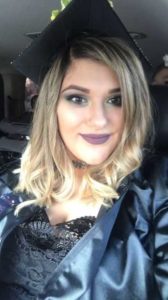 Selena Hernandez originally started in the Communities in Schools program at La Vega High School. After high school graduation, she was referred to the Workforce Development (WIOA) program as she had a strong interest in obtaining her nursing degree. After attending MCC for her prerequisite courses and meeting the rigorous nursing school requirements, she was accepted into the Registered Nursing Program at MCC. Selena was able to maintain her responsibilities as a mother, keep up her grades and work overnights at Providence Hospital Emergency Room in Patient Registration. While on her journey to become a nurse, Ms. Hernandez ran into some educational challenges but with the help of Communities in Schools and her own self-determination she was able to push through.
There were many times she would visit the office and have her children with her. They would play and we would work on job readiness activities and talk about her aspirations and struggles. She is the definition of a multi-tasker! Ms. Hernandez received her Licensed Vocational Nurse (LVN) credentials in Summer 2017 and completed the RN Program in December 2017. She dedicated her time to her family and her studies and became a licensed RN in 2018.
Selena is now employed at Quality Care Nursing Facility as a Nurse Supervisor and works PRN (as needed) at the Atrium Nursing Facility as a Registered Nurse.
She was able to attend her classes and clinicals, meanwhile balancing employment and her responsibilities as a wife, mother, and daughter! She is a true rock star. To know Selena is to know an outgoing and compassionate heart. She shows such amazing compassion for her family, patients, and those around her. She has a positive outlook on life and she is certain to make you laugh with her humorous personality. When you look at Selena’s journey you will find that the path to success is paved with dedication, time, and finding a way to move past setbacks. She has taught us that if you have a passion, you should follow it with every twist and turn!
The Workforce Development Program at Communities In Schools provides career coaching to youth ages 16-24, both in and out of school, to assist them in educational attainment and reaching their post-secondary goals. The Workforce Development program provides academic assistance, GED preparation, career exploration, assistance with entry into post-secondary education, and job placement opportunities. For more information, please visit www.cishot.org or email [email protected] today!
The Act Locally Waco blog publishes posts with a connection to these aspirations for Waco. If you are interested in writing for the Act Locally Waco Blog, please email [email protected] for more information.
By Cynthia Cunningham
This week we are observing Mental Illness Awareness Week (October 7 through October 13). Many do not think that this affects them because they do not have any mental issues. However, we are all touched by mental illness at some point in our lives. Maybe not directly ourselves but those around us: loved ones, friends or co-workers. The point I continue to emphasize is that we ALL need to educate ourselves so that we are prepared for when someone around us needs help.
Some Facts:
- Did you know that 75% of ALL chronic mental health conditions begin by the age of 24?
- 1 in 5 people WILL experience a mental health condition in their life.
- Roughly ½ of ALL lifetime mental health conditions start by the mid-teens.
- Mental Illness does not choose who is affected by it, but culture, race, gender or sexual orientation can affect access to treatment, support and quality of care for many.
- Racial Disparities in Mental Health Treatment: Of white health care providers, 51% believe that their patients do not adhere to medical treatments because of cultural or linguistic barriers. 56% report having no form of cultural competency training.
- 30% of active duty and reserve military personnel deployed in Iraq and Afghanistan have a mental health problem requiring treatment. Of the 30% less than half of returning Veterans in need receive any mental health treatment.
- Mental health of Firefighters and EMS Workers: First responders attempt suicide at a rate of 10 times higher than the general population. A firefighter is 3 times more likely to die by suicide than in the line of duty. 85% of first responders have experienced symptoms of mental illness at some point in their lifetime.
What is it like to care for someone with a mental illness?
In the U.S. there are 8.4 Million caregivers supporting people living with a mental illness and spend an average of 32 hours per week providing care.
Being a caregiver is stressful! Reach out to those caregivers you know. Offer to listen to them, take them out for some self-care, or learn what kind of support they would like.
Some Mental Illness Conditions:
Dual Diagnosis: What does it mean to have Dual Diagnosis?
Dual Diagnosis is when someone experiences a mental illness and a substance use disorder simultaneously. People with dual diagnosis should receive integrated treatment that addresses both substance use and underlying mental health conditions. Eight Million people in the U.S. experience dual diagnosis. More than ½ of all opioid prescriptions go to people with mental illness. Over 30,000 people died from opioid overdoses in 2015.
Borderline Personality Disorder (BPD)
Things you THINK you know about BPD:
- Untreatable
- Out of control
- Incapable of having healthy relationships
- Selfish
- Erratic
- Needy
- Impossible to please
Here are some FACTS:
- People with BPD experience extreme difficulty controlling their emotions, thoughts and actions, which complicate meaningful relationships.
- This lack of relationships and emotional support further complicates the illness. Separation or rejection can lead to self-destructive behaviors, self-harm or suicidal thinking.
Schizophrenia
How much do you know about Schizophrenia?
People living with Schizophrenia are 6 to 7 times more likely to be unemployed than the general population, with a 70-90% unemployment rate. 35% of people with schizophrenia have experienced homelessness or have been in jail. Schizophrenia interferes with a person’s ability to think clearly, manage emotions, make decisions and relate to others. It is a complex, long-term medical illness, affecting about 1% of Americans. It does not have a single cause either: genetics, environment, brain chemistry and substance use can all contribute to schizophrenia.
Obsessive Compulsive Disorder (OCD)
OCD is experiencing frequent, intrusive thoughts that lead to unwanted, excessive and irrational behaviors. These compulsive behaviors are often emotionally and sometimes physically painful.
Someone with OCD can learn positive coping skills. I learned from a woman, whose OCD made her late for work each day, that instead of running back into her home multiple times to make sure her curling iron and iron were turned off, she started bring them with her to the car. When she had that OCD panic that she left them on, she could look over and see them in the seat next to her. Learn what coping skills can help.
Suicide
90% of individuals who die by suicide experienced a mental health condition. We lose 22 Veterans by suicide each day. I have been told that in Waco we have 3 to 4 suicides per week! That is just the deaths that could be confirmed as suicide. However, some deaths are questionable so the numbers are never exact.
What do you do if you suspect someone is thinking of suicide? ASK
A – Ask them if they are thinking of killing themselves. No, asking does NOT put the thought into their mind. They are just hoping that someone around them will see how much they are struggling. They are using all their energy to fight these feelings that they cannot always ask for help. YOU can be their lifeline! Some have told me that they would be embarrassed to ask this and my reply is “would you rather be embarrassed a few seconds or go to their funeral”? It is THAT serious!!
S – Stay with them. Of course, keep yourself safe if they have a weapon first!! The amount of time that someone actually acts on the suicidal thoughts is a small amount. Never leave them alone during this time.
K – Know who to call for help! You are not an expert but you can seek help from those who are. Call 911!!
Post-Traumatic Stress Disorder (PTSD)
70% of adults in the U.S. have experienced some type of traumatic event at least once in their lives. This equates to approximately 233.4 million people. An estimated 8% of Americans (24.4 Million people) have PTSD at any given time. That is equal to the total population of Texas! An estimated one out of every nine women develop PTSD, making them twice as likely as men. Remember people of ALL ages can have PTSD, even small children.
Now that you have learned some mental health information, keep going!
Be a part of the StigmaFree Campaign by actively taking these three steps:
LIVE IT! Learn about mental health by educating yourself and others.
SHARE IT! Share StigmaFree on social media, strive to listen, tell your story and see the person not the illness.
SHOW IT! Take action on mental health issues, raise awareness and make a difference.
More information can be found here: https://www.nami.org/stigma
Help CureStigma!!
 Let us get rid of the shame for seeking help. No one thinks of anything of going to the doctor for heart problems, kidney problems or lung problems so why is there shame for seeking help for our brain? Learn what you can do here: https://www.curestigma.org/
Cynthia Cunningham will continue as the Act Locally Waco Mental Health blog coordinator, but she is leaving her position as Executive Director of NAMI. She shares this personal message:
“It has been an honor to work for NAMI Waco and my community. I found NAMI when my family desperately needed it. I knew absolutely nothing about mental illness. It not only helped save my daughter’s life but it gave her a future that we were worried that she would never have. A mental illness diagnosis does not have to be an end to a successful life. It just means a different path to get to where we are heading. I am proof that by educating yourself and those around you, you can save a life and make a difference!
Thank you to every place that has allowed me to come speak on topics of mental health, participate in trainings, provide resources and advocate for better mental health care. I do not know what the future holds for me but I know that I am blessed to have worked with so many wonderful people in this journey.” – Cynthia Cunningham
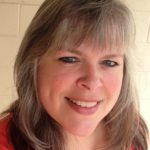 Cynthia Cunningham, has been a Wacoan since age 2. She lives with her husband of 28 years, Bobby, and two spoiled dogs and one royal cat! Her passion is educating others about mental health.
The Act Locally Waco blog publishes posts with a connection to these aspirations for Waco. If you are interested in writing for the Act Locally Waco Blog, please email [email protected] for more information.
The Historic Waco Foundation has launched a strategic process to understand Waco’s story from a number of perspectives in order to form future partnerships and programs that would offer the greatest benefit to the community. Act Locally Waco sat down recently with Rae Jefferson, Communications Director at Creative Waco, for a Q&A about the Historic Waco Foundation’s recent community gathering and the overall initiative. This post is the second in a series to share with you how that work is progressing and how you can get involved. For the rest of the posts in this series, click here: Historic Waco Foundation Series. — ALW
ALW: What is your connection to Historic Waco Foundation? Are you on the board?
RJ: I am not on the board, but I am part of a community engagement group convened by Historic Waco Foundation to guide the organization’s process of engaging Waco community leaders to talk about Waco’s history, including the parts not regularly told. As the Communications Director for Creative Waco, I was particularly interested in focusing on how the arts can be useful in telling Waco’s full story.
ALW: Are you a Waco local?
RJ: I came to Waco as a Baylor student, but after graduation, I stepped out of the “Baylor bubble.”
ALW: So you started to see Waco through a fresh set of eyes. In other words, your point of view changed.
RJ: That’s right. For example, I did not even know Historic Waco Foundation had these homes. I saw them around Waco, but I assumed they were businesses.
ALW: Or dentists offices.
RJ: Exactly—and over time I started to learn more about Historic Waco Foundation and now I am seeing a desire within the organization for it to encapsulate more of Waco’s story than it currently does.
ALW: So I am hearing you say that Historic Waco Foundation is launching a re-energizing effort of sorts. What is the first step in the process?
RJ: That is a great question. Historic Waco Foundation convened a community engagement group tasked with planning and carrying out a meeting of community leaders to discuss Waco’s history from a number of perspectives.
ALW: How did you think the community meeting went?
RJ: I think it was a great first step. The community engagement group wanted to ensure we had a number of perspectives, so we invited a diverse group to the meeting, including individuals from interest groups, academic institutions and local nonprofits, among others. It was clear from the conversations in the room that everyone who attended was excited to be there, and it was encouraging to see so many people come out to help with such an important initiative.
ALW: I was at the meeting too, and when you say diverse, I think most people assume you are saying racially diverse, and that was certainly true, but there was also diversity in age, gender, length of time in Waco. What would you say we heard that we would not have necessarily heard if it had not been such a diverse group?
RJ: I had no idea that TSTC was the site of an air force base, and I had not heard much mention of military history during our initial discussions as an engagement group.
There was also talk of the Waco tunnels. Apparently, in the last few years a number of long underground tunnels have been discovered beneath buildings around the city. Their original purpose is still unknown, but it is incredible that there are bits of our city’s history that are still surfacing. No one at my table knew anything about the tunnels, and we would not have if we had not gathered that specific group of people together. I like to think it is an indication that we are on the right track with the work we have been doing.
ALW: What do you hope Historic Waco Foundation will do with the information?
RJ: I hope we begin to tell more stories in a creative way. I am part of a creative organization, so I am partial to using art as a way to tell the stories of the past. I also hope Historic Waco Foundation will be able to engage more people in our collective history and that there will be some level of reconciliation with Waco’s story, regardless of on what side of history an individual’s own history falls. And I also think we can work to get the younger generations excited about Waco’s history.
ALW: You know, I have been thinking about that a lot. Why is it important to get young adults interested and engaged in history?
RJ: I facilitated one of the tables at the community gathering, and my table had a former history teacher. He was explaining that his middle and high school students did not care about history so it took the fun out of history for him. Thinking back to my own experience, I hated history class. Now, especially with the way things are in our country, if you do not have an understanding of the history of the people that live around you then you cannot have empathy. If you understand history, you can take steps not to repeat it.
ALW: Tell us a little about the community leaders who participated in the gathering.
RJ: Of course when you think of community leaders you think of leaders from area nonprofits, the arts and businesses, but we also tried to center in on individuals who are not necessarily thought of as traditional community leaders but who play an essential role in the community. For example, the longtime Director of the Richland Mall was at the gathering. If you want to shop in Waco, you go to the Richland mall. It really goes to the notion that history is happening all around us—it is not just sitting on a shelf somewhere.
ALW: Why is this initiative so important now, locally speaking and looking at the big picture?
RJ: You can really feel a shift happening across Waco. For example, millennials are no longer the generation in college. We are looking to start our careers and settle down, and we are seeing that students are graduating and staying in Waco or leaving for a short time and coming back. Waco is also experiencing immense growth. We are seeing an influx of tourism and with it a fresh energy. But, with that comes the need to step back and recognize our entire community.
ALW: Is there anything from the meeting you would like to work on personally?
RJ: Yes! Many people suggested using the houses as venue space for art shows and concerts; I love the idea of combining history with the arts.
ALW: Lastly, how do others get involved?
RJ: We are currently working on next steps, but in the meantime, we are encouraging area residents to reach out to the Foundation directly at [email protected] or (254) 753-5166 with questions, comments and stories about the people and places that have made Waco what it is today.
 Rae Jefferson is a creative, Netflix-er and marketing professional, in that order. Originally from Houston, she stuck around Waco after graduating from Baylor University with a B.A. in Journalism, PR & New Media and a minor in Film & Digital Media. Now she is the Director of Marketing and Communications at Creative Waco, where she is paid to tell people that there is, in fact, really good art in Waco. She loves her community and learning what it means to serve others, but most of all, she loves her “dog-daughter,” Charlie.
By Jeffrey Vitarius of the Waco Pride Network
Waco had celebrated LGBTQ Pride in the past, but had not had any kind of organized, city-wide celebration for ten years. That changed last year. After a crop of conversion therapy billboards sprouted up around Waco, organizers took the initiative to bring Waco’s LGBTQ community back out into the open. They had originally planned on a small picnic…what ultimately occurred was the first “OUT on the Brazos Pride Festival.” Over four hundred people turned out, the event was a huge success, and the organizers were able to raise considerable funds for future Pride events.
 The 2018 festival focused on building a family-oriented welcoming environment featuring live performances, speakers, vendors, sponsors and a great sense of community. As planning began for Waco Pride 2018, it was obvious that the OUT on the Brazos Pride Festival should continue. But what about offering a more adult-oriented event in addition to the family-friendly festival?
Then we had a thought. What if we celebrated the numerous LGBTQ-friendly establishments downtown? And just like that, the concept for “OUT on Austin” was born. A few conversations with the wonderful Rebekah Geare Hagman of Cultivate 7Twelve later and we had an event plan.
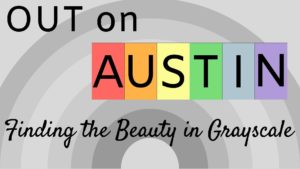 OUT on Austin will be centered on Cultivate 7Twelve where we will hold an art auction and raffle as well as offer refreshments. We will connect the event with various other locations up and down Austin Avenue with a social media scavenger hunt, encouraging participants to take in all that the Austin Avenue District has to offer. The event will close with a short presentation and the announcement of the raffle winner back at Cultivate 7Tweleve.
The theme of the evening will be “Celebrating the Beauty in Grayscale,” we will be recognizing that we are moving from a world of stark contrasts to one of gradients and subtlety.
 The plan is ambitious, and we are absolutely confident in its success. We hope you will join us this year, next year, and in many years to come. We don’t plan on going anywhere. Find out more at www.wacopride.org or on social media @WPrideNetwork.
The art auction portion of OUT on Austin will take place from 6:00 pm to 9:00 pm on October 12th at Cultivate 7Twelve and will be followed by a short presentation.
The OUT On the Brazos Pride Festival will take place from 11:00 am to 4:00 pm on October 13th at Brazos Park East.
 Jeffrey Vitarius is an active member of the Waco Pride Network. The Waco Pride Network was official founded in July 2018. It is a non-profit organized to serve the LGBTQ community of Waco, Texas. Waco Pride Network’s keystone event is the annual Out on the Brazos event held each October. We strive to foster a positive, open, and compassionate LGBTQ community by promoting events with integrity and excellence.
The Act Locally Waco blog publishes posts with a connection to these aspirations for Waco. If you are interested in writing for the Act Locally Waco Blog, please email [email protected] for more information.