By Christina Helmick
As you may have heard, the US Census Bureau recently released the 2017 American Community Survey (ACS) data. The ACS is an ongoing survey of individuals and households. The government uses this information to help distribute federal and state funds each year, and the Prosper Waco backbone organization uses this data to track our community’s progress toward the initiative goals. The ACS includes information about population demographics, employment, income, educational attainment, housing and other topics. It is important to note that while the newly released ACS data breaks down 2017 outcomes, it is the most available and recent data for our community to use in guiding the work of Prosper Waco. Click here to peruse the American Community Survey data portal.
Across all indicators, Waco saw notable improvements from 2016 to 2017. Waco’s growth mirrored the growth that was seen at both the state and national levels. Below is a breakdown of key indicators of how our community is doing:
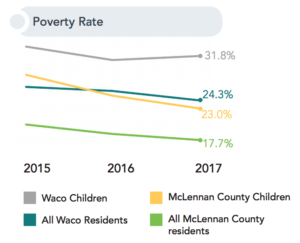
Poverty rates:
In 2017, the number of individuals experiencing poverty was concentrated within the City of Waco. The number of children (individuals under the age of 18) living in poverty in Waco increased, while all the other categories decreased.
Median Household Income:
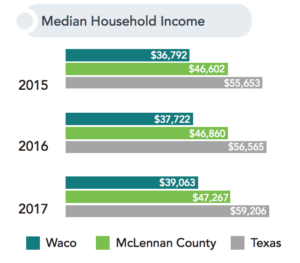
The 2017 numbers for the City of Waco and McLennan County followed state and national trends of increased median household income. In 2017, the median household income in Waco was $8,204 less than for the rest of McLennan County.
Educational Attainment:
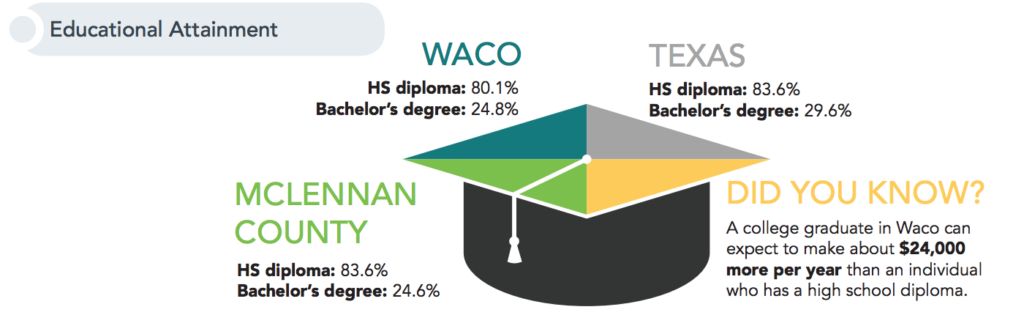
McLennan County and Texas had similar educational attainment rates in 2017. Waco, McLennan County and Texas followed similar trends, which indicated that the general population is becoming more educated. In 2017, one in eight residents of Waco had a high school diploma, compared to one in four in both the county and state.
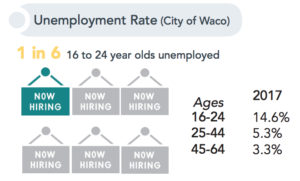
Unemployment:
In 2017, one in six youth who looked for work were unable to find employment. Waco had slightly higher unemployment rates compared to the county and state.
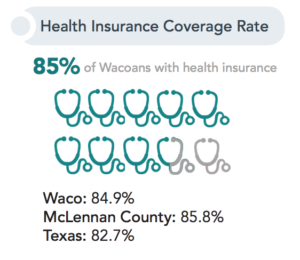
Health Insurance:
Eighty-five percent of Wacoans were insured in 2017, which was higher than the state average. Additionally, the highest population at local, state and national levels without health insurance were 26-34 year olds.
Our community is using data, like what is highlighted above, to make data-informed decisions and to work toward advancing the goals of the Prosper Waco initiative. To learn more about these partnerships and initiatives, visit “The Work” page on the Prosper Waco website.
If you have any questions or comments, email [email protected] or call 254-741-0081.

 Christina Helmick is the director of communication at Prosper Waco. She is a recent graduate of Baylor University with a BA in Journalism, Public Relations & New Media. Originally she is from Washington, D.C., but has stayed in Waco post-graduation. She is an active mentor at J.H. Hines Elementary School, enjoys spending time with her family and watching Baylor football. Sic ’em Bears!
The Act Locally Waco blog publishes posts with a connection to these aspirations for Waco. If you are interested in writing for the Act Locally Waco Blog, please email [email protected] for more information.
(As I’m sure most of you probably know, one of our Prosper Waco community goals is “McLennan County residents will live healthier lifestyles and access the best available care.” With that in mind Act Locally Waco is teaming up with Better Living for Texans to bring you a monthly blog post full of tips for healthy living. For more of the posts in this series, click here: Better Living for Texans. – ALW)
by Lindsey Breunig
Fall is here, which means busy days and busy nights. From the school work (dog school for me), fall sports, and extra-curricular activities, everything is back in session. Hectic schedules between family and friends create limited time to prepare a healthy meal at home. I will admit it, when I am hungry and have limited time, my dinner choices usually are not the healthiest.
I believe it is safe to say we have pizza fans in Waco. Pizza can be cheap, easy, and feed the masses, perfect for those fall days. I can think of numerous occasions where pizza has been the chosen meal for watching away Baylor football games. Pizza is a great go-to meal, but you might be wary to regularly serve pizza because of the nutritional value, or lack thereof. Calories add up quickly when one adds double cheese and extra meat! However, today I’ve got good news for you! Pizza doesn’t have to be unhealthy – read on, and get ready for pizza night, there will be a slice for everyone!
Making a healthy pizza can be easy, a cost-saver, and fun for family and friends. Make the crust and sauce together and let everyone personalize the pizza with their favorite (healthy!) toppings! In the sections below, we will talk about pizza basics; however, once you’re in your own kitchen, I challenge you to get creative and make it your own!
Make Your Own Crust!
Whether it is thick, thin, or deep-dish, in its basic form, pizza crust is made from flour (whole wheat or unbleached are preferred), water, and yeast. If you are pressed for time, buy a pre-made whole wheat pizza crust, or use an alternative crust – English muffins, mini-bagels, flat or pita bread, or French bread make great crust! Does the crust have to be bread-based? No! Sneak more veggies into your pizza by trying out a cauliflower crust, check out this recipe below, and see if anyone notices the difference!
Ingredients:
 1 cauliflower stemmed and roughly chopped
1 tablespoon olive oil, plus more for drizzling
1 tablespoon minced onion
2 garlic cloves peeled and minced
1 teaspoon dried oregano
2 tablespoons Parmesan cheese
1/4 cup shredded low-fat mozzarella cheese
2 egg whites
To make the Crust: Preheat the oven to 375°F. In a food processor, add the cauliflower in sections and pulse 10 times until it has a rice-like consistency. Place into a dry dishcloth, squeeze and wring out any water into the sink. Pour out on a parchment-lined baking sheet and drizzle with olive oil. Bake for 25 minutes, or until dry and lightly golden. Remove and cool. In a large mixing bowl, add cauliflower and remaining crust ingredients. Mix together until dough forms, then press mixture into two 8-inch circles on the parchment-lined baking sheet. Drizzle with olive oil if desired. Turn oven up to 450°F and bake for 20 minutes.
Sauce
 Choose tomato-based sauces like marinara rather than alfredo sauce for a lower fat content. Use a premade tomato-based sauce or take fresh tomatoes and blend them together for your own sauce. For added nutrtients, add fresh or frozen vegetables to the sauce and use a blender to mix the vegetables into the sauce. I recommend spinach or kale! Try this recipe below:
Ingredients:
1 tsp olive oil
2 tsp garlic minced
2 28 oz canned crushed tomatoes unsalted
1 1/2 tsp dried thyme
1 1/2 tsp rosemary
1 1/2 tsp oregano
1 1/2 tsp basil
1 1/2 tsp onion powder
2 Tbsp sugar
Instructions: Heat olive oil and garlic in a large saucepan or pot over medium heat. Sauté garlic for 1 -2 minutes until slightly golden. Reduce heat to low and add crushed tomatoes, herbs, and sugar. Simmer on low for 15-18 minutes.
Toppings
Choose your favorite toppings to make the perfect pizza for you and your family. Something I always encourage is the more colorful, the better! Add your favorite fruits and/or vegetables and you’re almost done! Don’t like the crunch? Sauté bell peppers and onions before topping. Like a kick? Add some pickled Jalapeños! Something I have found when introducing new veggies is that the more finely cut, the better. When it comes to cheese, use a low-fat cheese, like part-skim mozzarella. If you want a little protein on your pizza, use a lean meat source.
Conclusion
Making your own pizza can not only be a good bonding experience, but it can also provide you with a much healthier pizza that everyone will love! Don’t be afraid to let the kids help, many important nutrition-related lessons and habits can be taught over making pizza together. Get the pizza cutter out and save me a slice!
 Lindsey Breunig is a graduate of Baylor University and currently works as the Better Living for Texans Educator for the Texas A&M AgriLife Extension Service. She is originally from Grapevine, TX and now calls Waco home. Here in Waco she loves to venture out to Cameron Park, visit the local Farmers Market, and try out the awesome eateries in Waco. If you see her and hear a loud bark, that’s her pup Lucy just saying hello.
Cauliflower Crust: https://whatscooking.fns.usda.gov/recipes/myplate-cnpp/chicken-sausage-cauliflower-crust-pizza
Herb Infused Marinara Sauce: https://dinnertonight.tamu.edu/recipe/herb-infused-marinara-sauce/
By Brett Mills
“Let’s take Easter to the strip clubs,” my wife said to me 15 years ago. Little did I know my “yes” would be my death sentence.
I experienced a “gentleman’s club” only once before as a bright-eyed Baylor freshman. I ducked in with trepidation, curious about what I would see. Two decades later, that experience is still seared into my memory, though for different reasons than you might expect. From the back, I watched as a half-naked dancer swayed around a 50-something-year-old man. He stared at her…as close as he could get without touching. His gaze was empty, robotic, disconnected from reality. I thought to my 18-year-old self, “I don’t want to be that guy”, and played pool the rest of the night. But I am no hero. I, too, am that man. A man who has been culturally conditioned to view women as objects, to “conquer the girl,” “chase the skirt,” belittle her mind and question her power.
Good Friday 2004, I drove my wife to several Waco stripclubs. She carried gifts inside, I sat in the car. It was the beginning of what would later become Jesus Said Love: a statewide movement sharing the love of Jesus with those impacted by the commercial sex industry.
This death of mine has been slow. In my 20s, I knew everything. I understood the way things worked. And, without a shadow of a doubt, I knew this reality of mine was made up of black-and-white, clear-cut, God-given truth. Today, at 42, my reality is more shades of living color than anything else, a hundred tones stacking and overlapping and spreading wide. This didn’t happen overnight. Every time we would visit a strip club, death. Every conversation with a club employee or manager, death. Every crisis, death. Dinners at my house with entertainers and their children, death.
My thoughts on everything from the sex industry to government, social justice to the church…everything in me, at some point, has experienced one of these deaths. And it makes sense. When macro issues suddenly become intimately personal, your response is wildly different than it was when you were a mile away. For those concerned that I’ve abandoned my faith, I can assure you: my views on Jesus have only deepened and grown stronger. In fact, these deaths I died were exactly what Jesus meant by “losing your life” to find the life that is life indeed. Yes, I die and rise again on the daily. I have awakened to greater truths: that numerous times in Scripture, Jesus relates to women, empowers women, listens to women, respects women. Jesus stands with women, positioning himself between oppressor and victim.
Several years ago, another level of death smacked me in the chest when we launched an empowerment program called ACCESS. I was scheduled to spend every day of 8 weeks with women who have been to hell and back: sisters with bravery beyond comprehension (because facing your own trauma is a serious and gutsy thing).
I sat around the big table in the Great Room at our JSL office with 8 future ACCESS students. It was our first chance to meet—an orientation of sorts. There came a point in our visit when the atmosphere shifted. There was a bit of silence. And then she spoke up. She said “I don’t trust men. I never have and never will. All they’ve ever done is hurt me. Abuse me. Lie to me.” She went on to say, “but I can honestly say you, Brett, are the first man I think I trust. There’s something about you that’s different.”
Tears. From everyone.
I swallowed and looked around the table. “I’m sorry for the way men have treated each of you,” I managed to say. “You are worth infinitely more than the words and actions that have been done to you at the hands of men. I promise this will be a safe place for you.”
I went home that night and the grim reaper was waiting…again. I kept thinking about her words: “You’re the first man I think I trust…” In a moment of honesty, I struggled with her comments because I thought about all the times I’ve objectified women. The crass jokes I’ve made around other guys, or (worse) the times I’ve heard other men say horrible things about women and I’ve kept silent – also known as “the bystander effect”. The times I thought, “She can’t handle that…we need a man to do it,” or the times my wife asked me to help with laundry, and, almost instinctively, my gut quietly said, “Wait, that’s your job.”
I don’t want to find myself sitting around the deer campfire talking about “tits and ass,” thinking it’s harmless. Or, conversely, diminishing its harm by saying, “It’s just guys being guys,” or, “I was just kidding.”
That night, in light of these deaths over the past 15 years, I wanted to create a space for men to come and die with me, learning about issues affecting women today. Yes, this was to be a brotherhood of sorts, made up of men who are willing to take back the language of the locker room and golf course. A band of brothers willing to look at these issues affecting women and realize they are, in fact, also inherently men’s issues.
Man In the Mirror Collective is that space where, together, we will put our minds, hearts, and pocketbooks together and make a difference in the current culture of domestic and gender violence. Men coming together in numbers strong enough to make a cultural shift.
The objectives of MITMC are simple:
- Courage to Look Inward
To stand against gender violence, we must be willing to examine our own attitudes, biases, and behaviors regarding women, approach to sex, and masculinity. - Support Survivors
Most sexual abuse goes unreported. Most who report are telling the truth. Offer support by listening intently to survivor stories, not minimizing or criticizing them. - Refuse Sexist and Abusive Behavior
Help to create a climate in our male peer culture that discourages sexist attitudes and behaviors. Refuse to be a bystander. - Contribute Financial Resources
Help fund programs and organizations, providing resources for victims of domestic, physical, and sexual violence.
Now, this collective is not about helping the “poor, weak woman.” It’s not about charging in, muscles flexed, ready to rescue with a savior mentality. Rather, it’s about doing what any logical human would do: listen first, link together – arm in arm, feet lined up unified at the front lines of the battlefield. In standing with women, we not only become better men, but (ultimately) better human beings in a better world for the next generation. This is legacy. This is good and true and right and reasonable.
The bells are tolling, men. Will you join me in making a change? Let’s start with the man in the mirror.
 Brett Mills is the CEO of Jesus Said Love, a movement across Texas working with those impacted by the commercial sex industry. He also works closely with those arrested for buying sex through an intervention program of JSL called Stop Demand School. A graduate in Communications from Baylor University, Brett lives in Waco, TX with his wife Emily, and children Hattie, Lucy and Gus. For more information about how to participate in the Man in the Mirror Collective visit jesussaidlove.com/mitm or or email [email protected]
The Act Locally Waco blog publishes posts with a connection to these aspirations for Waco. If you are interested in writing for the Act Locally Waco Blog, please email [email protected] for more information.
The Historic Waco Foundation has launched a strategic process to understand Waco’s story from a number of perspectives in order to form future partnerships and programs that would offer the greatest benefit to the community. This post is the first in a series to share with you how that work is progressing and how you can get involved! For the rest of the posts in this series, click here: Historic Waco Foundation Series. — ALW
By Ashley Wucher
Humans are, generally speaking, emotional creatures. We digest and retain information best when packaged in a way that allows us to connect emotionally with the information presented. Perhaps, then, it should come as no surprise that storytelling has, for so long, been society’s primary form of communication. In fact, humans used stories even before written language as one of the very first forms of communication.
Fast forward to today, and we are still a society of storytellers. We package difficult concepts in a familiar story to teach our children from grade school through secondary education. Families tell stories of grandparents and great-grandparents as a way to keep the memories of loved ones alive. Cities use stories to articulate their communities’ culture through historical museums, foundations and exhibits. Waco has some great examples of this kind of storytelling such as the Waco Hispanic Museum, now in its third year, and the 2016 Historic Waco Foundation exhibit “Footprints of African Americans in McLennan County” that spotlighted major, yet largely unfamiliar, contributions by local African Americans to the region.
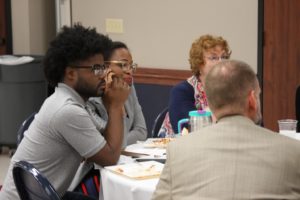 The Waco community has made great strides in recent years to create a space for listening to the stories of the people and places that have made Waco what it is today—but we have long way to go in order to articulate a more complete history of our community that is representative of every Wacoan.
Historic Waco Foundation, a group that has long considered itself the storytellers of Waco’s history, has begun to broaden its work and follow its long-held mantra: Preserve, Educate and Inspire. The organization is stepping outside of the historic homes to listen to the community in an effort to become better storytellers of Waco’s full history.
The group gathered local leaders representing the Waco-area’s diverse communities on September 27 to discuss the rarely told and untold stories of the people and places that make up the City’s history. The gathering was the first step in a larger strategic process of understanding Waco’s story from a number of perspectives in order to form future partnerships and programs that would offer the greatest benefit to the community. Historic Waco Foundation convened a working group that identified community leaders from across the greater Waco-communities, but the group is now asking for input from the greater Waco community.
Waco-area residents can submit their comments, questions and stories to [email protected] or by mail to Historic Waco Foundation, 810 South 4th Street, Waco, Texas 76706.
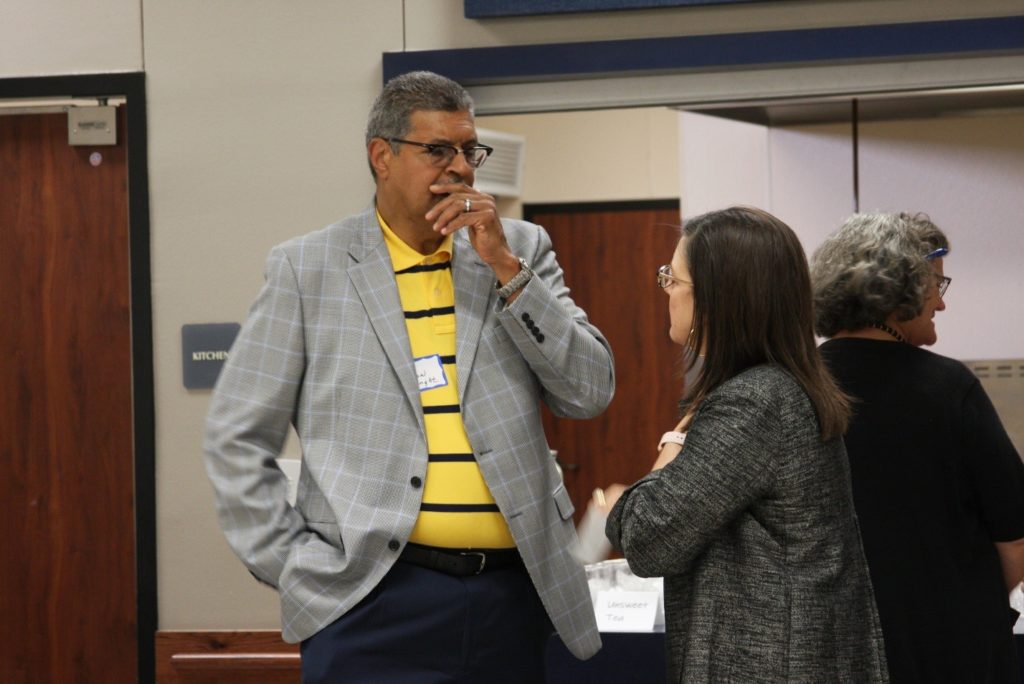 The group discussed the well-known stories of World War II hero Doris Miller and Waco-born Gospel singer, Jules Bledsoe, but it also focused on the stories that have not gotten the attention they deserve, like the Starlights, a Waco-based Mexican-American dance band popular throughout Central Texas in the 60s.
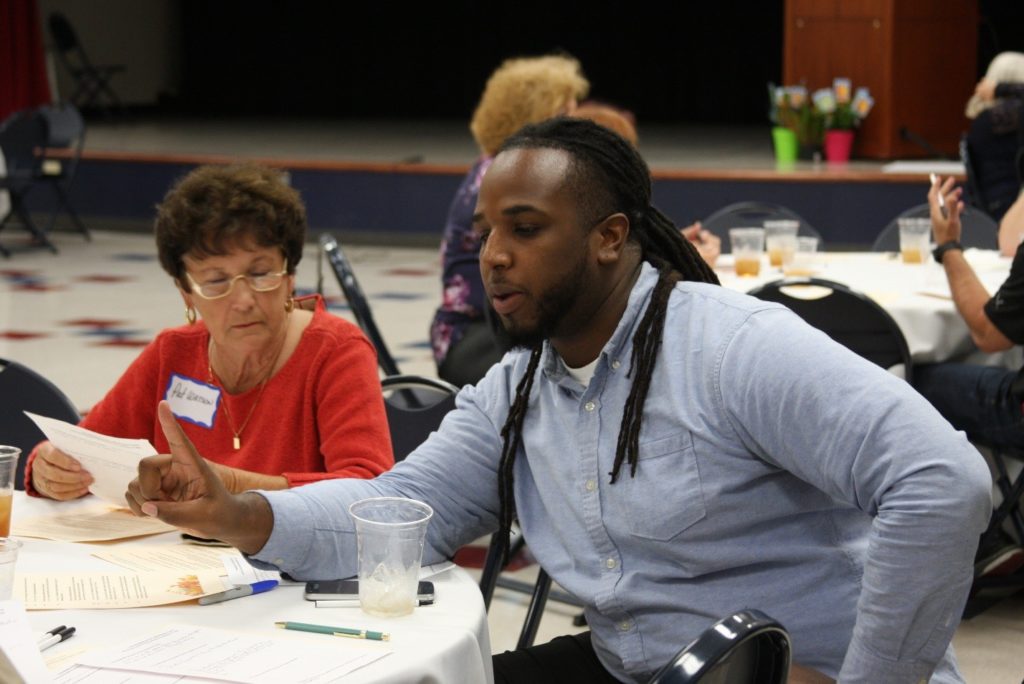 East Waco community organizer, Cuevas Peacock, said the gathering is only the first step in a larger strategic process of understanding Waco’s story from a number of perspectives.
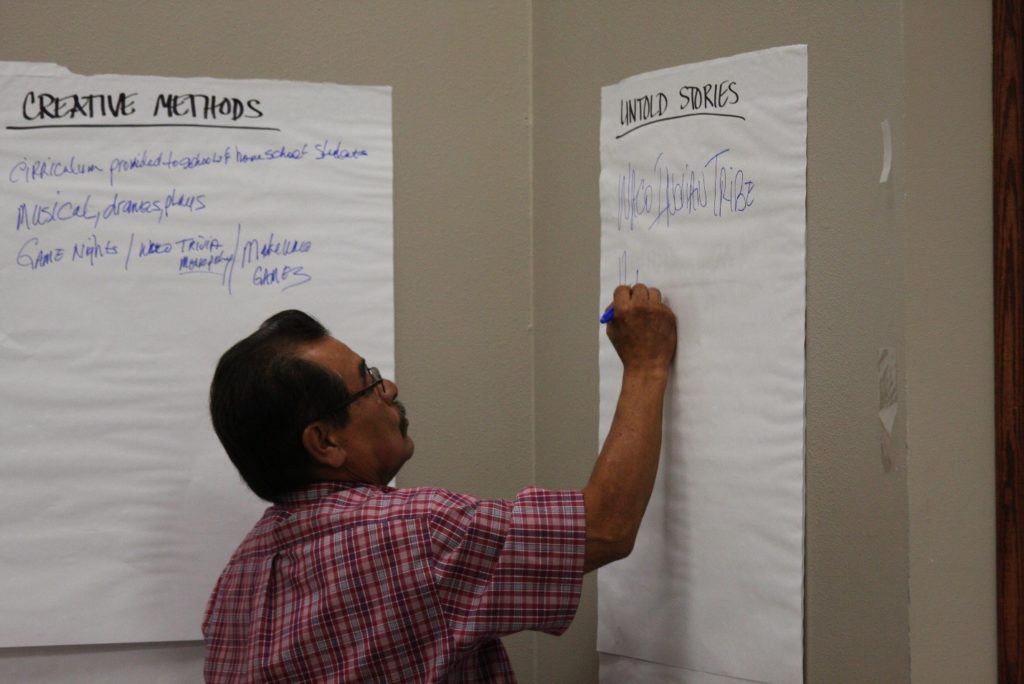
Louis Garcia, Chairman of the Waco Hispanic Museum at the South Waco Community Center, said he looks forward to working with Historic Waco Foundation to tell the story of Waco’s Hispanic families, past and present, as the group works to build a Wacoan can see themselves represented.

Ashley Wucher is Assistant Director of Community Public Relations at the Waco Foundation. Ashley graduated magna cum laude from Baylor University with a Bachelor of Arts in Journalism/Public Relations, where she served as the News Editor for the Baylor Lariat. Ashley also earned her Masters of Jurisprudence from Michigan State University College of Law. She is thrilled to return to Waco and looks forward to bringing people and ideas together to help the city realize its collaborative vision.
 (The current exhibit at local art and culture hot spot Cultivate 712 is called “Writing on the Wall.” It features the street art of world-renowned, anonymous street artist “Banksy,” specifically his/her installation “Haight Street Rat: This is where I draw the line” in addition to artwork by Waco and Central Texas artists. Bringing the work of this famous/infamous street artist to town made us wonder about the state of street art in Waco. Steve Veracruz of the Central Texas Artist Collective (CTAC) agreed to dig into it a little for us. Thanks for writing, Steve! The “Writing on the Wall” exhibit is free and open to the public during Cultivate 7Twelve’s open hours until Saturday Nov. 17.) – ALW)
By Steve Veracruz
Street art is not new to Waco. Sometimes it seems like street art and graffiti styles fill up any place resembling wall space. There is a fine line between calling graffiti “street art” and actual works of art. It all depends where you draw the line I suppose.
There really are no boundaries when it comes to street art because the actual environment becomes the canvas. Street art can be about the statement…a street artist has something to say and it will be revealed on a grand scale, with a touch of controversy perhaps. But, that is not always the case. It may also be about reflecting a particular area with some visual form of identity.
One particularly talented individual in Waco with experience in street art goes by the name Skcoobaveli. He has created outstanding works of art everywhere, from bridges to buildings. He is also one of Waco’s famed tattooists, as well as the winner to one of CTAC’s special art exhibitions!
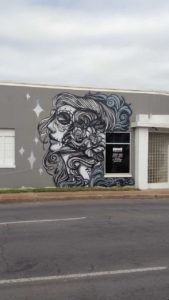 Skcoobaveli acknowledges the many street and graffiti artists before him. Building on that, he hopes to create a brand known for its tasteful qualities. Businesses have reached out to him to help encourage traffic through the attraction of his art.
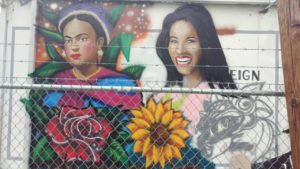 Skcoobaveli explains that areas with the less attractive graffiti and even vulgarity are mere places for practice. They are places where adolescent behavior grows into work to be shared, for the people. He also noted that sometimes a wall becomes a space for something amazing to be created…a legacy gets left behind.
“It feeds the soul to be remembered,” says Skcoobaveli. “Keeps the Ghost alive. And without ghost to chase, Scooby Doo wouldn’t have a job. Feed the memory. Be a ghost chaser. Spread the stories. RIP Benjamin Franklin, may I always have you in my pockets, close by.”
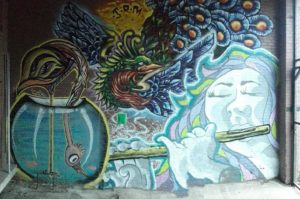 Sal Valesco is another former street artist in Waco. He has seen and worked with some Waco’s street art pioneers. His take on the movement is to recognize its value. It truly exercises the right of free speech, given it is done properly.
“To me the street art in a city always gives me a reading,” explains Sal, “like a pulse of what’s happening in that city.” Sal understands the necessary information that street art can reveal. It can promote style, politics, and more importantly, culture.
 Since his street art days, Sal has taken his skills to the next level and created his own company, Epitome. Through Epitome he provides advertising and marketing for many of the sprouting local businesses waking up in Waco. His once hidden designs developed while decorating the street under the cover of night, now help businesses explain and promote their identity.
Sal likes a quote from soccer star, Pele, “Success is no accident. It is hard work, perseverance, learning, studying, sacrifice and most of all, love of what you are doing or learning to do.” “Those words couldn’t be more true,” says Sal. I’m looking forward to embarking on this new venture and to putting our best foot forward. Follow @epitome_tx to keep up with our new projects and to get more info.” (#epitome)
Any form of art continues to generate, encourage, influence, and plant the seeds for so much more we have not yet seen. I feel absolutely honored to be able to work with so much of Waco’s talent so far. The best quote to take us out with is, “We have not seen anything yet!”
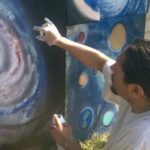 Steve Veracruz is Co-founder and communicator for Central Texas Artist Collective. He is a multimedia artist and strong advocate for collaborative success. He likes to say, “No big accomplishments are created alone, and our city is on the way.” For more information about the Central Texas Artist Collective (CTAC) email [email protected] .
The Act Locally Waco blog publishes posts with a connection to these aspirations for Waco. If you are interested in writing for the Act Locally Waco Blog, please email [email protected] for more information.
By Melissa Mullins
Anyone who’s been around Waco for very long has no doubt noticed the remarkable growth and development occurring, with everything from home construction to hotel revenue on the rise. All the new construction I see around me daily got me to wondering: how do cities around Texas and around the country encourage “green” infrastructure and what’s planned for Waco?
Sustainable Development
Sustainable development is loosely defined as meeting the needs of the present without compromising the ability to meet future needs. It is often discussed in terms of the ubiquitous “three-legged stool” metaphor with strong economic, environmental and social legs (people, planet, profit) all required if you don’t want a wobbly stool. Since my background is in biology (and not economics or social sciences), I wonder most about interactions of the natural and the built environment when communities grow.
In my neighborhood and around Texas
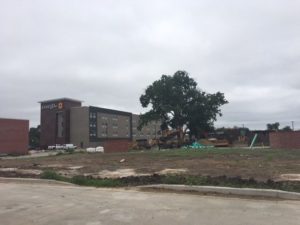 So, for instance, as the city block (pictured) that I pass by daily was converted from older houses to a new shopping center this year, what changes will take place in terms of water movement, soil, and plants? How can we capitalize on the new structures that are in place (such as rooftops)? Waco has lots of great outdoor green spaces- but are there things we can do to promote linkages and greenbelts in our community? I don’t claim to know the answers to these questions, but I do think we all should be a part of the conversation. And it’s a conversation that is not unique to Waco. About 85% of Texans currently live in urban areas, and the population of Texas’ cities is expected to double in the next 40 years, with metropolitan counties (including ours) accounting for nearly all the growth that will occur in the state.
Waco City Plan
There is certainly no shortage of information on the internet about “greening cities” around the country and around the world. Closer to home, The Waco City Council adopted the City Plan, Waco Comprehensive Plan 2040 a couple of years ago, and this plan discusses specifics for Waco related to economic development, growth management, transportation, community livability and the environment. In addition to outlining broad goals and objectives for Waco, specific implementation strategies are identified related to sustainable growth. For instance, City Ordinances could be adopted such as a parkland ordinance that would require developers to contribute to construction of parks, and creek beds could be developed as linear parks that could link neighborhoods to the Brazos River Corridor. There are recommendations to adopt stormwater utility fees that would encourage green infrastructure. The section of the plan on the Environment contains implementation strategies aimed at reducing impervious cover, conserving water, and encouraging sustainable planting practices using native plants. Some of the most exciting implementation strategies are related to energy and encourage considering the adoption of a green building code, promoting the use of solar power in residential, commercial, and industrial development, and taking specific actions to decrease the urban heat island effect.
What can I do?
A city plan is only a starting point of course, and only as good as the action that comes from it. There are other entities besides government (such as non-profits) that play an integral part in advocating for all three legs of sustainable growth in Waco and surrounding communities. How can interested citizens be involved? We are often given lists of individual actions we can take that are sustainable (recycling, taking our own bags to the grocery store, etc.) and while these are all great ideas, our real strength and ability to promote sustainability is as a community, which is more than a loose affiliation of individuals doing their own “green” thing. So maybe for me that means forcing myself to go to public meetings (though I hate them) where issues I care about are on the agenda. What does it mean for you? Some places to look for inspiration might include: Keep Waco Beautiful, the Waco Sustainable Resource Practices Advisory Board, Sustainable Waco Facebook group, Heart of Texas Master Naturalists, McLennan County Master Gardeners – feel free to share others you know about in the comments section!
 Melissa Mullins coordinates water education and outreach at Baylor’s Center for Reservoir and Aquatic Systems Research. She’s lived in various neighborhoods in Waco and McLennan Co over the last 25 years, loves spending time outside, and is a library patron.
The Act Locally Waco blog publishes posts with a connection to these aspirations for Waco. If you are interested in writing for the Act Locally Waco Blog, please email [email protected] for more information.
(This post is a part of a regular series “Trails & Trials,” a monthly adventure series inspiring others to experience the physical, mental, and social benefits of cycling, running or swimming in Central Texas. For more posts in this series, click here: Trails and Trials. – ALW)
By Natasha van der Merwe
Last weekend we had the pleasure of hosting over 60 athletes in Waco. They came in from cities all across Texas, Oklahoma and Arkansas, for the inaugural Bicycle World IRONMAN® 70.3® Waco training camp.
What exactly does a Triathlon training camp entail?
This camp was specifically targeted at helping athletes feel as prepared as possible for the inaugural IRONMAN® 70.3® Waco Triathlon on October 28th.
The first goal was to familiarize the athletes with the race course. The second goal was to make sure every athlete left with as much information on how to execute all the small but important elements that would make their race day a success. We covered topics such as day-to-day nutrition, race day nutrition, race day pacing, carb-loading, taper week protocols, cycling equipment, and much more. All elements are just as important as the other.
Outside of these two goals for the athletes, an added bonus is that a triathlon community was built.
There is nothing like getting a group of like minded, and enthusiastic people in the same room conversing about their favorite subject – triathlon. The conversation flowed and many new friends were made.
The camp started on Saturday mid-morning, where we took athletes through a transition clinic. The quickest way to transition from the 1.2 mile swim to the 56 mile bike ride, and from the bike ride to the 13.1 mile run.
Transition times are important, as they add to one’s overall time. We showed the athletes a few tips and tricks to make the process as time efficient as possible.
Athletes were advised as to what a pre-workout and race warm up routine should look like. This included activation exercises, specifically targeted at getting muscles ready for the upcoming activities, as well as running specific drills focused on building running efficiency and making sure we have the body feeling loose and ready for the workout session or race ahead.
Following our activation exercises and warm up we sent the athletes off to run part of the IRONMAN® 70.3® Waco run course, which ran them on a beautiful and mostly shaded path along the Brazos River.
Thanks to the volunteers from the Waco Triathlon Club for all their assistance. They ensured that the campers had a great impression of Waco. We had water stops along the route for them to stop, chat and take in the views before heading back.
Next on the agenda was a group swim at the beautiful Waco Family YMCA pool. Our group was so large that we had to split them in two groups. Aaron Shapley, a Bicycle World Racing Team athlete and an ex collegiate swimmer, gave an informational session in the bleachers. I then took a group through their paces of a triathlon specific workout that can be done in the pool.
After a short break, all the athletes got together at Downtown 301, which is located right behind the new Bicycle World store. Athletes got to mingle with others over a steak and sweet potato dinner, which we recommend prior to big races due to its nutrient density, which is perfect in preparing the body for a big event.
Bicycle World’s CEO and President, Todd Behringer, and local triathlete Erik Romanov took us through the bike and run courses so that athletes got familiar with the course before riding and running it the following day. I then got the opportunity to speak on several topics and details that would help them make their race day as enjoyable as possible.
Sunday morning, while the athletes were enjoying breakfast, our volunteers setup course signage and aid stations on the bike and run course. When athletes arrived in the morning, they setup their transition in the IRONMAN® 70.3® Waco transition area. We then set athletes off in various pace groups led by the Waco triathlon community and Bicycle World Racing team. All campers got to ride the entire 56 mile bike course which is described on the Ironman website as a single-loop course through the scenic Central Texas rural roads.
The day finished with running one loop of the challenging two loop run course that takes athletes along the Brazos River and into the hills of Cameron Park, and finishing on the suspension bridge which offers a picture perfect and memorable finish line.
After the ride and run, athletes, coaches, and volunteers all congregated under tents enjoying a well-deserved and delicious lunch from Luna Juice, while reminiscing about their big training weekend. One of our athletes, who was brand new to the sport of triathlon, finished the day in tears of joy. She exclaimed how proud she was of herself because never in a million years did she think that she was capable of doing a triathlon. It was her longest ride and run to date, and training for IRONMAN® 70.3® Waco was the big goal that kept her mind off recent heartbreak she had experienced in her life. Like many of us that enjoy the sport, training for a triathlon had given her day purpose, and she was proving to herself that she was strong enough to handle anything that came her way.
We all come to the sport of triathlon for one reason or another. Mine started out as simply needing a bigger purpose to workout and take care of myself, other than just to look or feel good.
Well, I got this and so much more…
- It turned into an Enduring Passion.
- It improved my overall quality of life.
- It became a career that allows me to compete and help others on their journey through the sport.
- It created new and long-lasting friendships within a close-knit community.
- Lastly, training for a triathlon and race day brought about joy and living life to the fullest.
It is a great experience when crossing that finish line at the end of a race. Months and months of preparation are celebrated.
I personally cannot wait to see the many tears and exclamations of joy from nearly 3000 triathletes on that suspension bridge on October 28th.
 Natasha van der Merwe is originally from South Africa. She is mom to a 19-month old girl, former professional tennis player and tennis instructor, and a professional triathlete representing Bicycle World and Waco Running Company. She has multiple top 10 finishes in Ironman and 70.3 events around the world. She is Director of Team Programs for Bicycle World, Texas
The Act Locally Waco blog publishes posts with a connection to these aspirations for Waco. If you are interested in writing for the Act Locally Waco Blog, please email [email protected] for more information.
By Jessica Maxwell
In July 2015, Waco Transit System assumed operations of the newly-formed McLennan County Rural Transit District (MCRTD). MCRTD offers appointment-based, door-to-door service that anyone can use to travel anywhere in McLennan and adjacent counties. The program, which replaced a former rural program operated by another agency, was created to improve the mobility of rural residents and enhance access to jobs, education, community services, healthcare and more. Public transportation was previously not an option for most people in these rural areas, due to limited service.
“By combining the urban and the rural systems to one provider, we’ve been able to maximize our efficiencies, which has allowed us to extend service hours and create Saturday service,” said Waco Transit System General Manager, Allen Hunter. “This program gives people who don’t have transportation a chance to lead independent lives – and we’re just glad to be a part of that.”
Take, for example, rural transit passenger, Jerry Kucera. Mr. Kucera is unable to drive and uses rural transportation every day during the week to get to his job in Waco at Goodwill. He lives at home with his parents in West, and his mother, Dorothy, said the service has been a “godsend” to their family.
“My husband cannot drive anymore, because he’s on oxygen 24/7, and I needed somebody to help me with the driving,” said Mrs. Kucera. “The drivers handle him [Jerry] with kid-glove care, they’re there on time, and they make sure he gets to work on time.”
Public outreach has been instrumental in generating awareness on MCRTD and educating on rural transportation’s affordability and ease of use. To help promote the program even more, MCRTD partnered with Texas country music artist, Holly Tucker, to create an eye-catching TV commercial and full-length PSA.
- Link to award-winning, full-Length “Anyone. Anywhere.” PSA: https://youtu.be/SJB_KKx7SHw
- Link to award-winning, :30 “Anyone. Anywhere.” commercial: https://youtu.be/eponEyXXWGU
MCRTD has grown exponentially and continues to flourish. The service provided more than 54,000 trips in 2017 and experienced 114% growth from the previous calendar year. This year, MCRTD is projected to transport more than 63,000 passengers. Ridership has increased above expectation, and transit officials expect those numbers to rise even more as word continues to spread about the program.
Additionally, MCRTD was named the “2018 Outstanding Rural Transit System of the Year” by the Texas Transit Association. This award is given out each year to an agency in the state of Texas that displays exemplary service in the transportation industry.
“In a time when ridership has been declining in the state and in rural transportation, our ridership has actually gone up each year,” said Mr. Hunter. “We’ve worked very hard to grow this program, and we’re excited for what the future holds.”
Rural transit service is available from 5:15 a.m. to 7:15 p.m., Monday through Friday, and 6:15 a.m. to 8:15 p.m., on Saturday. Trips can be arranged by calling Waco Transit System at least 24 hours in advance at (254) 750-1620 or 877-875-RIDE (7433). Fare for one-way, in-county trips is $3.00, and fare for one-way, adjacent-county trips is $5.00. Fees also apply for guests. Destinations include anywhere in McLennan or adjacent counties, as long as one leg of the scheduled trip originates from, or travels to, a rural address.
For more information about the McLennan County Rural Transportation District program, call (254) 750-1620. Additional information can also be found on the Waco Transit System website at http://www.waco-texas.com/transit/rural_transit.asp.
 Jessica Maxwell is the Director of Marketing for Waco Transit System. She graduated from Northern Illinois University with a BA in Journalism and Communication Studies. Originally from Illinois, she moved to Texas with her husband in 2013, and they have been happily settled in Waco ever since. She enjoys spending time with her family, traveling and experiencing all the great outdoors has to offer. You can reach Jessica at [email protected].
The Act Locally Waco blog publishes posts with a connection to these aspirations for Waco. If you are interested in writing for the Act Locally Waco Blog, please email [email protected] for more information.
(Welcome to the Act Locally Waco/Towny blog series. Towny is an app that exists to connect consumers with local businesses. It’s fairly new to Waco and is loaded with answers to the question, “Why local?” Through this blog series, the folks at Towny will be sharing the stories behind some of our high-quality, local products and helping you get to know some of our energetic local entrepreneurs. We hope you enjoy it! Supporting local business is a terrific way to support the Waco economy! Plus, it’s just fun to get to know your neighbors. For more posts in this blog series, click here: Towny Waco.– ALW)
by Beth Whittington
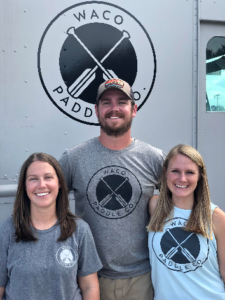
Sarah Raley, Ross + Beth Harris
Ross and Beth Harris have considered Waco their permanent home since 2003. Ross was with a store called Outdoor Waco. Bicycle World bought Outdoor Waco and then sold the water rentals part of the business to Ross and Beth 2016. The couple, along with Beth’s sister, Sarah Raley, rebranded the business as Waco Paddle Company.
All three of them had an interest in the outdoors – we’re talking rock climbing, camping, mountain biking, swimming, canoe and stand-up paddling. Beth was an outdoor recreation major at Baylor (Ross and Sarah’s alma mater as well!) Before she and Ross had their first child in 2015, she had been the Director of Recreational Services at Methodist Children’s Home for five years. Between her experience and Ross’s experience with Outdoor Waco, it seemed like a great opportunity.
We met up with Sarah Raley, to learn more about the business of the Brazos. What we didn’t know was – for Sarah, there is waaay more behind the word “marine” than water sports. Here’s a gorgeous example of local leadership AND the, no doubt, interesting journey of this mother of two.
Sarah, how did you get involved in Waco Paddle Company?
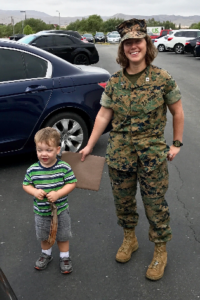
Sarah on her last day in the military!
“I came to Baylor in 2005. My husband, too…We left for me to go to law school in Austin. I joined the Marine Corps and I was a judge advocate — I was a lawyer in the Marine Corps — up until last year in Okinawa, Japan. We visited Texas before we permanantly moved back to the States. We were in Austin and Dallas and Waco, and we were just like – man, Waco is such a great place.
We really feel strongly that Waco Paddle Company can add value to people’s lives. Get them outdoors. It’s fun and relaxing; it’s adventurous. It’s an activity, exercise and you don’t even mean it to be. Sometimes when you’re on the water it feels like you’re by yourself. There’s nothing else going on. It’s a fun thing to be a part of. No one gets off the water, and comes back in upset or disappointed.”
Did you enjoy your time in the military?
“It was a very interesting, very valuable thing to go through, though there were certainly parts of it I didn’t enjoy. I was prosecuting a sexual assault case and our judge was a reserve colonel getting his reserve time by coming over and presiding over some of our cases.
It turned out that he was an assistant U.S. attorney in Austin. He said, the kind of cases you just prosecuted, you would have had to be in my office for 10 years to have even been a fourth seat on a case like this and you’re getting to do it. Overall, the experience was very, very good.”
So, being a part of the community sounds like a huge value to Waco Paddle Company?
“We try to be involved in anything that makes sense as a watercraft rental business on the Brazos… When there are events on the water like TriWaco or Sharkfest, we provide kayaks for the lifeguards.
We do a quarterly river clean up with Keep Waco Beautiful where they bring in loads and loads of volunteers.
We want to be stewards of the river. We want people to appreciate and care for not only the Brazos but Texas waterways in general, so we want to be involved in that.
Our dock is going to be the entry point for the swim portion of the IronMan!”
And you guys do all this with four kids under three years old!
“Maybe that’s the reason. We all need something to pour our intellectual energy into because we’re dealing with little kids all the time!”
What does Waco Paddle offer the community, specifically?
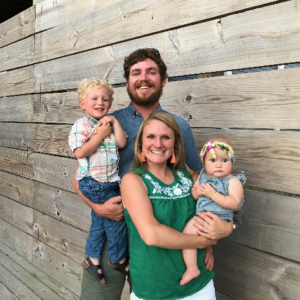
The Harrises
“We have stand-up paddle boards, we have single and double kayaks, and canoes. You can rent them anywhere from an hour to all day. We see lots of families coming out or people trying this out a first time or a group of girls coming out looking for something fun to do. Our clientele for rentals is very widespread!
What’s awesome about kayaking, paddle boarding or canoeing – you can do it when you’re older. It doesn’t require a lot of physicality to do it. Anyone can do it!
We have infant life jackets. My niece that’s going to turn one soon – she’s gone out of couple times. We just put her in a little infant life jacket and she just sits right in front of you. My boys love it.
The rentals are so accessible. Our staff gets you set up, they get you your lifejackets. They show you how to hold your paddle; they show you how to do different types of strokes and they help you get on the water so it’s so accessible for anyone. For families, for groups, for kids of all ages; it’s so great.
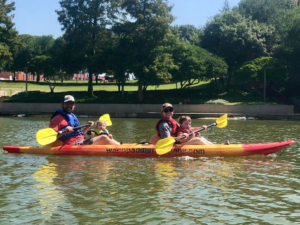
Sarah + her family (Ben is husband)
Along with our rentals, we’ve been doing night paddles on Friday nights. You go out from 8-10PM and watch the sunset on the river. Paddling at night time is just a different type of adventure because it’s dark. But, in downtown Waco all of the bridges are lit up and you’re paddling by the light of the suspension bridge.
We’ve had people come out for every single one and they get off the water and say, when’s the next one? We’ll see you then! It’s just different. It’s so peaceful. There’s even less ambient noise out there. It has a different feel to it.”
What about for kids?
“We did camps this summer. (It probably doesn’t hurt that it’s like 100 degrees outside!)
The kids learned how to operate all of our different watercraft – kayaks, canoes, and stand up paddle boards – but in a really fun way. They played Capture the Flag and did races to practice the paddle techniques. They did an extended paddle trip down the Brazos. They put in at the MCC dock and they would spend the entirety of that day paddling back to our dock.
EVERYONE loved it. We got great feedback from all the parents. We ended up with about 10 kids per session. We would do up to 20 kids per session, but we’d never have a ratio beyond one staff for every five campers.”
What’s new for Wacoans and Waco Paddle Co.?
We’re planning on offering paddle trips to EVERYONE on Saturdays this fall. Kind of what we did for kids’ camps, but we’re going to do a different put in location. People would come to Waco Paddle Company and we would transport everyone and the boats to a put in location.
It takes paddlers out of the totally urban realm and takes people into more adventure. When you paddle on the Brazos, you don’t see any homes or things like that, it gives you a good sense of adventure.
 Beth Whittington remembers sitting on the Waco suspension bridge as a girl, visiting family friends. Legs dangling off, watching the Fourth of July fireworks spark the sky. Been a Waco local for the better part of 19 years. Gaps explainable by the awkwardly untrue term of “ex-missionary.” Beth thrives on: generating ideas + copywriting. Can’t wait to: visit South Africa. Favorite part of Waco: Bangkok Royale + the HOTHTC. Wants: everyone in Waco to get Towny because it’ll make life better for us all if we let it.
Take your local support up a notch – pop in Towny + have a look around.
The Act Locally Waco blog publishes posts with a connection to these aspirations for Waco. If you are interested in writing for the Act Locally Waco Blog, please email [email protected] for more information.
By Madiha Kark
Young men of color face challenges every day; they strive to be seen beyond their stereotypical portrayal as depicted by news media and pop culture. Especially in higher education, their representation is small, and completion rates have been historically low. At McLennan Community College, the Men of Color Success Initiative focuses on engaging in individual and group mentoring to address challenges for first-generation students, traditionally underrepresented groups, and students in need of academic and personal direction.
The goal of the program is to increase higher-education completion rates among men of color while raising awareness of issues with diversity and equity, and creating awareness of support services available. The initiative is modeled after similar programs at other colleges in Texas, and representatives are working closely with the Texas Education Consortium for Male Students of Color to grow its efforts.
According to a study by the Center for Community College Student Engagement (CCCSE), titled Aspirations to Achievement: Men of Color and Community Colleges, “Consistently and unmistakably, data show a persistent gap separating Latinos and Black males from other student groups on measures of academic progress and college completion. These gaps exist across higher education.”
Barron Lowe, who graduated recently with an associate degree in communications, said before he found the initiative, he was going through personal issues and wasn’t sure where he was headed in life. A trip to Austin to attend a seminar for the Men of Color made him realize he wasn’t the only one with problems.
The program pairs faculty members and mentors with students to help them achieve personal and academic goals. The idea is to be accountable and push each other to better ourselves. Lowe says the networking opportunities he has had because of the initiative helped him to reach the next level in his life. He is currently working as a leasing agent for a community center but wants to get a bachelor’s degree from Texas A&M. “I’ve met some of the most amazing men through this, and they’ve helped me be the best version of myself.”
Building networks and relationships is a big part of the initiative, and one that allows the group members to make stronger ties, because everyone is invested in the common goal.
“It gave me the opportunity to have a professor who was good one-on-one and really caring, and saw I had the potential to be a better student,” Lowe said. “He basically took me under his wing, and it’s been like this ever since: close.”
At a time when one might feel like they’re taking on the world alone, college can be daunting, he said. Lowe had to learn how to ask for help when necessary, something he couldn’t bring himself to do before MCC, he said.
Click here and learn how you can be a part of the Men of Color Success Initiative at MCC.
 Madiha Kark is a Marketing, Communications and Photography Specialist at McLennan Community College. She holds an M.A. in Journalism from the University of North Texas. She loves to travel, cook, and read nonfiction books.
The Act Locally Waco blog publishes posts with a connection to these aspirations for Waco. If you are interested in writing for the Act Locally Waco Blog, please email [email protected] for more information.